





Meat Flavor Enhancers: How to Balance Taste Impact, Label Needs, and Cost
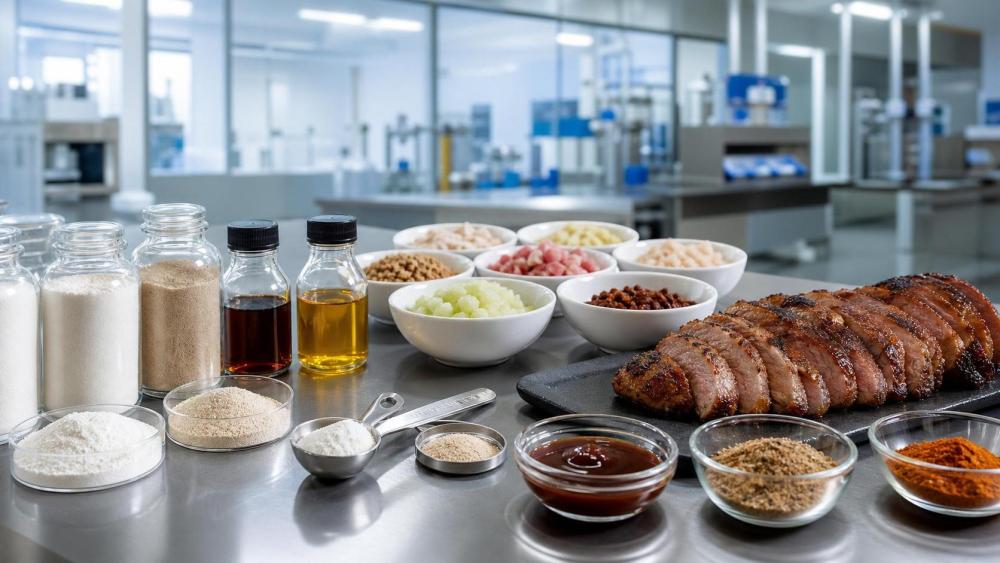
For procurement teams, choosing meat flavor enhancers is no longer just about boosting savory impact.
It also means balancing label expectations, formulation compatibility, supply stability, and cost control in a highly competitive market.
This article explores how buyers can assess performance, clean-label fit, and pricing trade-offs with more confidence.
In practical terms, the best decision is rarely the cheapest option or the strongest flavor system.
The smarter choice is the one that protects eating quality, supports the brand claim, and stays workable at scale.
Why Meat Flavor Enhancers Matter More Than Before
Demand has changed quickly across processed meat, plant-forward hybrids, frozen meals, sauces, snacks, and instant foods.
Consumers still expect rich, cooked, roasted, and juicy notes, even when formulas become leaner or cleaner.
That gap is exactly where meat flavor enhancers create value.
They help restore savory depth lost through fat reduction, sodium control, thermal processing, or ingredient replacement.
More importantly, they influence repeat purchase because flavor memory often decides whether a product feels satisfying.
From a sourcing view, this means meat flavor enhancers affect both formula cost and sales performance.
What Buyers Should Evaluate First
A useful starting point is to separate flavor promise from flavor chemistry.
Many meat flavor enhancers sound similar in supplier presentations, but performance can differ sharply in production.
Check the intended taste profile
Some systems deliver meaty top notes.
Others build long-lasting umami, broth depth, grilled notes, fatty mouthfeel, or lingering roast character.
The right choice depends on whether the product needs immediate aroma impact or fuller background complexity.
Review application conditions
Heat stability is critical.
A meat flavor enhancer that works in a soup base may fade in retort meals or high-shear seasoning production.
Salt level, sugar level, pH, oil phase, and protein matrix also shift flavor release.
Assess dosage efficiency
This is where cost control becomes real.
A higher-priced option may still win if the use level is lower and the flavor survives processing better.
Balancing Taste Impact with Label Expectations
Label pressure has become a central buying factor.
In many categories, flavor is judged together with the ingredient statement, not separately.
This creates a familiar tension.
The strongest meat flavor enhancers may rely on yeast extracts, hydrolyzed proteins, reaction flavors, nucleotides, or carriers that some brands want to limit.
At the same time, cleaner positioning can reduce flavor intensity or increase formula cost.
Questions worth asking suppliers
- Can the meat flavor enhancers support natural flavor or clean-label positioning?
- Do they contain allergens, animal-derived carriers, or declarable processing aids?
- Are they suitable for regional compliance and customer-specific label policies?
- What is the sensory difference between standard and label-friendly versions?
In actual business, a label-friendly system only works if it still delivers a convincing eating experience.
If the flavor feels thin, metallic, or short, the label advantage disappears at the shelf.
How to Compare Cost Beyond Price per Kilogram
One of the most common sourcing mistakes is comparing meat flavor enhancers only by unit price.
That approach misses the commercial impact of dosage, reformulation, waste, and finished product performance.
Use a true cost framework
A better buying metric is cost-in-use, not list price.
This gives a clearer view of which meat flavor enhancers truly protect margin.
Supply Stability and Specification Discipline
Recent market changes have made continuity planning much more important.
Meat flavor enhancers can depend on raw materials that face volatility in proteins, yeast derivatives, energy, and freight.
A low-cost quotation means little if the supplier cannot keep the same sensory profile from batch to batch.
Focus on these checkpoints
- Clear sensory specification, not just chemical specification.
- Defined origin and composition of key raw materials.
- Shelf life data under practical storage conditions.
- Backup manufacturing site or alternative production plan.
- Sample-to-commercial consistency records.
This is especially important for large-volume categories with tight sensory windows.
Even a small shift in roasted or sulfur notes can affect product acceptance.
Application-Specific Buying Strategies
Not all meat flavor enhancers should be sourced using the same criteria.
The application often changes what “best value” actually means.
Processed meat products
Prioritize heat stability, cured note compatibility, and performance under salt and fat variation.
Seasonings and snack coatings
Look for strong impact at low dosage, fast aroma release, and good blending behavior in dry systems.
Ready meals and sauces
Depth and persistence matter more here, especially after retort, reheating, or frozen storage.
Hybrid or plant-forward products
The role of meat flavor enhancers expands beyond taste.
They may also mask beany, earthy, or protein off-notes while building authentic cooked-meat character.
A Practical Shortlist for Smarter Sourcing
When comparing suppliers, a simple checklist can speed up the process without oversimplifying the decision.
- Define the target profile in plain sensory language.
- Confirm label boundaries before requesting samples.
- Test meat flavor enhancers in the real production matrix.
- Calculate cost-in-use at realistic dosage levels.
- Review documents for compliance, allergens, and claims.
- Check supply continuity and batch consistency.
- Keep one approved backup source where possible.
This process sounds basic, but it prevents expensive surprises later.
It also helps internal teams align faster around taste, label, and margin goals.
Final Takeaway
Choosing meat flavor enhancers is now a cross-functional business decision, not just a flavor house comparison.
The best option should deliver the right sensory impact, fit the intended label story, and stay efficient across production.
When meat flavor enhancers are evaluated through cost-in-use, application fit, and supply reliability, sourcing becomes much more strategic.
That is usually where stronger margins and better product acceptance begin.
A disciplined review today can make the next formulation decision faster, safer, and more commercially sound.
Related News
- When heat stable flavor formulations are needed for UHT beveragesOct 04, 2026Aromatics & Perfumery Fellow
- How heat stable flavor formulations prevent aroma loss in baked goodsOct 03, 2026Aromatics & Perfumery Fellow
- Using 4-vinyl guaiacol flavour standard to calibrate sensory panelsOct 02, 2026Aromatics & Perfumery Fellow
- Garlic Powder Flavor Profiles and Their Role in Seasoning BlendsSep 28, 2026Aromatics & Perfumery Fellow
Related News
- 00
0000-00
Can biomimetic peptides in cosmetics reduce the look of wrinkles? - 00
0000-00
How to assess a bio-based thickener manufacturer's batch consistency - 00
0000-00
Verifying halal status of hydrocolloid ingredients in the Middle East - 00
0000-00
How to interpret active matter on a surfactant specification sheet - 00
0000-00
How Do You Test Hydrocolloid Viscosity After Changing a Thickener?
Aromatics & Perfumery Fellow
Weekly Insights
Stay ahead with our curated technology reports delivered every Monday.