





Why molecular sensory interactions fail in one formula and work in another
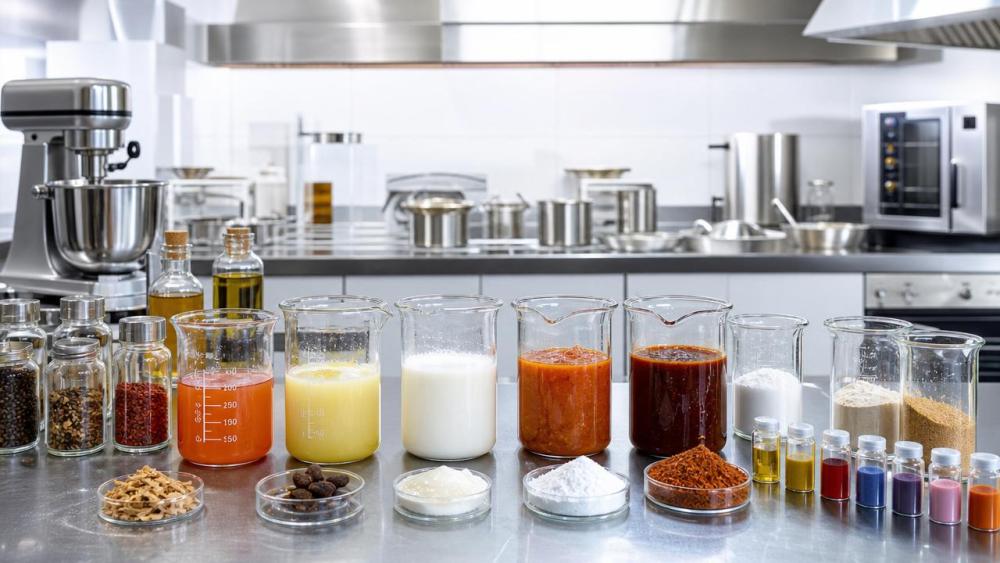
Molecular sensory interactions shape how food is perceived long before a label claim is noticed.
A formula can test well analytically, yet still feel flat, harsh, thin, or unstable in real consumption.
That gap usually comes from interactions between aroma compounds, acids, fats, hydrocolloids, antioxidants, pigments, and process conditions.
In practical development, molecular sensory interactions are rarely isolated events. They move with heat load, shear, oxygen exposure, water activity, and packaging choice.
This is why the same flavor system behaves differently in a baked snack, a chilled dairy drink, or a shelf-stable sauce.
FFAI often frames this issue as a formulation intelligence problem, not only a flavor problem.
When preservation, rheology, clean-label color, and aroma release are evaluated together, hidden failure points become easier to predict.
The most useful starting point is not ingredient popularity. It is the actual consumption and processing scene.
In real applications, the first question is the stress profile
Different products create different sensory stress profiles.
A refrigerated emulsion usually struggles with flavor release suppression and delayed top notes.
A baked matrix more often loses volatile notes, darkens pigments, and toughens texture through moisture migration.
Acid beverages create another pattern. Sweetness may fall short, bitterness can rise, and preservatives may alter finish perception.
So molecular sensory interactions must be judged against the full route from mixing to consumer use.
That route includes process temperature, residence time, oxygen pickup, filling method, storage temperature, and serving expectation.
More importantly, products positioned as indulgent, healthy, clean label, or high-protein create very different acceptance thresholds.
A slight astringency may pass in botanical drinks, but it becomes obvious in a creamy dessert.
A quick comparison helps clarify the decision path
Where beverages usually go wrong
In drinks, molecular sensory interactions are often underestimated because formulas appear simple on paper.
Yet acidulants, sweeteners, preservatives, cloud systems, and flavor carriers can compete for the same sensory outcome.
One common mistake is adjusting sweetness and aroma separately.
A citrus profile may smell bright in the headspace, but taste dull once acid sharpness peaks faster than sweetness recovery.
Another issue appears during shelf life.
Antioxidants and preservatives protect safety, but they may also shift finish, especially in delicate fruit or tea directions.
In clean-label positioning, this becomes more sensitive because fewer masking tools are acceptable.
A better practice is to review molecular sensory interactions at three points: fresh fill, midpoint storage, and end-of-shelf-life consumption.
That sequence shows whether the formula is truly balanced or only briefly attractive.
Emulsions, dairy, and plant-based systems need a different lens
Creamy systems rarely fail because of flavor dosage alone.
They fail when molecular sensory interactions between fat droplets, proteins, stabilizers, and aroma compounds delay release or distort texture cues.
This is especially visible in yogurt drinks, spoonable desserts, and oat or nut emulsions.
Hydrocolloids can improve body, but too much rheological correction reduces flavor lift and leaves a coated finish.
Protein fortification creates another layer.
Bitterness, dryness, and lingering notes may appear even when the flavor profile itself is well designed.
In actual use, the useful judgment is whether texture and aroma release tell the same sensory story.
If mouthfeel says rich but aroma says muted, the formula feels incomplete.
FFAI’s cross-category perspective is relevant here because thickeners, antioxidants, and flavor chemistry cannot be optimized in isolation.
What to confirm before locking the formula
- Check aroma release at real serving temperature, not only room-temperature evaluation.
- Compare viscosity target with perceived creaminess, because they are not always identical.
- Review protein, mineral, and flavor interactions after homogenization and storage.
- Test whether preservatives or oxidation control tools create late-stage off-notes.
Heat-processed foods expose the hidden cost of early assumptions
Baked, retorted, and extruded foods highlight the toughest side of molecular sensory interactions.
The challenge is not only losing top notes.
Heat also changes texture structure, oxidation speed, pigment stability, and even perceived sweetness.
A common misjudgment is approving a premix based on raw batter or pre-bake aroma.
That tells little about the final consumer experience.
Some antioxidants survive processing well enough to protect lipids, but the aroma system may still collapse.
Some colors hold visually, yet the taste profile turns flatter because thermal reactions erase contrast.
In these cases, molecular sensory interactions should be judged as a thermal design problem.
The more useful approach is to separate ingredients by thermal sensitivity, retention need, and timing of sensory contribution.
That is where formulation intelligence matters more than single-ingredient strength.
The biggest errors usually come from false equivalence
Many formulation pitfalls come from treating similar products as if they shared the same sensory logic.
A fruit preparation for yogurt is not judged like a fruit beverage.
A reduced-sugar biscuit does not react like a standard biscuit.
A natural pigment in a chilled sauce will not behave like the same pigment in a hot-filled drink.
These are not small formulation details. They redefine molecular sensory interactions from the start.
Another frequent error is overvaluing specification sheets.
Volatility, purity, viscosity, or oxidation stability matter, but application context matters more.
If process shear, pH, oxygen load, and packaging barrier are ignored, even a premium ingredient may underperform.
This is why FFAI’s broader intelligence model, spanning preservation, rheology, aroma chemistry, and compliance, has practical value beyond theory.
Misread signals worth catching early
- Strong bench aroma is mistaken for strong in-mouth perception.
- Texture correction is used to hide instability, then weakens flavor release.
- Shelf-life protection is measured chemically, but sensory drift is not reviewed.
- Clean-label substitution is made without checking bitterness, haze, or color fade.
A workable path for adaptation and next-step evaluation
The practical way to manage molecular sensory interactions is to build a scene-based review sequence.
Start with the product’s stress conditions, then map the sensory outcome that must survive them.
After that, compare which ingredients mainly protect safety, which shape mouthfeel, and which deliver emotional impact through aroma and taste.
That order reduces the chance of solving one issue while creating another.
In many food systems, the best adjustment is not a bigger flavor load.
It may be a lighter thickener system, a different antioxidant strategy, a revised process temperature, or improved oxygen control.
When molecular sensory interactions are reviewed this way, formulation decisions become more stable across development, scale-up, and shelf life.
The next useful step is to sort formulations by application scene, define the key failure signals for each, and verify them under real storage and serving conditions.
That creates a sharper basis for balancing safety, clean-label expectations, texture performance, and sensory appeal without relying on guesswork.
Related News
- When heat stable flavor formulations are needed for UHT beveragesOct 04, 2026Aromatics & Perfumery Fellow
- How heat stable flavor formulations prevent aroma loss in baked goodsOct 03, 2026Aromatics & Perfumery Fellow
- Using 4-vinyl guaiacol flavour standard to calibrate sensory panelsOct 02, 2026Aromatics & Perfumery Fellow
- Garlic Powder Flavor Profiles and Their Role in Seasoning BlendsSep 28, 2026Aromatics & Perfumery Fellow
Related News
- 00
0000-00
How to assess color stability from a natural food colors manufacturer - 00
0000-00
When does amino acid surfactant powder improve cleanser mildness? - 00
0000-00
How to verify a cosmetic nanotechnology supplier's safety documentation - 00
0000-00
How rheological thickeners for shampoo affect suspension stability - 00
0000-00
How to assess recombinant collagen ingredients for cream stability
Aromatics & Perfumery Fellow
Weekly Insights
Stay ahead with our curated technology reports delivered every Monday.