





Sensory Analytics for Food Product Development: What Data Improves Reformulation
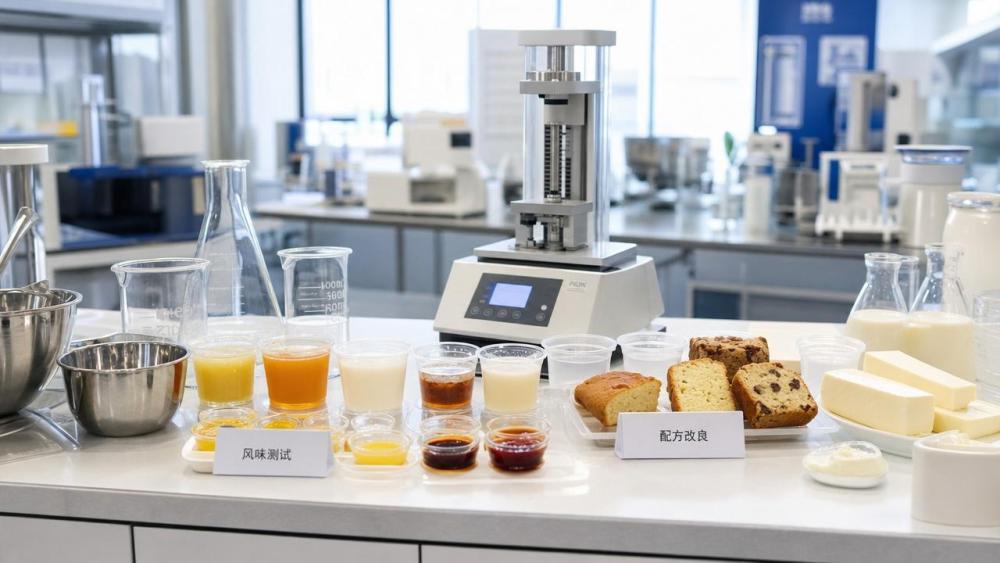
In reformulation work, instinct still matters.
But instinct alone no longer carries complex food projects.
Clean-label pressure, volatile raw materials, and fast launch cycles changed the game.
That is why sensory analytics for food product development has become a core decision tool.
It translates taste, aroma, texture, and appearance into usable project data.
More importantly, it links sensory signals with formulation changes and business risk.
When sugar drops, preservatives change, or thickeners shift, perception often moves first.
If teams measure that movement early, reformulation becomes faster and safer.
This matters across beverages, bakery, dairy, sauces, snacks, and functional foods.
The best programs do not treat sensory as a final gate.
They use sensory analytics for food product development from concept to scale-up.
Why reformulation needs better sensory data
Reformulation usually starts with a technical goal.
Reduce sugar, remove synthetic colors, improve stability, or lower cost.
Yet the market judges a product by experience, not formulation logic.
A small ingredient switch can reshape sweetness onset, creaminess, aftertaste, or flavor release.
This is where sensory analytics for food product development earns its value.
It shows whether technical improvement creates hidden acceptance losses.
It also helps teams avoid endless pilot rounds driven by opinion.
From a project view, better data improves timing, alignment, and escalation decisions.
- It reduces debate between R&D, quality, procurement, and commercial teams.
- It highlights which attributes truly affect liking or rejection.
- It supports faster go, hold, or reformulate-again decisions.
- It creates a repeatable evidence base for future product platforms.
What data matters most in sensory analytics for food product development
Not all sensory data carries equal value.
High-performing teams focus on data that explains change, not just preference scores.
1. Descriptive sensory profiles
Descriptive analysis maps the product in precise sensory language.
This includes aroma intensity, sweetness quality, bitterness, body, adhesion, and finish.
For reformulation, this dataset explains exactly what moved after an ingredient change.
2. Temporal perception data
Consumers do not experience flavor all at once.
They notice sequence.
Onset, peak, fade, and aftertaste often define acceptance.
Temporal dominance and time-intensity methods are useful here.
They are especially useful in sugar reduction and fat replacement projects.
3. Texture and rheology correlation
Texture complaints often begin as technical mismatches.
Viscosity, yield stress, particle size, and melt behavior need sensory matching.
A thicker number does not always mean a creamier mouthfeel.
Sensory analytics for food product development works best when lab and panel data are paired.
4. Consumer acceptance and penalty analysis
A product can be technically elegant and still fail in market testing.
Acceptance scores show outcome.
Penalty analysis shows why.
It identifies which attribute gaps drive the biggest liking losses.
5. Shelf-life sensory drift
Early prototypes often taste good on day one.
Problems emerge later through oxidation, aroma fade, color shift, or texture breakdown.
Tracking sensory drift across shelf-life is essential for launch confidence.
How to build a practical reformulation framework
A useful framework starts before the first bench sample.
The goal is to connect sensory data with technical and business checkpoints.
- Define the sensory baseline of the current product and top competitor set.
- Identify no-compromise attributes such as signature aroma, body, or color.
- Rank acceptable movement ranges for sweetness, thickness, acidity, and finish.
- Link each formulation variable to expected sensory impact and test method.
- Set decision gates for prototype screening, pilot approval, and shelf-life review.
This sounds simple, but the discipline changes project speed dramatically.
Teams stop chasing every difference and start managing critical differences.
That is the practical side of sensory analytics for food product development.
Where projects usually go wrong
Most failures are not caused by lack of data.
They come from weak data design.
Several patterns appear again and again.
- Testing too late, after formulation options are already constrained.
- Using overall liking without descriptive data to explain rejection.
- Ignoring texture-aroma interaction in reduced fat or protein-fortified systems.
- Comparing fresh prototypes against aged commercial controls.
- Overweighting internal opinions over blinded panel evidence.
- Skipping shelf-life sensory checkpoints to save time.
In actual business conditions, these mistakes create hidden delays.
A formula may pass technical review, then fail market realism later.
Fixing that late is far more expensive than measuring earlier.
Useful metrics for faster decisions
Decision makers need a compact view, not a wall of charts.
The following table shows metrics that support action.
With this view, sensory analytics for food product development becomes operational.
It stops being a research report and becomes a control system.
How intelligence partners strengthen sensory programs
Strong analytics also depend on outside intelligence.
Ingredient behavior, compliance shifts, and cost pressure shape sensory outcomes.
This is where a specialist platform such as FFAI adds practical value.
Its intelligence focus spans preservatives, thickeners, flavors, fragrances, and functional actives.
That wider view matters during reformulation.
A preservative decision can affect aroma fade.
A hydrocolloid decision can change mouthfeel and flavor release together.
A pricing decision can force ingredient swaps with sensory consequences.
By stitching technical, regulatory, and market signals, teams gain better reformulation judgment.
Final takeaway
The strongest reformulation programs measure what consumers actually experience.
That is the real purpose of sensory analytics for food product development.
It reduces guesswork, protects brand equity, and improves launch readiness.
It also helps balance clean-label goals with sensory performance and commercial reality.
If the next reformulation project is under time pressure, start with the right sensory map.
Then connect it to formulation variables, shelf-life, and acceptance risk.
That approach delivers faster decisions and better products with fewer surprises.
Related News
- When heat stable flavor formulations are needed for UHT beveragesOct 04, 2026Aromatics & Perfumery Fellow
- How heat stable flavor formulations prevent aroma loss in baked goodsOct 03, 2026Aromatics & Perfumery Fellow
- Using 4-vinyl guaiacol flavour standard to calibrate sensory panelsOct 02, 2026Aromatics & Perfumery Fellow
- Garlic Powder Flavor Profiles and Their Role in Seasoning BlendsSep 28, 2026Aromatics & Perfumery Fellow
Related News
- 00
0000-00
How to assess color stability from a natural food colors manufacturer - 00
0000-00
When does amino acid surfactant powder improve cleanser mildness? - 00
0000-00
How to verify a cosmetic nanotechnology supplier's safety documentation - 00
0000-00
How rheological thickeners for shampoo affect suspension stability - 00
0000-00
How to assess recombinant collagen ingredients for cream stability
Aromatics & Perfumery Fellow
Weekly Insights
Stay ahead with our curated technology reports delivered every Monday.