





Synthetic Flavor Ingredients for Confectionery: Stability and Cost Trade-Offs
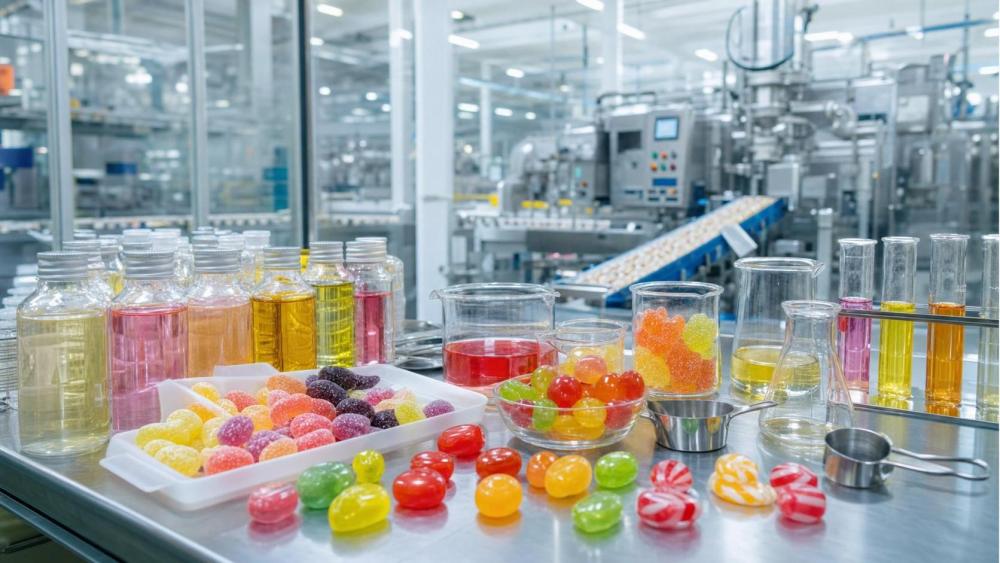
For confectionery buyers, flavor selection affects far more than taste.
Synthetic flavor ingredients for confectionery sit at the intersection of processing performance, sourcing predictability, and finished product margin.
That matters because candies, gummies, hard-boiled sweets, fillings, and coatings all stress flavor systems in different ways.
A low-cost flavor can look attractive on paper, then fade during cooking, storage, or packaging conversion.
A more robust option may cost more per kilogram, yet lower total formula loss and reduce production variability.
In practical purchasing work, the right question is not simply, “What is cheaper?”
It is, “Which synthetic flavor ingredients for confectionery deliver the best cost-per-performing-batch?”
Why Stability Drives Real Procurement Value
Thermal stability is usually the first screening factor.
Many confectionery processes expose flavor compounds to high heat, vacuum, shear, and moisture migration.
Hard candy boiling can exceed 140 degrees Celsius.
Chewy caramel and toffee introduce longer dwell times and fat interactions.
Gummy systems create a different challenge, especially with acidic profiles and water activity shifts.
This is where synthetic flavor ingredients for confectionery often outperform more delicate alternatives.
They can be engineered for better volatility control, cleaner top-note retention, and greater batch-to-batch consistency.
That also means fewer sensory corrections later in production.
Key Stability Risks During Processing
- Heat loss of volatile top notes during boiling or depositing.
- Flavor distortion under low pH, especially in fruit confectionery.
- Oxidation during storage, especially in transparent or high-oxygen packaging.
- Flavor absorption into fat phases, coatings, or packaging films.
- Uneven release across shelf life, causing front-loaded taste perception.
When these risks are ignored, initial savings disappear quickly.
Rework, dosage increases, shelf-life complaints, and failed line trials all raise the true sourcing cost.
Understanding the Cost Side Beyond Price Per Kilogram
Cost evaluation should move beyond quotation sheets.
For synthetic flavor ingredients for confectionery, unit price only tells part of the story.
A better framework compares total delivered flavor impact at the finished product stage.
This includes dosage rate, processing loss, shelf-life retention, and supplier consistency.
A Practical Cost Model
Procurement teams often compare suppliers using four simple dimensions.
- Price per kilogram or liter.
- Recommended dosage in the target confectionery matrix.
- Retention after heat processing and after defined shelf-life checkpoints.
- Operational costs linked to reformulation, waste, and complaint risk.
This approach usually changes the ranking.
A premium flavor with stronger retention may require a lower inclusion rate.
That lowers the effective cost per saleable batch.
In some categories, it also reduces the need for flavor overages.
Example Comparison Logic
This pattern is common in fruit, mint, cola, and cream profiles.
Where Synthetic Flavor Ingredients for Confectionery Make Business Sense
Not every application needs the same flavor architecture.
The better decision comes from matching ingredient design to process stress and market positioning.
High-Heat Candy Applications
Hard candy, lollipops, and some compressed sweets reward robust synthetic systems.
Here, thermal resistance often matters more than label storytelling.
Synthetic flavor ingredients for confectionery can provide sharper character after heat exposure.
Value-Focused Mass Market SKUs
In price-sensitive channels, cost control stays central.
Synthetic solutions often support cleaner cost forecasting and lower volatility than more complex alternatives.
That helps protect margins during swings in energy, sugar, gelatin, or packaging costs.
Global Supply Programs
Cross-border confectionery programs need repeatability.
Synthetic flavor ingredients for confectionery can simplify specification management across regions and contract manufacturers.
That consistency becomes a major advantage during scale-up.
Questions to Ask Suppliers Before Approval
Recent market shifts make supplier discipline even more important.
The stronger signal is not just flavor quality.
It is how transparently the supplier explains performance under real production conditions.
- What is the retention profile after your exact heating curve?
- Does the flavor behave differently in sugar-free, pectin, or gelatin systems?
- What overage is recommended to protect shelf-life taste?
- How stable is supply across regions and seasons?
- Can the supplier provide sensory and technical support during line trials?
- What are the documentation standards for compliance and specification control?
These questions reveal whether a quote is commercially reliable or only superficially competitive.
How to Balance Performance, Label Expectations, and Margin
The market no longer rewards one-dimensional sourcing decisions.
Many confectionery brands now balance three pressures at once.
- Stable flavor delivery through processing and shelf life.
- Acceptable ingredient positioning for the target market.
- Margin discipline that survives scaling.
That is why a hybrid portfolio strategy often works well.
Use premium synthetic flavor ingredients for confectionery in heat-stressed or shelf-life-critical products.
Use more basic systems in fast-turn, lower-risk product lines.
This tiered approach supports both innovation and cost control.
A Practical Decision Framework for Sourcing Teams
In actual business reviews, a short decision sequence helps keep discussions grounded.
- Define the confectionery process stress clearly.
- Estimate finished-product flavor loss, not just starting dosage.
- Compare synthetic flavor ingredients for confectionery on effective batch cost.
- Validate performance with accelerated shelf-life and pilot trials.
- Score suppliers on support, compliance, and continuity.
That sequence keeps sensory, operational, and financial priorities in the same discussion.
It also reduces the risk of approving a flavor that looks efficient only in lab samples.
When synthetic flavor ingredients for confectionery are assessed through stability, dosage efficiency, and supply resilience, better procurement decisions follow.
The most competitive choice is usually the one that protects flavor performance and margin at the same time.
Related News
- When heat stable flavor formulations are needed for UHT beveragesOct 04, 2026Aromatics & Perfumery Fellow
- How heat stable flavor formulations prevent aroma loss in baked goodsOct 03, 2026Aromatics & Perfumery Fellow
- Using 4-vinyl guaiacol flavour standard to calibrate sensory panelsOct 02, 2026Aromatics & Perfumery Fellow
- Garlic Powder Flavor Profiles and Their Role in Seasoning BlendsSep 28, 2026Aromatics & Perfumery Fellow
Related News
- 00
0000-00
What drives fragrance ingredients price changes in bulk orders? - 00
0000-00
How to assess a food antioxidants distributor’s traceability practices - 00
0000-00
How minimum order quantities shape private label ingredient sourcing costs - 00
0000-00
What drives personal care ingredient price volatility in sourcing - 00
0000-00
What drives micelles price differences in cosmetic formulations?
Aromatics & Perfumery Fellow
Weekly Insights
Stay ahead with our curated technology reports delivered every Monday.