





Clean label pressure has changed how taste is built in modern food systems. In that shift, umami flavor enhancers have moved from niche formulation tools to strategic levers for better taste, shorter labels, and more credible product positioning.
The topic matters because taste remains the final judge of repeat purchase. Even the cleanest ingredient deck struggles if soups taste flat, plant proteins seem chalky, or reduced-salt meals lose depth.
For companies operating across FMCG, foodservice, and ingredient supply chains, the real question is not whether umami matters. It is which umami flavor enhancers fit clean label goals without weakening compliance, cost discipline, or sensory consistency.
Why umami is back at the center of formulation
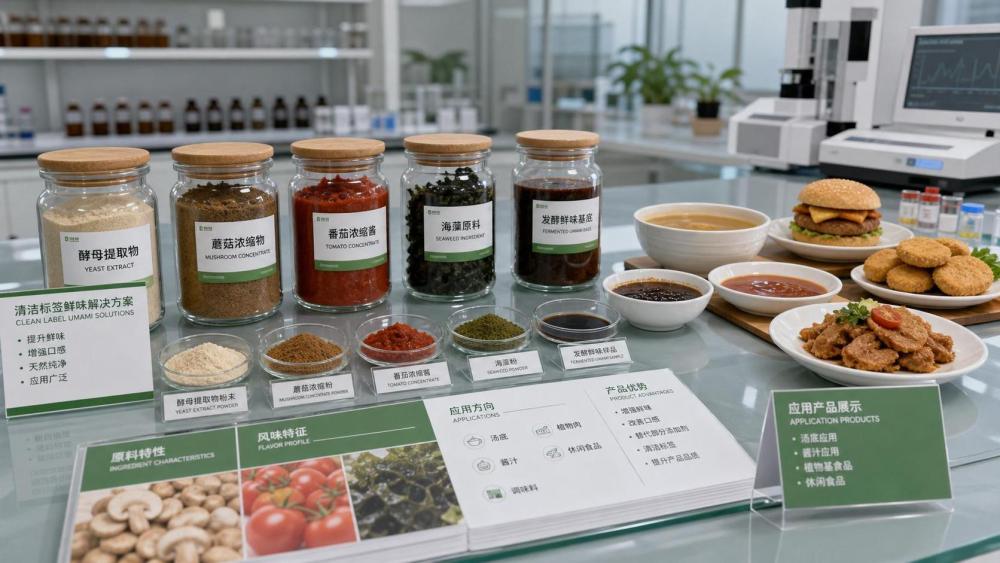
A useful image here is a formulation map linking taste depth, sodium reduction, and label simplicity.
Umami is often described as savory depth, but that definition is too limited for commercial use. In practice, it supports fullness, mouthwatering character, longer flavor persistence, and better balance across sweet, salty, and roasted notes.
That is why umami flavor enhancers appear in products far beyond broth or seasoning. They now influence snacks, sauces, meat alternatives, frozen meals, bakery fillings, and even nutrition products where off-notes need control.
This broader role aligns with the kind of cross-category sensory intelligence emphasized by FFAI. Taste performance rarely depends on one ingredient alone. It emerges from interactions among preservation, texture, aroma, processing, and regulatory constraints.
In other words, umami flavor enhancers are not only flavor boosters. They are part of a wider formulation system that affects stability, ingredient storytelling, and margin protection.
What counts as a clean label umami solution
Clean label does not mean one universal ingredient list. It usually means ingredients that consumers perceive as familiar, minimally processed, and easier to trust.
Within that frame, common clean label options include yeast extracts with careful positioning, mushroom concentrates, tomato concentrates, fermented vegetable bases, seaweed-derived ingredients, and slow-cooked stock systems.
Some formulations also use natural reaction flavors or concentrated savory extracts. These may still require careful review, since consumer perception and regional labeling rules do not always move together.
The challenge is that “clean” is never only a sensory decision. It is also a regulatory, commercial, and branding decision. A technically elegant ingredient may still fail if the declaration creates friction in key markets.
Common clean label directions
The best option often comes from layering sources rather than relying on a single input. That approach creates roundness while reducing the risk of one ingredient dominating the flavor story.
Where umami flavor enhancers create the most business value
The strongest value appears when sensory improvement connects directly with a commercial problem. That may be sodium reduction, protein masking, recipe simplification, or premium taste positioning.
In soups, sauces, and bouillon systems, umami flavor enhancers help maintain body after salt cuts. In plant-based meat or dairy alternatives, they can reduce beany, metallic, or dry notes that limit repeat purchase.
Frozen meals benefit because reheating often dulls flavor top notes. A well-built umami base restores perceived richness without requiring heavy fat or excessive seasoning.
Snack applications are also growing. Savory crackers, chips, and coated nuts increasingly use clean label umami flavor enhancers to deliver lingering satisfaction, which can support premium positioning.
From an innovation perspective, these ingredients also work well with FFAI’s wider focus on texture, aroma, and preservation. Mouthfeel from thickeners, aroma lift from flavor systems, and shelf-life control all shape whether umami lands effectively.
Typical high-interest use cases
- Reduced-sodium soups and instant noodle seasonings needing deeper broth character.
- Plant-based burgers and ready meals requiring masking and more meat-like savoriness.
- Premium sauces, marinades, and gravies aiming for chef-style roundness.
- Healthy snacks where simpler labels must still support strong repeat appeal.
- Nutritional products that need to soften protein bitterness or mineral harshness.
What deserves closer scrutiny before adoption
Not every umami solution improves a product in a meaningful way. Some create immediate impact in bench trials, then fail during scale-up, thermal processing, or shelf-life evaluation.
A disciplined review usually starts with five questions.
- Does the ingredient support the intended label language in each target market?
- Does it survive processing conditions without losing key savory impact?
- Does it interact positively with salt, acids, fats, and hydrocolloids?
- Does the cost-in-use justify the sensory gain at commercial dosage?
- Does the final taste remain authentic for the category?
These points sound basic, yet they often separate a successful launch from an expensive reformulation cycle. A mushroom extract may work beautifully in brown sauces but feel out of place in a light dairy alternative.
Likewise, yeast-based umami flavor enhancers may deliver excellent taste economics, while still requiring tighter messaging around ingredient transparency. The right answer depends on portfolio strategy, not only lab preference.
A practical framework for evaluating options
A useful way to compare umami flavor enhancers is to score them across four dimensions: sensory fit, label acceptance, process tolerance, and business efficiency.
Sensory fit asks whether the ingredient creates depth that feels native to the product. Label acceptance tests how the declared name will be viewed across channels and regions.
Process tolerance matters because heating, drying, freezing, and retorting can all reshape flavor performance. Business efficiency goes beyond unit price and includes usage rate, sourcing stability, and reformulation complexity.
This is where a data-led intelligence model becomes valuable. FFAI’s lens on compliance, molecular behavior, and market pricing reflects the reality that ingredient decisions must connect science with commercial execution.
In practice, strong evaluation often means running side-by-side trials with at least one single-source option and one layered system. That gives a clearer picture of both clean label credibility and finished product resilience.
How to move from interest to informed action
The market for umami flavor enhancers will keep expanding as salt reduction, plant-based innovation, and cleaner labels converge. The winners will not be the brands using the most ingredients, but the ones choosing the most coherent system.
A sensible next step is to map current products by sensory gap. Identify where taste lacks persistence, where labels are under pressure, and where reformulation could create measurable commercial upside.
Then compare clean label umami flavor enhancers against processing conditions, regional declaration rules, and target taste architecture. That sequence creates better decisions than selecting an ingredient only because it sounds natural.
When the review is grounded in sensory science, compliance awareness, and cost-in-use logic, umami stops being a vague taste concept. It becomes a practical route to stronger products and clearer market differentiation.
Related News
- When heat stable flavor formulations are needed for UHT beveragesOct 04, 2026Aromatics & Perfumery Fellow
- How heat stable flavor formulations prevent aroma loss in baked goodsOct 03, 2026Aromatics & Perfumery Fellow
- Using 4-vinyl guaiacol flavour standard to calibrate sensory panelsOct 02, 2026Aromatics & Perfumery Fellow
- Garlic Powder Flavor Profiles and Their Role in Seasoning BlendsSep 28, 2026Aromatics & Perfumery Fellow
Related News
- 00
0000-00
Verifying halal status of hydrocolloid ingredients in the Middle East - 00
0000-00
How to interpret active matter on a surfactant specification sheet - 00
0000-00
What Quality Checks Should You Run on Fragrance Ingredient Suppliers? - 00
0000-00
How to assess a flavor chemistry manufacturer's batch consistency - 00
0000-00
What drives fragrance ingredients price changes in bulk orders?
Aromatics & Perfumery Fellow
Weekly Insights
Stay ahead with our curated technology reports delivered every Monday.