





Why are powder flavor delivery systems getting so much attention?
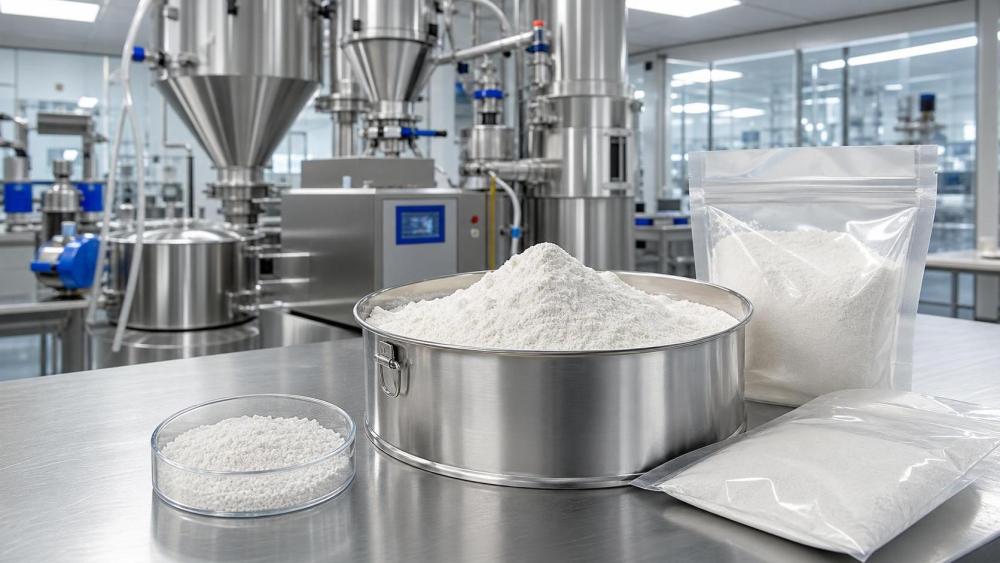
Powder flavor delivery systems matter because they solve a stubborn processing problem. Many aroma compounds are volatile, heat-sensitive, and easy to lose during mixing, drying, filling, or storage.
In practical terms, they help keep flavor where it belongs. That means more stable sensory performance, cleaner handling, and fewer surprises between pilot batches and full production.
This is especially relevant across food, fragrance, and adjacent FMCG applications followed by FFAI. Stability is not only a taste issue. It also affects shelf life, compliance, labeling strategy, and production consistency.
A good powder flavor delivery system usually combines a flavor core with a protective carrier. Depending on the application, that carrier may support oxidation control, moisture management, flowability, and release behavior.
The appeal is simple. Better retention during processing often means less aroma loss, fewer dosing corrections, and more predictable finished product quality.
What exactly do powder flavor delivery systems improve in daily processing?
The first gain is stability. Encapsulation or carrier binding can shield delicate top notes from oxygen, light, and heat. That is often the difference between a bright profile and a flat one.
The second gain is handling. Liquid flavors can create dosing errors, residue buildup, or uneven distribution. Powder flavor delivery systems usually meter more cleanly and disperse more uniformly in dry or semi-dry blends.
The third gain is process hygiene. Free-flowing powders are easier to transport, weigh, and store. In many plants, that reduces line contamination risk and lowers cleanup time between runs.
There is also a formulation benefit. A well-designed matrix can control when the flavor is released. Some products need immediate impact. Others need delayed release through baking, rehydration, chewing, or skin contact.
That is why FFAI often frames these systems as part sensory science, part processing discipline. The molecular interaction matters, but the production environment decides whether the flavor survives long enough to matter.
A quick way to judge the value
When evaluating powder flavor delivery systems, the useful question is not whether they sound advanced. The better question is whether they reduce measurable flavor loss in your actual process window.
Where do powder flavor delivery systems make the biggest difference?
They are most valuable where flavor stress is unavoidable. Dry beverage mixes, seasonings, bakery premixes, confectionery fillings, instant foods, and nutraceutical formats are common examples.
In food preservation contexts, flavor stability connects directly with antioxidant strategy. If oxidation is already a shelf-life risk, an exposed flavor profile tends to fade early and unevenly.
Fragrance applications also benefit when free oil handling creates volatility loss or housekeeping issues. Powdered delivery can improve dosing control in blends where top-note preservation matters.
There is a less obvious use in active ingredient systems. Some cosmetic or wellness formats need sensory masking, controlled release, or dry blending compatibility. In those cases, powder flavor delivery systems support both user experience and process order.
FFAI’s broader industry view is useful here. Flavor, rheology, preservation, and active performance often interact. A powder system that protects aroma but disrupts texture or release timing is not a real improvement.
How do you choose the right powder flavor delivery systems without overpaying?
Start with the stress map of your process. Temperature, shear, moisture, hold time, packaging barrier, and target shelf life tell you more than a supplier brochure ever will.
Then look at the release goal. Some formulas need quick aroma bloom in water. Others need protection until baking ends, or until the product reaches the mouth or skin.
Carrier compatibility is the next checkpoint. The matrix must fit your system, whether that means clean-label expectations, viscosity limits, allergen control, or solubility behavior.
Cost should be judged against retained performance, not headline price per kilogram. A higher-cost powder flavor delivery system can still be the better option if it reduces flavor fade, rejects, and overdosage.
A practical comparison usually includes these factors:
- Retention after thermal or storage stress
- Flowability and dosing precision
- Compatibility with preservatives, thickeners, pigments, or actives
- Regulatory fit, including GRAS or cosmetic notification pathways where relevant
- Real usage cost per finished batch, not just ingredient cost
That last point matters. FFAI’s intelligence approach often connects molecular behavior with market economics. Premium systems only make sense when they protect value that would otherwise be lost.
What mistakes cause powder flavor delivery systems to underperform?
One common mistake is assuming all powder flavor delivery systems behave the same. Encapsulation method, carrier composition, particle size, and flavor load all change real-world performance.
Another mistake is focusing only on initial flavor impact. A sample may taste strong on day one, then collapse after transport or warm storage because the barrier system was poorly matched.
Moisture control is often underestimated. Even a technically strong system can cake, bridge, or lose flow if the storage environment and packaging barrier are not controlled.
Processing order also matters. Adding the powder too early, exposing it to unnecessary shear, or blending it with reactive components can reduce the benefit before the product is even packed.
The most reliable way to avoid failure is to test the system under realistic abuse conditions. Bench-top success rarely predicts line performance by itself.
Warning signs worth catching early
- Sharp aroma loss after thermal processing
- Visible caking or poor feeder flow
- Flavor hotspots in blended powder products
- Storage drift between retained and fresh batches
- Unexpected interaction with thickeners, pigments, surfactants, or actives
What is a sensible implementation path before full-scale use?
Begin with a narrow trial, not a broad rollout. Compare your current flavor format with one or two powder flavor delivery systems under the same processing conditions.
Use a simple decision table so the evaluation stays grounded in data, not preference.
It also helps to review compliance early. For food, fragrance, or cosmetic-adjacent use, documentation on carrier composition, residual solvents, and regional acceptance should not be left until launch week.
A realistic implementation plan usually ties together sensory validation, process fit, and regulatory review. That cross-functional view mirrors how FFAI approaches ingredient intelligence across preservation, aroma, texture, and actives.
So when do powder flavor delivery systems truly improve stability and processing?
They improve results when the system is chosen for the real stress conditions of the formula, not for a generic promise of better flavor. That is the practical dividing line.
If heat, oxygen, moisture, dosing variability, or release timing are already limiting product quality, powder flavor delivery systems can create a clear operational advantage.
If those risks are minor, the value may be smaller. In that case, the smarter move is to compare retained performance, handling gains, and total usage cost before making a switch.
The next step is straightforward. Map your process conditions, define the release target, screen carrier compatibility, and run a short stress-based trial. That sequence usually reveals whether a powder flavor delivery system is a refinement or a real upgrade.
Related News
- When heat stable flavor formulations are needed for UHT beveragesOct 04, 2026Aromatics & Perfumery Fellow
- How heat stable flavor formulations prevent aroma loss in baked goodsOct 03, 2026Aromatics & Perfumery Fellow
- Using 4-vinyl guaiacol flavour standard to calibrate sensory panelsOct 02, 2026Aromatics & Perfumery Fellow
- Garlic Powder Flavor Profiles and Their Role in Seasoning BlendsSep 28, 2026Aromatics & Perfumery Fellow
Related News
- 00
0000-00
Can biomimetic peptides in cosmetics reduce the look of wrinkles? - 00
0000-00
How to assess a bio-based thickener manufacturer's batch consistency - 00
0000-00
Verifying halal status of hydrocolloid ingredients in the Middle East - 00
0000-00
How to interpret active matter on a surfactant specification sheet - 00
0000-00
How Do You Test Hydrocolloid Viscosity After Changing a Thickener?
Aromatics & Perfumery Fellow
Weekly Insights
Stay ahead with our curated technology reports delivered every Monday.