





Essential Oil Extracts Price in 2026: why the gap is still so wide
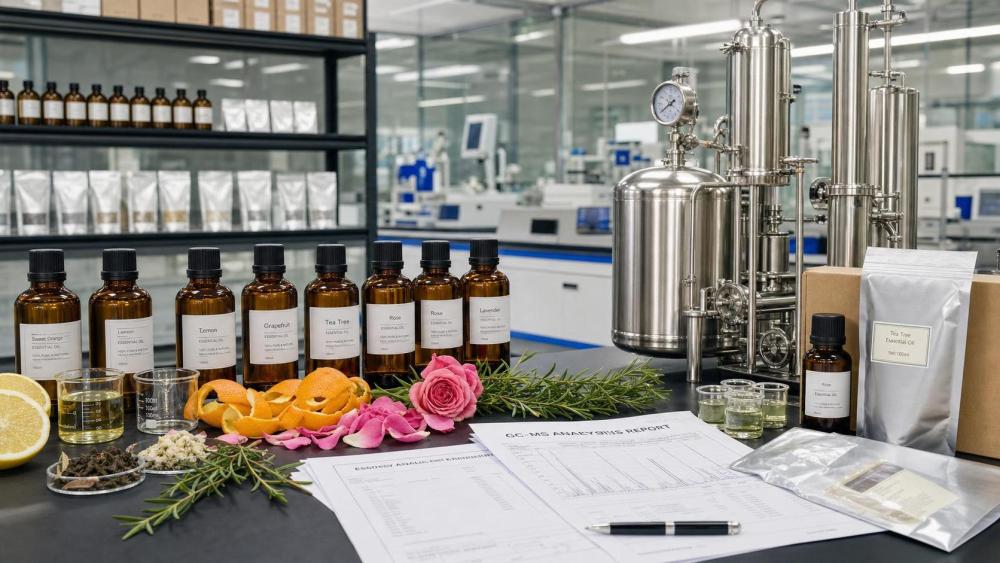
The essential oil extracts price in 2026 still swings sharply between suppliers, even for materials with similar names.
That surprises many teams at first, because aroma alone rarely explains the difference.
In practice, price is built from agricultural volatility, extraction yield, purity targets, compliance workload, and expected performance in finished formulas.
A citrus oil for beverage flavoring, for example, is evaluated differently from a rose extract for prestige fragrance or a tea tree fraction for cosmetic actives.
That is why cost comparisons without context often lead to weak sourcing decisions.
Across food, fragrance, personal care, and household applications, FFAI tracks these differences as part of a wider ingredient intelligence view.
The same market forces shaping preservatives, thickeners, aroma systems, cosmetic actives, and surfactants also reshape essential oil buying logic.
What actually sits behind the essential oil extracts price?
The short answer is yield and specification.
Some botanicals produce large oil volumes with stable chemistry. Others need far more raw material and careful processing for one kilogram of usable extract.
Rose, neroli, and sandalwood remain classic examples of materials where farming limits and low yield push the essential oil extracts price upward.
Extraction method matters too. Steam distillation, cold pressing, solvent extraction, CO2 extraction, and molecular fractionation create different cost structures.
A lower-cost distillate may work for ambient fragrance.
A more expensive selective extract may be needed for clean top notes, lower wax content, or better stability.
Then comes the specification layer. Natural does not mean interchangeable.
If a formula requires narrow ranges for allergens, peroxide value, optical rotation, residual solvents, or microbial limits, cost rises quickly.
Suppliers are not just selling aroma. They are selling process control, consistency, and risk reduction.
A quick comparison helps frame the cost logic
Why do two similar-looking quotes lead to very different delivered value?
Because the invoice line rarely shows the whole economics.
A lower essential oil extracts price can hide dilution, weak traceability, unstable odor profile, or missing compliance documents.
That may look acceptable during sourcing, then become expensive during formulation, claims review, or scale-up.
In fragrance, inconsistency affects evaporation curve and dry-down character.
In food, trace contaminants or oxidation can distort flavor delivery and shelf-life behavior.
In cosmetics, color drift, sensitizer profile, and impurity levels may trigger reformulation or market restrictions.
More common than expected is the gap between quote price and usable inclusion cost.
If one extract is cheaper but needs higher dosage, the true formula cost may end up worse.
FFAI often frames this through an end-use lens: not just price per kilogram, but price per validated performance outcome.
Questions worth asking before comparing offers
- Is the material a whole oil, a fraction, a folded oil, or a reconstituted blend?
- Does the specification match the exact regulatory market and product type?
- What is the retention or sensory impact at actual use level?
- How much batch-to-batch variation has been recorded over the past year?
- Which tests are routine, and which are only available on request?
Which applications push the essential oil extracts price higher in 2026?
The highest pricing pressure usually appears where compliance and performance must coexist.
Food, fine fragrance, and active-led cosmetics are the clearest examples.
For food use, aroma is only part of the equation.
Oxidative stability, clean processing, contaminant control, and documentation can all raise the essential oil extracts price.
For premium perfumery, the market pays for nuance, diffusion, and evolution over time on skin or substrate.
That rewards highly selective fractions and stable origin management.
For anti-aging or scalp-care cosmetics, the challenge shifts again.
Aromatic materials may need to work alongside peptides, preservatives, and surfactant systems without destabilizing the formula.
In other words, compatibility becomes part of the cost.
By contrast, household fragrance or basic air-care often tolerates wider quality ranges, so price bands can be broader.
Application sensitivity by segment
How should you judge a fair essential oil extracts price instead of chasing the lowest quote?
A fair price is one that matches risk, performance, and supply continuity.
That means building a comparison grid before discussing discounts.
Start with intended use, target geography, required documents, and acceptable sensory variance.
Then compare offers against the same benchmark.
A practical judging method is to score five areas: authenticity, compliance, application fit, supply resilience, and cost-in-use.
This reduces the chance of buying an apparently low-cost oil that later fails stability or audit review.
Where possible, ask for pilot-scale retention samples from more than one batch.
For 2026 contracts, it also helps to request origin flexibility options.
Climate disruption, freight shifts, and regional compliance changes remain active pricing variables.
A simple decision checklist
- Confirm the exact botanical name and extraction method.
- Match technical documents to destination market requirements.
- Review GC-MS or equivalent identity data for each lot.
- Test formula performance at realistic dosage levels.
- Check lead time, safety stock, and alternate origin strategy.
- Calculate delivered cost, not only quoted cost.
What mistakes make essential oil sourcing more expensive later?
The first mistake is treating all natural extracts as commodity-equivalent.
That assumption ignores chemistry, crop variability, and intended function.
Another frequent issue is approving a sample without checking scale consistency.
A beautiful lab sample does not guarantee stable industrial supply.
Documentation is also underestimated.
When allergen files, traceability records, or regulatory statements arrive late, development timelines slow down and real costs rise.
There is also the purity trap.
Buying a very high-spec extract for a basic application can waste budget without adding measurable value.
The better approach is specification right-sizing.
This is where FFAI-style cross-category intelligence becomes useful, because fragrance, food preservation, rheology, and active compatibility often intersect in one formula system.
When those interactions are understood early, the essential oil extracts price becomes easier to judge on business value rather than headline cost.
So, what is the smart next step in 2026?
Start by defining what the extract must actually do.
Is the priority aroma impact, clean-label positioning, regulatory fit, active support, or long-term supply security?
Once that is clear, the essential oil extracts price becomes a comparison tool, not a distraction.
Use a shortlist with aligned specifications, test on real formulations, and compare total delivered value across batches and regions.
The most reliable decisions usually come from combining market data, technical evidence, and compliance foresight.
That is especially relevant in 2026, when ingredient economics are increasingly shaped by both molecular performance and documentation discipline.
A grounded review of yield, purity, application fit, and supply resilience will do more for cost control than negotiating on unit price alone.
The next practical move is to build one evaluation sheet for current quotes and one risk watchlist for the next buying cycle.
Related News
- Which essential oil applications suit sensitive skincare formulas?Sep 28, 2026Aromatics & Perfumery Fellow
- Essential Oil Extracts Price: What Drives Cost Differences in 2026Jul 12, 2026Aromatics & Perfumery Fellow
- Supercritical Essential Oil Applications: Best Uses by Product TypeJul 10, 2026Aromatics & Perfumery Fellow
- Ningbo Tightens CO₂ Extract Shipping DeclarationsJul 09, 2026Aromatics & Perfumery Fellow
Related News
- 00
0000-00
What drives fragrance ingredients price changes in bulk orders? - 00
0000-00
How to assess a food antioxidants distributor’s traceability practices - 00
0000-00
How minimum order quantities shape private label ingredient sourcing costs - 00
0000-00
What drives personal care ingredient price volatility in sourcing - 00
0000-00
What drives micelles price differences in cosmetic formulations?
Aromatics & Perfumery Fellow
Weekly Insights
Stay ahead with our curated technology reports delivered every Monday.