





Why Product Type Changes the Best Uses for Supercritical Essential Oil Applications
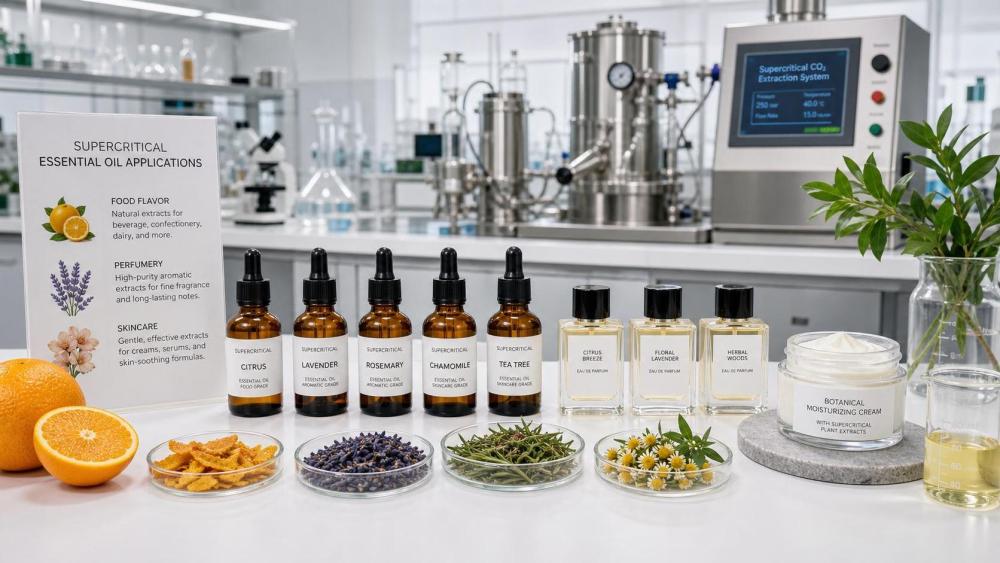
Supercritical essential oil applications are rarely judged by aroma alone. In practical formulation work, extraction behavior must match the product’s real performance target.
That is why the same botanical source can fit one category well and create friction in another. Volatility, wax content, oxidation resistance, and residue profile all matter differently.
Within the FFAI view of food, fragrance, cosmetic actives, and functional household systems, this distinction is especially important. End-use value depends on sensory impact, stability, safety, and compliance working together.
A supercritical extract often retains a broader molecular range than steam-distilled oil. That can improve authenticity, but it can also change color, mouthfeel, solubility, or skin feel.
So the better question is not whether supercritical extraction is superior in general. The better question is where supercritical essential oil applications create measurable advantage by product type.
In Food Flavor Systems, Authenticity Helps Only When the Matrix Can Carry It
Food is one of the strongest use cases for supercritical essential oil applications, especially when a formula aims for fresh botanical character without heavy thermal notes.
Beverages, confectionery fillings, dairy bases, and savory seasonings do not behave the same way. A clear beverage may reject heavier fractions that work beautifully in a sauce or bakery cream.
In practice, the main judgment point is matrix compatibility. If the extract carries lipophilic compounds beyond the target flavor window, clarity, dispersibility, or shelf stability can become difficult.
More stable systems, such as fat-based fillings or snack coatings, usually handle broader extracts better. They can translate complexity into longer-lasting aroma without exposing every minor fraction.
This is where supercritical essential oil applications align with FFAI’s wider interest in preservatives and rheology. Flavor performance is not isolated. Oxidation control and texture architecture shape aroma release over time.
A common mistake is choosing the richest extract for premium positioning, then discovering that process heat, low pH, or emulsifier choice strips away the expected sensory edge.
What Usually Matters Most in Food Use
- Thermal exposure during baking, pasteurization, or hot-fill processing
- Oil dispersibility in water-based systems
- Color impact on clean-label appearance
- GRAS status and regional flavor compliance
- Oxidation behavior during target shelf life
Fine Fragrance Works Differently Because Evolution on Skin Matters More Than First Impact
In perfumery, supercritical essential oil applications are often valued for depth and botanical realism. Yet fragrance success depends less on extraction novelty and more on evaporation choreography.
A supercritical jasmine, ginger, or pink pepper extract may deliver a more textured opening. Still, that benefit only holds if the heart and base remain balanced after wear.
This is why fragrance evaluation looks beyond the bottle. Skin warmth, alcohol compatibility, fixative system, and discoloration risk can completely reshape the best uses of supercritical essential oil applications.
More selective use is often better than building an entire accord from supercritical materials. They excel when a formula needs lift, natural diffusion, or a less cooked botanical signature.
They are less effective when the concept depends on crystal-clear top notes or tightly controlled allergen exposure. Rich extracts may blur rather than sharpen the intended olfactory architecture.
Cosmetic and Active Beauty Formats Need a Harder Look at Purity, Feel, and Claims
For skin care, supercritical essential oil applications sit at the intersection of sensory design and efficacy storytelling. That creates opportunity, but also raises a stricter screening threshold.
A facial oil, balm, or anhydrous serum may benefit from a fuller extract profile. The result can feel more natural, more premium, and closer to the original plant expression.
However, emulsions, eye-area products, and anti-aging systems require tighter control. Odor persistence, dermal tolerance, photostability, and CPNP-related documentation become central, not secondary.
FFAI’s focus on high-end cosmetic actives makes this distinction practical. A peptide-led serum cannot afford an extract that destabilizes emulsifier balance or distracts from clinical positioning.
In actual product development, the best uses are usually supportive rather than dominant. Supercritical essential oil applications work well when they enhance sensorial identity without competing with active delivery goals.
Misjudgment often starts with naturalness claims. A cleaner extraction story does not automatically mean lower irritation potential or easier compatibility with preservatives, packaging, and antioxidants.
Household and Functional Consumer Goods Favor Stability Over Romance
In detergents, cleaners, and wash products, supercritical essential oil applications have a narrower but still meaningful role. The value lies in controlled sensorial differentiation under harsh formulation conditions.
Surfactant systems can suppress, distort, or accelerate fragrance loss. A beautiful extract on a blotter may disappear quickly in alkaline liquid soap or become unstable in oxidizing cleaners.
That makes compatibility screening essential. Solubility behavior, foaming interaction, packaging permeability, and stain risk usually matter more here than extraction romance or botanical storytelling.
The best uses often appear in premium hand wash, hair care cleansing, or fabric refresh categories where mildness, after-scent, and perceived quality justify closer formula tuning.
In bleach-adjacent or highly alkaline systems, many supercritical essential oil applications lose their advantage. Standardized aroma materials may deliver more reliable performance at lower technical risk.
Different Product Types Shift the Evaluation Criteria
The same extract can perform well in one category and fail in another because the decision frame changes. The table below keeps those differences visible during assessment.
Where Selection Errors Usually Happen
One frequent error is treating all natural extracts as interchangeable. Supercritical essential oil applications can differ widely in density, co-extractives, and sensory persistence even within one botanical family.
Another error is checking only the supplier specification sheet. Real suitability appears after dilution, processing, storage, and packaging interaction are tested under category-specific conditions.
Cost analysis also gets distorted easily. A higher-priced extract may reduce dosage, improve top-note retention, or support cleaner sensory positioning. But that benefit must be proven in the final system.
Regulatory assumptions can also mislead. Food, cosmetic, and household frameworks do not share the same tolerance for claims, impurities, allergens, or residual profile interpretation.
A Practical Way to Match Supercritical Essential Oil Applications to Real Use
A workable assessment path starts with the product type, not the ingredient story. Define the matrix, process stress, target sensory role, and compliance pathway before comparing extracts.
- Map the extract against heat, light, oxygen, and pH exposure
- Check whether broad molecular profile helps or complicates the formula
- Test in the final base, not only in a neutral carrier
- Review category-specific documentation before scale-up
- Compare sensory gain against total implementation cost
That approach reflects the broader FFAI logic: molecular nuance only creates business value when it survives process reality, consumer use, and regulatory review.
For the next step, organize supercritical essential oil applications by product family, then verify which extracts improve the actual end-use signal rather than the ingredient narrative alone.
Related News
- Which essential oil applications suit sensitive skincare formulas?Sep 28, 2026Aromatics & Perfumery Fellow
- Essential Oil Extracts Price: What Drives Cost Differences in 2026Jul 12, 2026Aromatics & Perfumery Fellow
- Supercritical Essential Oil Applications: Best Uses by Product TypeJul 10, 2026Aromatics & Perfumery Fellow
- Ningbo Tightens CO₂ Extract Shipping DeclarationsJul 09, 2026Aromatics & Perfumery Fellow
Related News
- 00
0000-00
What drives personal care ingredient price volatility in sourcing - 00
0000-00
What drives micelles price differences in cosmetic formulations? - 00
0000-00
How to assess color stability from a natural food colors manufacturer - 00
0000-00
When does amino acid surfactant powder improve cleanser mildness? - 00
0000-00
How to verify a cosmetic nanotechnology supplier's safety documentation
Aromatics & Perfumery Fellow
Weekly Insights
Stay ahead with our curated technology reports delivered every Monday.