





CPNP compliance for EU market has become a decisive gate for cosmetics entering Europe, especially for brands built on active ingredients, fragrance systems, and efficacy-led positioning. A product can be commercially ready, sensorially strong, and clinically promising, yet still stall before launch because the notification package does not align with regulatory expectations. In practice, the most expensive delays rarely come from one major violation. They come from several small filing mistakes that expose weak documentation control.
That matters across the wider FMCG ingredient landscape. Companies working with anti-aging compounds, essential oil extracts, surfactant systems, and preservation technologies often operate across multiple categories and export routes. In that environment, CPNP compliance for EU market is not only a legal step. It is also a signal that formulation data, label claims, and responsible person coordination are mature enough for European distribution.
Why CPNP filing deserves closer attention
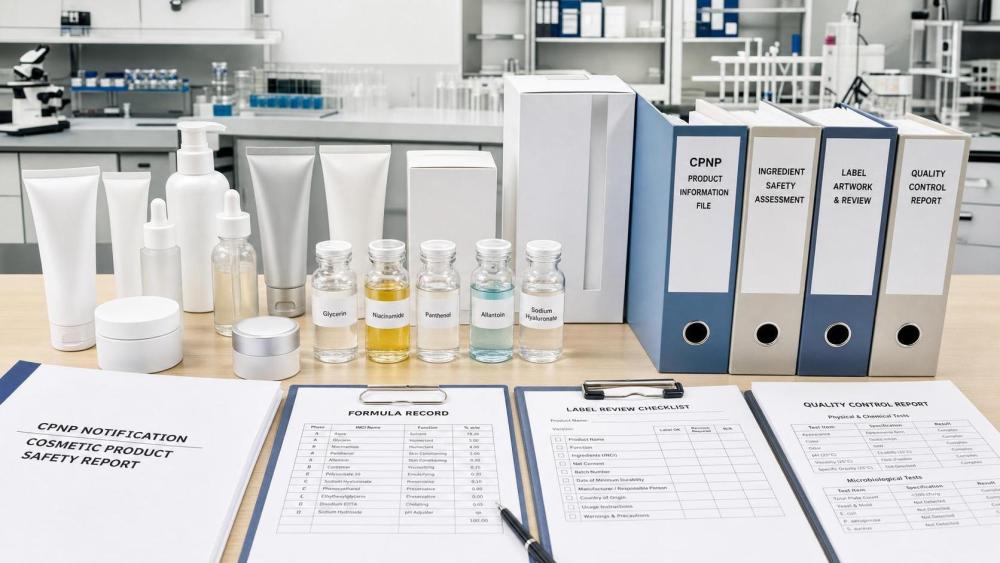
The Cosmetic Products Notification Portal is the EU system used before a cosmetic product is placed on the market. Filing does not replace broader compliance duties, but it sits at the center of market readiness.
A successful notification depends on connected records. Formula data, product category, labeling language, nanomaterial status, and responsible person details must support each other. When they do not, questions surface quickly.
This is especially relevant for businesses handling premium actives. FFAI’s coverage of fragrance chemistry, transdermal performance, preservative systems, and high-end cosmetic compounds reflects the same reality: technical sophistication means little without disciplined compliance translation.
What CPNP compliance for EU market really involves
At a basic level, CPNP compliance for EU market means preparing and submitting accurate product information before sale in the European Union. Yet the practical scope is broader than a form submission.
It touches formulation governance, supplier data quality, packaging review, and internal ownership. The filing must match the Product Information File, safety assessment logic, and the final commercial presentation.
In other words, the portal entry is the visible tip of a much larger compliance structure. If upstream data is unstable, the filing becomes unstable too.
Core records that usually drive success or failure
- Exact product identity and category
- Responsible person details in the EU
- Quantitative and qualitative ingredient information
- Presence of substances of concern or nanomaterials
- Label elements consistent with intended market version
- Emergency and traceability information
The most common filing risks
Most notification setbacks follow a familiar pattern. The issue is not that teams ignore compliance. The issue is that data sits in separate systems, owned by separate functions, and updated at different times.
Incomplete product data
One of the fastest ways to compromise CPNP compliance for EU market is submitting product information that is technically correct but operationally incomplete. Shade variants, pack sizes, or fragrance versions are often overlooked.
This happens frequently in portfolios with rapid launches. Marketing names change late. Regional SKUs split after artwork approval. The portal entry then reflects an earlier commercial draft.
Ingredient inconsistencies
Ingredient mismatches are another repeated problem. The formula used for safety assessment may differ from the formula uploaded for notification. Supplier updates can also change INCI naming or impurity profiles.
For businesses using sophisticated peptides, essential oils, surfactant blends, or multifunctional preservatives, these differences can carry real regulatory consequences. Small naming errors may point to a larger documentation gap.
Labeling gaps
A label can be attractive and still fail regulatory scrutiny. Missing warnings, inconsistent function descriptions, or unsupported benefit language often trigger downstream corrections.
This is common in premium cosmetics where efficacy claims and sensorial storytelling sit close together. The commercial message must stay aligned with the notified product and the safety rationale.
Unclear responsible person arrangements
Some organizations treat the responsible person as an administrative requirement. In reality, this role anchors accountability in the EU. If contractual scope, document access, or update responsibilities are vague, filing quality usually suffers.
The risk increases when one entity develops the formula, another owns the brand, and a third handles importation. Without clear control, no one fully owns the compliance chain.
Practical fixes that reduce delay and rework
The most effective response is not more paperwork. It is better alignment between formulation, regulatory review, labeling, and launch management. CPNP compliance for EU market improves when one source of truth governs all market-facing records.
Build the review around change control
Many filing errors appear after the technical work is finished. A preservative source changes. A fragrance allergen statement is revised. A pack language panel is shortened. Each change can affect CPNP compliance for EU market.
That is why change control matters more than one-time checking. Compliance should follow the product through final commercialization, not stop at initial formula approval.
Where these issues show up most often
Risk patterns differ by product type. High-turnover personal care lines face version complexity. Premium anti-aging products face deeper scrutiny around actives, claims, and ingredient characterization.
Fragrance-led products add another layer. Essential oil extracts, allergen disclosure, and naming discipline must stay consistent across supplier records and commercial labels.
Ingredient suppliers also have exposure, even when they are not the final notifier. Weak technical dossiers, ambiguous composition details, or incomplete impurity information can create downstream filing problems for brand owners.
This is where intelligence-led support becomes useful. FFAI’s focus on compliance, sensory chemistry, and high-purity functional ingredients reflects a practical market need: export growth depends on translating complex science into defensible regulatory records.
A stronger internal standard for EU readiness
A workable standard for CPNP compliance for EU market usually includes three disciplines. First, every market SKU should map to a controlled formula and label version. Second, supplier data should be reviewed for regulatory usability, not just technical completeness.
Third, the responsible person arrangement should be active, not symbolic. Access to the Product Information File, post-market update duties, and incident escalation should already be defined before launch.
Useful checkpoints before submission
- Confirm the final formula version used in safety assessment
- Verify INCI names against supplier and label documents
- Check warnings, function, and market naming consistency
- Review whether any ingredient status has changed recently
- Ensure the responsible person can access all supporting files
- Record a last-change date for every critical compliance document
What to evaluate next
For any company relying on advanced actives, fragrance systems, or fast-moving cosmetic portfolios, CPNP compliance for EU market should be reviewed as part of launch governance, not as a final checkbox. The real question is whether internal data, supplier inputs, and packaging decisions still point to the same product.
A useful next step is to audit one live or upcoming SKU from formula approval to portal entry. That exercise usually reveals where version control breaks, where labels drift, and where responsible person coordination needs tightening. Once those gaps are visible, EU market entry becomes less about reacting to filing problems and more about building a repeatable compliance system.
Related News
- How to verify a cosmetic nanotechnology supplier's safety documentationOct 04, 2026Dr. Chloe Vance
- How to set a control sensory flavour standard for panel consistencySep 27, 2026Dr. Chloe Vance
- How to verify compliance documents for cosmetic active compoundsSep 19, 2026Dr. Chloe Vance
- How to verify food grade flavor formulation ingredients for safetySep 18, 2026Dr. Chloe Vance
Related News
- 00
0000-00
Can biomimetic peptides in cosmetics reduce the look of wrinkles? - 00
0000-00
How to assess a bio-based thickener manufacturer's batch consistency - 00
0000-00
Verifying halal status of hydrocolloid ingredients in the Middle East - 00
0000-00
How to interpret active matter on a surfactant specification sheet - 00
0000-00
How Do You Test Hydrocolloid Viscosity After Changing a Thickener?
Dr. Chloe Vance
Weekly Insights
Stay ahead with our curated technology reports delivered every Monday.