





For business evaluators, flavors & fragrances compliance is no longer a back-office checklist—it is a frontline risk filter for market access, brand trust, and investment confidence.
From FDA GRAS status in food applications to IFRA conformity in fine fragrance, personal care, and home care formulations, one overlooked restriction can trigger delays.
This guide highlights the key GRAS and IFRA risk points to verify before supplier approval, product launch, or cross-border commercialization.
Why Flavors & Fragrances Compliance Needs a Checklist
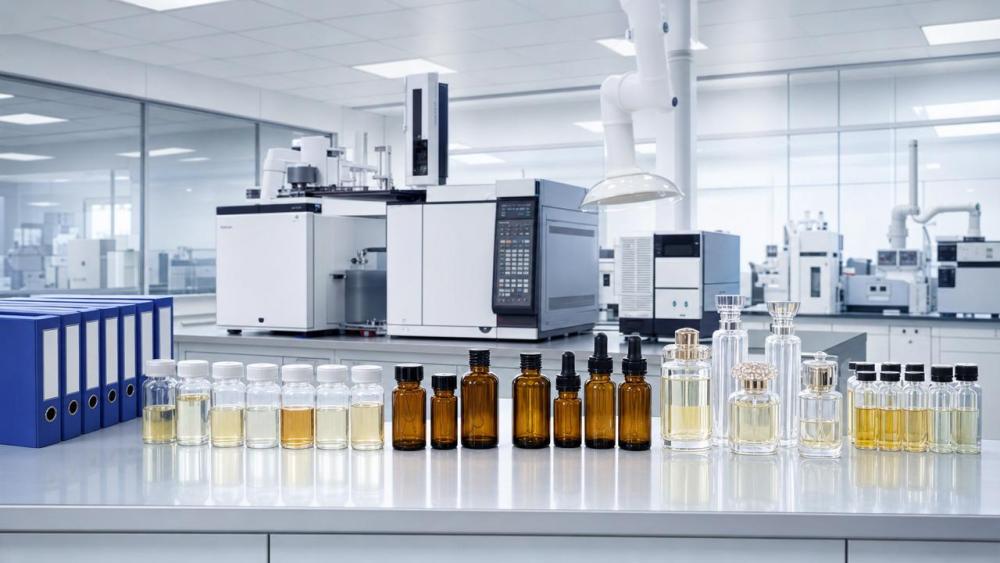
Flavors & fragrances sit between chemistry, sensory design, food law, cosmetics regulation, and consumer safety expectations.
A material may be acceptable in one category, restricted in another, and commercially risky when used in a different geography.
GRAS and IFRA are not interchangeable. GRAS supports food-use safety. IFRA addresses fragrance safety across exposure categories.
A checklist turns scattered certificates, formulas, concentration limits, and toxicology notes into a repeatable decision process.
For flavors & fragrances, that discipline helps avoid late-stage reformulation, retailer rejection, customs questions, and credibility loss.
Core GRAS Risk Checks for Food Flavor Applications
GRAS review should begin before commercial quotation, not after trial production.
The goal is to confirm legal status, intended use, exposure level, and documentation strength.
- Verify GRAS status by substance identity, not trade name, because blends may hide carriers, solvents, or processing aids requiring separate review.
- Confirm intended food categories, since a flavor ingredient cleared for beverages may create exposure concerns in confectionery, bakery, or dairy systems.
- Check use level against FEMA GRAS, FDA references, supplier limits, and internal exposure assumptions before approving scale-up production.
- Request full compositional disclosure under confidentiality when natural extracts contain allergens, residual solvents, pesticide residues, or restricted aromatic compounds.
- Review carrier systems such as ethanol, propylene glycol, triacetin, gum arabic, or maltodextrin for local labeling and dietary suitability.
- Document heat, pH, and processing stability, because degradation products can change the safety profile of flavors & fragrances in food matrices.
- Confirm natural, organic, non-GMO, halal, kosher, vegan, and allergen claims with certificates that match the exact production site.
GRAS does not mean unrestricted use. It means safety under intended conditions, supported by qualified expert consensus or regulatory recognition.
For flavors & fragrances suppliers, the strongest GRAS file connects identity, specifications, exposure, toxicology, and manufacturing controls.
Core IFRA Risk Checks for Fragrance Applications
IFRA compliance is category-specific and concentration-driven.
A fragrance oil may be compliant in candles, but non-compliant in leave-on body cream.
- Identify the correct IFRA category before calculation, especially for leave-on cosmetics, rinse-off products, air care, detergents, and oral care.
- Obtain the latest IFRA certificate, including amendment reference, maximum use level, product category, and supplier signature.
- Screen restricted materials such as citral, eugenol, coumarin, oakmoss derivatives, hydroxycitronellal, and methyl salicylate.
- Calculate final concentration in the finished product, not only fragrance concentrate concentration, to prevent false compliance assumptions.
- Check fragrance allergens required under EU, UK, ASEAN, or other local cosmetic and detergent labeling frameworks.
- Review phototoxicity risks for citrus oils, bergamot fractions, furocoumarins, and other light-reactive natural fragrance materials.
- Reassess formulas after supplier substitution, because small changes in aroma chemicals can alter the IFRA conformity conclusion.
IFRA certificates are essential, but they are not complete safety dossiers.
A serious flavors & fragrances review also checks SDS data, allergen declarations, impurities, stability, and regional restrictions.
Decision Table: GRAS vs IFRA Risk Focus
This table separates the logic behind food flavor approval and fragrance conformity.
It also prevents a common mistake: using one certificate to justify every flavors & fragrances application.
Application Notes by Product Scenario
Food and Beverage Systems
In beverages, solubility, cloud stability, acidity, preservatives, and packaging migration can affect both safety and sensory performance.
Flavors & fragrances used in food must be assessed as consumed, including dilution ratio and cumulative daily intake.
Fine Fragrance and Personal Care
Leave-on applications require stricter attention to sensitization, dermal exposure, phototoxicity, and fragrance allergen labeling.
For premium perfumes, IFRA limits can influence the creative formula, especially when naturals define the olfactory signature.
Home Care and Air Care
Detergents, aerosols, diffusers, and candles create inhalation, surface contact, and environmental release considerations.
Flavors & fragrances in home care need category mapping, volatile profile review, and compatibility checks with surfactants or solvents.
Commonly Overlooked Compliance Risks
Assuming “natural” means lower risk. Natural essential oils may contain allergens, restricted constituents, contaminants, or variable marker compounds.
Ignoring formula concentration drift. A compliant trial batch can fail after dosage changes, fragrance boosters, or cost-driven ingredient replacement.
Using expired certificates. IFRA amendments evolve, and flavors & fragrances files must reflect the latest regulatory and scientific position.
Missing regional labeling rules. EU cosmetic allergens, US food labeling, and local language requirements can differ from supplier paperwork.
Separating compliance from sensory reformulation. Removing a restricted aroma chemical may disturb top notes, mouthfeel perception, or consumer preference.
Neglecting impurity control. Residual solvents, heavy metals, pesticide residues, nitrosamine risks, or oxidation byproducts can become decisive audit findings.
Practical Execution Checklist Before Approval
- Build one compliance folder per material, including specification, SDS, COA, allergen statement, IFRA certificate, and GRAS support where relevant.
- Map every formula to final product category, target country, exposure route, dosage level, and consumer claim before commercial approval.
- Ask suppliers to disclose change-control triggers, including source plant, synthesis route, carrier system, production site, and regulatory amendment updates.
- Run a concentration calculation at finished-product level, then archive the calculation with version number and responsible reviewer.
- Test stability under realistic heat, light, oxygen, pH, and packaging conditions to detect degradation or sensory shift.
- Schedule periodic revalidation, because flavors & fragrances compliance can change through IFRA amendments, new toxicology, or market expansion.
Execution should be cross-functional but evidence-driven.
Regulatory, R&D, quality, sourcing, and commercial teams should work from the same controlled document set.
How FFAI Supports Safer Flavors & Fragrances Decisions
FFAI observes the hidden chemistry behind taste, smell, preservation, texture, cleansing, and cosmetic efficacy.
Its intelligence approach connects molecular sensory design with practical compliance requirements for global FMCG and health-related markets.
For flavors & fragrances, this means linking aroma performance with GRAS evidence, IFRA conformity, allergen review, and export-readiness documentation.
A strong review does not slow innovation. It protects launch timing, premium positioning, and long-term formula credibility.
Summary and Action Guidance
Flavors & fragrances compliance depends on intended use, exposure, category, geography, and current scientific standards.
GRAS answers whether a food flavor is safe under defined consumption conditions.
IFRA answers whether a fragrance formula meets category-based safety limits.
Before approving any flavors & fragrances supplier or formulation, request complete documentation, verify category fit, calculate final concentration, and archive conclusions.
The next step is simple: create a controlled GRAS and IFRA review file for each material before market launch.
Related News
- How to verify a cosmetic nanotechnology supplier's safety documentationOct 04, 2026Dr. Chloe Vance
- How to set a control sensory flavour standard for panel consistencySep 27, 2026Dr. Chloe Vance
- How to verify compliance documents for cosmetic active compoundsSep 19, 2026Dr. Chloe Vance
- How to verify food grade flavor formulation ingredients for safetySep 18, 2026Dr. Chloe Vance
Related News
- 00
0000-00
Can biomimetic peptides in cosmetics reduce the look of wrinkles? - 00
0000-00
How to assess a bio-based thickener manufacturer's batch consistency - 00
0000-00
Verifying halal status of hydrocolloid ingredients in the Middle East - 00
0000-00
How to interpret active matter on a surfactant specification sheet - 00
0000-00
How Do You Test Hydrocolloid Viscosity After Changing a Thickener?
Dr. Chloe Vance
Weekly Insights
Stay ahead with our curated technology reports delivered every Monday.