





As 2026 approaches, quality and safety teams in flavors & fragrances face rising compliance pressure across labeling, restricted substances, traceability, allergen disclosure, and cross-border market access.
A single overlooked requirement can trigger recalls, shipment delays, customer complaints, or reputational damage. For most businesses, the highest risks are not dramatic regulatory changes, but weak internal control over familiar obligations.
For quality control and safety managers, the practical priority is clear: verify substance status, confirm document consistency, strengthen traceability, and align labels, specifications, and export files before authorities or customers find gaps first.
What searchers really need to check before 2026
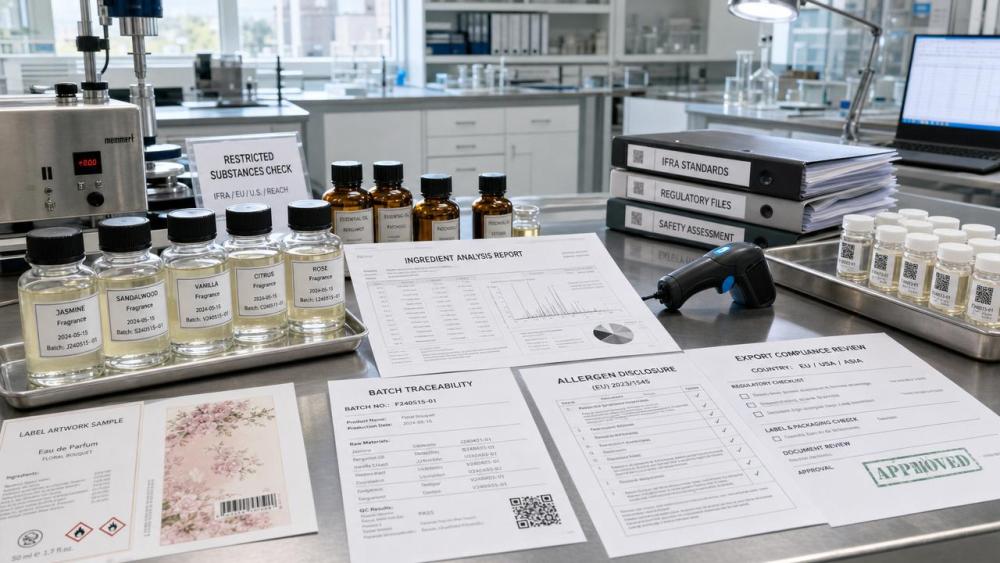
Professionals searching for flavors & fragrances compliance risks to check in 2026 are usually not looking for theory. They want a realistic risk map they can use in audits, supplier reviews, and launch decisions.
The core search intent is preventive. Readers want to know which compliance failures are most likely to cause shipment holds, reformulation costs, rejected registrations, or customer escalation in the next planning cycle.
That makes this topic especially relevant for quality personnel, regulatory teams, and safety managers working across food, home care, personal care, and fragrance applications where documentation precision matters as much as formula performance.
The most useful way to approach 2026 is not to predict one single new rule. It is to identify weak points where changing expectations, broader enforcement, and fragmented regional requirements create silent exposure.
Risk 1: Restricted substances and formula status are no longer safe to “assume”
One of the biggest compliance risks in flavors & fragrances is relying on old substance assessments. A raw material that was acceptable in one market, application, or concentration may not remain acceptable everywhere.
This is especially risky for companies using complex fragrance compounds, essential oil fractions, processing aids, solvents, carriers, stabilizers, or trace constituents inherited from long-standing supplier relationships.
Quality teams should not only review headline ingredients. They should also check impurities, residual solvents, naturally occurring allergens, and by-products that may affect classification, disclosure, or customer acceptance.
In practice, the question is simple: do you have current evidence that every relevant component is allowed for its intended use, in its intended geography, at its intended concentration?
If the answer depends on outdated supplier declarations or assumptions from prior years, 2026 compliance exposure is already present. Regulatory risk often begins with incomplete verification, not intentional non-compliance.
Risk 2: Allergen disclosure gaps create avoidable customer and labeling failures
Allergen disclosure remains one of the most operationally sensitive issues in flavors & fragrances. Even when the formula itself is lawful, poor allergen communication can create labeling errors, reformulation delays, and customer mistrust.
For food applications, this means verifying whether allergenic carriers, processing media, or cross-contact risks have been properly captured. For fragrance applications, it means tracking declarable fragrance allergens accurately and consistently.
The problem is often not a lack of data, but inconsistent data flows. Supplier specifications, internal ERP fields, finished-goods labels, and customer technical documents may all describe the same product differently.
Quality managers should test whether allergen data can move cleanly from raw material intake to specification approval, artwork review, customer questionnaire response, and final market release without manual reinterpretation.
Where allergen statements are manually edited from one document to another, the risk of discrepancy rises sharply. That is where many compliance failures emerge during customer audits or post-market checks.
Risk 3: Labeling and claims language can create compliance problems even when formulas are acceptable
Many companies focus heavily on formula legality but underestimate wording risk. In 2026, labeling and claims scrutiny is likely to intensify because authorities and commercial buyers increasingly compare technical documentation with market-facing language.
For flavors & fragrances products, trouble often starts when names, descriptors, or marketing terms imply a regulatory status that has not been fully substantiated. “Natural,” “clean,” “free from,” and similar claims require careful support.
Even technical expressions can create confusion if they are used differently across regions. A compliant composition may still trigger review if ingredient listing conventions, functional descriptions, or warning statements are mismatched.
Quality and safety teams should therefore review labels as control documents, not just packaging outputs. Every commercial description should reconcile with formulation records, legal classifications, and customer-specific disclosure obligations.
A useful internal test is this: if a regulator, auditor, or multinational customer compares your label, specification sheet, SDS, and sales brochure side by side, will they see one coherent story?
Risk 4: Traceability systems often fail at the exact point where investigations begin
Traceability is now a frontline compliance issue, not just a recall tool. In flavors & fragrances, complex sourcing, frequent reformulation, and multilayer distribution make traceability failures especially dangerous.
When an authority or customer asks where a specific allergen, restricted component, botanical source, or solvent originated, companies must answer quickly and with evidence. Slow responses can signal weak control even before facts are confirmed.
The weak point is often batch linkage. Many businesses can identify approved suppliers, but struggle to connect specific incoming lots to production batches, retained samples, customer shipments, and supporting quality records.
Another common problem is document fragmentation. Purchasing records, lab approvals, warehouse release data, and customer COAs may sit in separate systems that do not reconcile efficiently under time pressure.
To reduce 2026 risk, perform a mock trace exercise now. Pick one finished flavor or fragrance product and verify whether your team can trace one step back and one step forward within hours, not days.
Risk 5: Supplier compliance files are often incomplete, inconsistent, or too old
For quality teams, supplier management is where many future compliance problems can be prevented early. Unfortunately, supplier files are often treated as static onboarding paperwork rather than living risk-control assets.
In flavors & fragrances, this is dangerous because raw material profiles can change due to origin shifts, process changes, crop variability, specification tightening, or revised legal interpretations in destination markets.
A strong supplier file should go beyond a basic specification and certificate. It should include current regulatory declarations, allergen status, contaminant information, change notification commitments, and contact pathways for urgent clarification.
Just as important is consistency across documents. If the specification, questionnaire, SDS, and statement of composition contain conflicting information, your company effectively inherits that ambiguity into its own compliance framework.
For 2026 planning, prioritize suppliers linked to high-risk naturals, multi-component fragrance blends, imported specialty ingredients, and materials used across multiple end markets with different labeling rules.
Risk 6: Cross-border market access is being shaped by documentation quality, not only product quality
Many flavors & fragrances companies assume that if a product is safe and performs well, market access will follow. In reality, export success often depends on documentation readiness as much as formulation acceptability.
Different markets may expect different statement formats, disclosure depths, naming conventions, or supporting evidence. The same ingredient can move smoothly into one region and face prolonged review in another.
Quality and safety managers should identify where their portfolio is most exposed to cross-border friction: food ingredients, fragrance compounds, cosmetic actives, or dual-use materials supplied into multiple regulatory environments.
Typical failure points include incomplete declarations, untranslated supporting records, unclear botanical identity, inconsistent compositional ranges, and missing confirmation for application-specific restrictions or notifications.
In 2026, companies with disciplined document standardization will move faster than competitors still rebuilding export files market by market. Good compliance systems reduce not only risk, but also commercial delay.
Risk 7: Change control is too weak for a world of tighter customer scrutiny
Not every compliance problem comes from a regulation update. Many come from internal changes that were not assessed thoroughly enough before release. In flavors & fragrances, even minor adjustments can affect declarations and marketability.
Examples include changing a solvent, switching a natural extract source, updating preservative systems, modifying a carrier, or replacing a supplier for cost or availability reasons. Each change may alter disclosure obligations.
Where change control is informal, commercial pressure can push revised materials into production before quality and regulatory impacts are fully assessed. That creates hidden risk that may surface months later.
Effective change control should force review of formulation, labeling, allergen status, restricted substance status, customer approvals, and export documentation before implementation, not after market complaints begin.
If your current process mainly asks whether the product still “works,” it is not sufficient for 2026 compliance expectations. It must also ask whether the product is still documented correctly for every target market.
How quality and safety teams can build a practical 2026 compliance checklist
For most organizations, the best response is not a massive regulatory project. It is a focused compliance review built around actual failure points in flavors & fragrances operations.
Start with a portfolio risk ranking. Identify products with complex composition, natural variability, broad export exposure, high customer visibility, or known documentation inconsistencies. These should be reviewed first.
Next, test seven control areas: ingredient legality, restricted substances, allergen disclosure, labeling alignment, batch traceability, supplier file completeness, and change control effectiveness. This creates a usable operational baseline.
Then verify document consistency across specification sheets, internal formula records, SDS files, certificates, customer questionnaires, and packaging text. In many businesses, inconsistencies matter more than missing data.
Finally, run at least one mock audit and one mock traceability event before 2026 planning closes. These exercises reveal whether your compliance system works in real time, under pressure, with current staff and tools.
What matters most for 2026
The main compliance risk in flavors & fragrances is not simply regulatory complexity. It is organizational overconfidence around familiar products, familiar suppliers, and familiar documents that have not been challenged recently.
For quality control and safety professionals, the smartest move is early verification. Review what you think you already know, because that is often where the most expensive gaps are hiding.
If formulas, labels, declarations, and traceability records remain aligned, your business will be far better prepared for audits, customer reviews, and cross-border checks. If they do not, 2026 will expose those weaknesses quickly.
In short, now is the time to treat compliance as a system of connected evidence. Companies that strengthen that system early will reduce recalls, avoid delays, and protect both commercial credibility and consumer trust.
Related News
- How to verify a cosmetic nanotechnology supplier's safety documentationOct 04, 2026Dr. Chloe Vance
- How to set a control sensory flavour standard for panel consistencySep 27, 2026Dr. Chloe Vance
- How to verify compliance documents for cosmetic active compoundsSep 19, 2026Dr. Chloe Vance
- How to verify food grade flavor formulation ingredients for safetySep 18, 2026Dr. Chloe Vance
Related News
- 00
0000-00
Verifying halal status of hydrocolloid ingredients in the Middle East - 00
0000-00
How to interpret active matter on a surfactant specification sheet - 00
0000-00
What Quality Checks Should You Run on Fragrance Ingredient Suppliers? - 00
0000-00
How to assess a flavor chemistry manufacturer's batch consistency - 00
0000-00
What drives fragrance ingredients price changes in bulk orders?
Dr. Chloe Vance
Weekly Insights
Stay ahead with our curated technology reports delivered every Monday.