





A practical food additive compliance guide is no longer a back-office reference. It is a daily control tool for formula review, supplier approval, and label release.
FDA scrutiny, retailer standards, and consumer-facing claims now intersect on one label. A small naming error or unsupported claim can create recalls, detentions, or costly reformulation.
That pressure is especially visible across the FMCG chain, where preservatives, thickeners, pigments, and flavors move quickly between markets, specifications, and packaging systems.
For companies tracking ingredient intelligence through platforms like FFAI, compliance is not separate from innovation. It sits beside stability, sensory performance, and export readiness.
Why food additive compliance matters more now
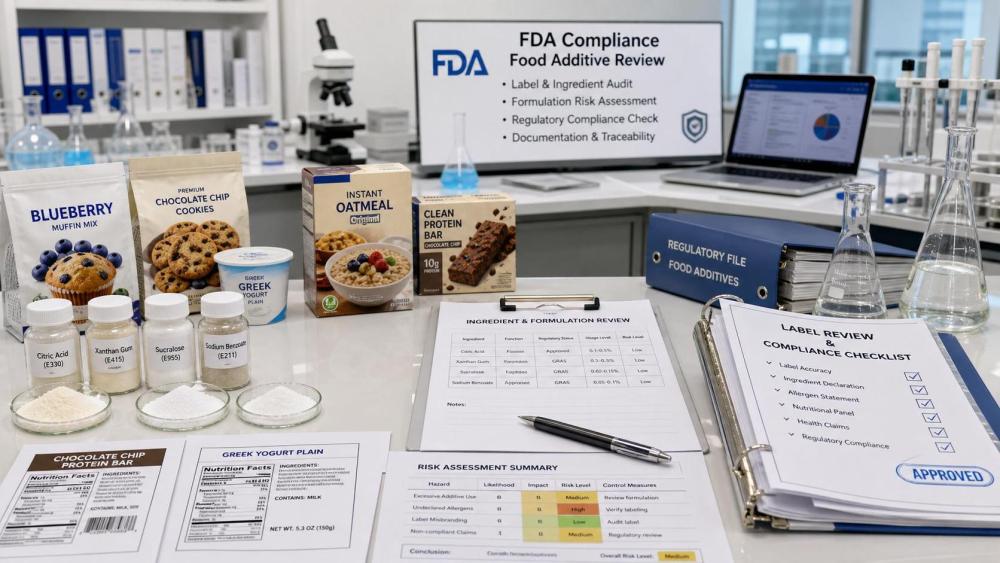
Food systems have become more global, but regulatory tolerance has not become more flexible. Products often combine imported ingredients, contract manufacturing, and multiple packaging revisions.
That means one formula may touch several risk points at once: additive identity, use level, technical effect, allergen crossover, and marketing language.
A strong food additive compliance guide helps connect those points early. It gives teams a way to test whether an ingredient is lawful, properly declared, and contextually defensible.
This has become critical for ingredients that shape shelf life and sensory experience, such as antioxidants, preservatives, hydrocolloids, natural color systems, and flavor preparations.
In practice, the issue is rarely one dramatic violation. More often, problems come from assumptions carried forward from old formulas, supplier summaries, or foreign-market artwork.
The core compliance question behind every additive
At the center of any food additive compliance guide is a simple question: can this substance be used here, at this level, for this purpose, with this label language?
That question sounds basic, yet it requires several checks. FDA status alone does not close the review.
Identity comes first
The exact identity of the additive must be confirmed. Trade names, blended systems, and regional synonyms often hide what is actually being added to the food.
A flavor system may include carriers, solvents, preservatives, or processing aids. A thickener blend may contain standardizers that need their own review.
Regulatory pathway must match use
Some substances rely on food additive regulations. Others are used under GRAS conclusions, prior sanction, or specific exemptions. Misreading that pathway creates immediate legal weakness.
This is where technical and regulatory intelligence need to meet. FFAI’s focus on ingredient behavior and compliance tracking reflects that reality.
Function and level must stay aligned
An additive may be acceptable in one category but not another. It may also be lawful only within use limits linked to a stated technical effect.
For example, an antioxidant used to protect oil stability should have supporting rationale, especially if the same product also carries a clean label positioning.
Where FDA and labeling risks usually appear
The most common failures are not always scientific. They often happen during translation from specification sheet to commercial label.
A food additive compliance guide should therefore be built around document flow, not just regulation text. The real risk sits between approval, purchasing, formulation, and packaging release.
Labeling pressure points that deserve closer review
Labels fail when they simplify too aggressively. That is common in crowded categories such as sauces, beverages, baked goods, dairy alternatives, and functional snacks.
Preservatives and antioxidants
These ingredients support shelf life, but they also attract attention from consumers and retailers. The declared name should match the substance and its regulatory context.
Claims like “no preservatives” require exceptional care when the formula includes multifunctional ingredients with preservative effects.
Colors, pigments, and visual claims
Natural color systems often support clean label positioning, but sourcing variability creates documentation gaps. Stability loss can also tempt undocumented substitutions during reformulation.
That makes version control essential. A label approved for one pigment source may become inaccurate after a silent supply change.
Flavors and compound systems
Flavor houses can deliver sophisticated sensory performance, yet flavor declarations remain one of the least transparent areas for internal reviewers.
A food additive compliance guide should require visibility into carriers, solvents, and incidental components, especially when natural claims are involved.
How to apply this guide in day-to-day review
Useful compliance work depends on repeatable checkpoints. Reviews should happen before commercialization, during change control, and after supplier updates.
- Confirm the full composition of every additive system, not only the commercial name.
- Match each ingredient to its regulatory basis and intended technical effect.
- Check formula levels against category-specific use permissions and limits.
- Review artwork wording against the latest specification and claim support file.
- Re-open the assessment after reformulation, supplier change, or market expansion.
This process is particularly important for ingredients at the center of FFAI coverage, including hydrocolloids, preservatives, flavor blends, and specialty active systems crossing adjacent FMCG sectors.
The wider lesson is clear. Technical performance and compliance status must travel together through the product lifecycle.
Signals that a formula needs deeper investigation
Some products deserve enhanced review even if the initial paperwork looks complete. These warning signs often appear before formal noncompliance is detected.
- The specification uses broad marketing language but limited compositional detail.
- The ingredient has different names across supplier documents and label drafts.
- A “natural” or “clean” claim depends on interpretation rather than evidence.
- The formulation includes imported blends adapted from another legal market.
- Heat, pH, or shelf-life conditions could alter additive behavior or dosage need.
Those signals matter because modern product systems are dynamic. An antioxidant stable in one baked format may behave differently in another matrix or process condition.
That is why ingredient intelligence platforms have value beyond data collection. They help connect regulatory status, application science, and commercialization risk.
A practical next step for stronger control
The most effective food additive compliance guide is usually not the longest one. It is the one that turns complex rules into a review path people actually follow.
Start with the additives that carry the highest exposure: preservatives, antioxidants, colors, flavor systems, and multifunctional blends. Then align specifications, legal basis, use levels, and label text in one record.
From there, watch change points carefully. New suppliers, reformulation for clean label goals, and export expansion are where hidden labeling risks usually surface first.
A disciplined food additive compliance guide does more than prevent errors. It supports faster approvals, steadier market access, and better decisions when ingredient performance and regulatory boundaries need to move together.
Related News
- How to verify a cosmetic nanotechnology supplier's safety documentationOct 04, 2026Dr. Chloe Vance
- How to set a control sensory flavour standard for panel consistencySep 27, 2026Dr. Chloe Vance
- How to verify compliance documents for cosmetic active compoundsSep 19, 2026Dr. Chloe Vance
- How to verify food grade flavor formulation ingredients for safetySep 18, 2026Dr. Chloe Vance
Related News
- 00
0000-00
Can biomimetic peptides in cosmetics reduce the look of wrinkles? - 00
0000-00
How to assess a bio-based thickener manufacturer's batch consistency - 00
0000-00
Verifying halal status of hydrocolloid ingredients in the Middle East - 00
0000-00
How to interpret active matter on a surfactant specification sheet - 00
0000-00
How Do You Test Hydrocolloid Viscosity After Changing a Thickener?
Dr. Chloe Vance
Weekly Insights
Stay ahead with our curated technology reports delivered every Monday.