





How to Verify GRAS Status for Food Formulation Ingredients Under FDA Rules
For technical evaluators, verifying whether food formulation ingredients have GRAS status is not a box-ticking exercise. It is a formulation decision with regulatory, safety, supply-chain, and labeling consequences. A supplier may state that an ingredient is “GRAS,” provide a short opinion letter, or point to an FDA GRAS Notice number. None of those items, by itself, proves that the exact material in the proposed formula is appropriate for the intended use.
The practical question is narrower and more demanding: is this specific substance, made by this manufacturing process, meeting these specifications, safe under its proposed conditions of use, and supported by evidence that qualifies as generally recognized among qualified experts? That is the standard a defensible review must address.
This distinction matters especially in complex food systems. A preservative that performs well in an acidic beverage may not have the same exposure profile in a neutral dairy alternative. A xanthan gum or other hydrocolloid may be familiar in food, yet its safety assessment still needs to match the proposed use level, food categories, impurity profile, and processing conditions. The same is true for flavor preparations, botanical extracts, antioxidant blends, and fermentation-derived ingredients.
Start with the FDA regulatory pathway, not the supplier’s marketing language
Under the Federal Food, Drug, and Cosmetic Act, a substance intentionally added to food is generally a food additive unless an exclusion applies. One important exclusion is GRAS: “generally recognized as safe” under the conditions of intended use. The legal framework is tied to section 201(s) of the Act, while FDA’s GRAS criteria and notification process are addressed in 21 CFR Part 170, including 21 CFR 170.30 and 21 CFR 170.36.
A recurring mistake is to describe GRAS as an FDA certification or approval. It is neither. FDA does not issue a “GRAS certificate.” A company may independently conclude that a use is GRAS, often based on a GRAS panel review. It may also submit a GRAS notice to FDA. After evaluating a notice, FDA may issue a letter stating that it has no questions at that time regarding the notifier’s conclusion. That response is meaningful, but it is not an approval of every commercial version of the ingredient or every future use.
For an evaluator, the first task is therefore to identify which situation applies:
- the substance is covered by an FDA food additive regulation or another explicit authorization;
- the supplier relies on a publicly available FDA GRAS Notice and FDA’s response letter;
- the supplier relies on a self-determined GRAS conclusion without an FDA notification; or
- the supplier is using a regulatory claim that does not actually address U.S. food use.
The last category deserves attention. “Food grade,” “natural,” “used in Europe,” “FEMA GRAS,” or “approved for cosmetics” do not automatically establish GRAS status for food formulation ingredients under FDA rules. These statements may be commercially relevant, but they answer different regulatory questions.
Verify the identity: similar names can hide materially different substances
The most useful early-stage discipline is to lock down identity before discussing toxicology. Trade names are not sufficient. Request the chemical name, common name, CAS number where applicable, molecular or compositional description, source material, production organism if fermentation is involved, and a clear explanation of whether the substance is a single compound, a mixture, or a standardized extract.
This is where reviews often become uncomfortable, but appropriately so. “Rosemary extract,” for example, can refer to preparations with different extraction solvents, marker compounds, carrier systems, residual solvents, and antioxidant concentrations. A flavor ingredient may be chemically identical to a previously reviewed substance, or it may be a reaction flavor with a substantially different composition. A fermentation-derived thickener can have the same headline name as a conventional material while differing in processing aids, purification steps, or residual proteins.
The GRAS evidence must map to the material actually being purchased. If the supplier cites a GRAS Notice for a comparable substance, compare the notice’s identity section and specifications against the supplier’s current technical data sheet, certificate of analysis, and manufacturing description. “Comparable” is a scientific conclusion, not a sales statement.
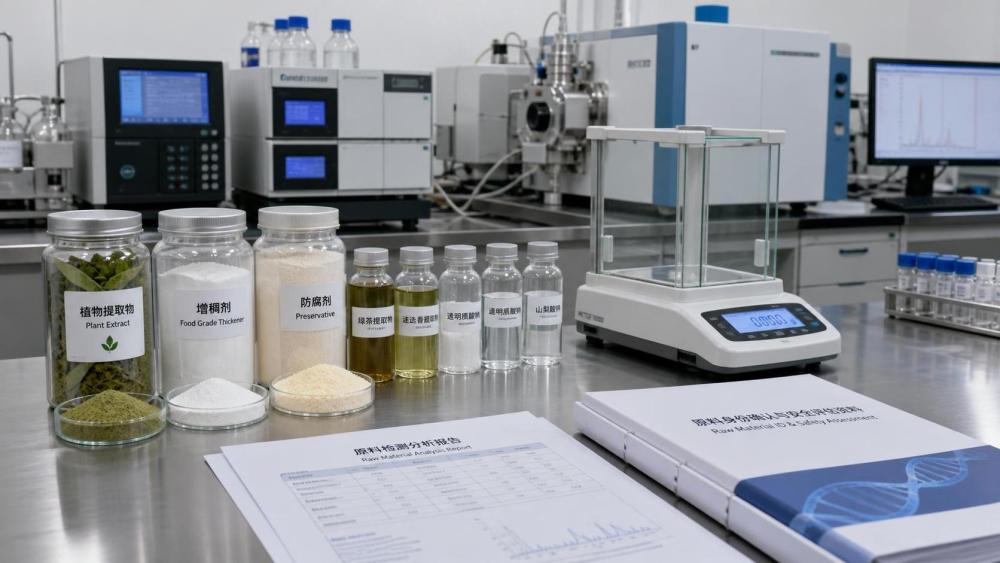
What to compare against the supporting dossier
Read the GRAS Notice for scope, not just its number
FDA’s public GRAS Notice Inventory is a valuable starting point. It can show the notifier, substance, intended conditions of use, and FDA’s response. But a notice number should be treated as the beginning of due diligence, not the conclusion.
Open the notice and read the use section carefully. Look for the food categories, maximum levels, population assumptions, and technical purpose. Then compare them with the real formulation. If a material was notified for use as a stabilizer in specified products, that does not automatically support a much higher dose in meal replacements, foods for young children, or a combination product that materially increases total dietary exposure.
Also read FDA’s response letter precisely. “No questions” is not interchangeable with a broad endorsement. In some cases, FDA correspondence can identify limitations, deferred questions, or matters the notifier chose to withdraw. A notice that FDA ceased to evaluate, or a notice that was withdrawn, should not be presented internally as a successful FDA-reviewed GRAS conclusion.
A particularly important point for multi-supplier procurement: FDA’s response concerns the notifier’s conclusion about the substance described in that notice. If a second supplier uses a different strain, extraction process, purification train, or specification range, the second supplier needs a supportable bridge to that dossier or its own GRAS basis.
Test intended use against realistic dietary exposure
The phrase “safe under the conditions of intended use” carries most of the practical burden. A technically sound GRAS review does not stop at the inclusion rate in one recipe. It considers how much of the final food consumers may eat, how frequently they may eat it, other dietary sources of the substance, and whether specific groups could have higher exposure.
This is often where preservative, antioxidant, flavor, and rheology projects diverge. A low-level flavor constituent may need assessment across several product lines because it appears repeatedly in the portfolio. A hydrocolloid used at a modest percentage can become a meaningful daily intake contributor in a high-consumption beverage. An antioxidant designed to survive severe heat treatment should be assessed in its finished-product context, including relevant degradation products when the chemistry makes that question material.
Do not rely only on a supplier statement such as “recommended dosage: 0.1–0.5%.” Ask whether that range is inside the use level evaluated in the GRAS evidence. If the formula is intentionally positioned for frequent daily consumption, the exposure logic deserves closer scrutiny than it would in an occasional-use confectionery product.
Evaluate the evidence behind “general recognition”
GRAS is not merely a conclusion that an ingredient appears safe. The conclusion must be generally recognized among qualified experts. Under 21 CFR 170.30, this recognition is generally based on scientific procedures, except for substances whose safety is established through experience based on common use in food before January 1, 1958.
In modern ingredient reviews, scientific procedures are the usual route. The record should show a reasoned evaluation of identity, manufacturing, specifications, estimated intake, toxicology, metabolism or absorption where relevant, and the published scientific information supporting the conclusion. A robust independent GRAS determination typically includes an expert panel report, but the quality of that report matters more than its existence.
Ask practical questions. Are the panelists genuinely qualified in the relevant disciplines? Did they receive the full safety dossier? Does the report explain why the evidence supports the intended use, or does it merely restate the supplier’s summary? Are unpublished studies critical to the conclusion, and if so, is the public-availability standard adequately addressed? A short letter saying “our panel has determined this ingredient GRAS” provides very little for a downstream evaluator to audit.
For ingredients made through fermentation, enzymatic conversion, or other modern bioprocessing, review the production organism and manufacturing controls with care. The relevant concerns may include strain characterization, absence of production organisms in the final material where applicable, antimicrobial resistance considerations, introduced genetic material, and residual processing aids. The exact questions depend on the ingredient and process; they should not be copied mechanically from another dossier.
Specifications and change control are where GRAS conclusions can quietly erode
An ingredient’s safety basis is tied to its composition. That sounds obvious, yet commercial change control is frequently disconnected from regulatory review. A manufacturer changes solvent recovery conditions, shifts a botanical source, adds a processing aid, changes a carrier, or widens an impurity limit. Procurement may see an equivalent product; a GRAS evaluator may see a different safety question.
Build GRAS verification into supplier qualification and change management. At minimum, retain the current specification, manufacturing-flow summary, allergen statement where relevant, certificate of analysis, and a formal commitment to notify the buyer of changes that could affect identity, purity, or regulatory status. For higher-risk ingredients, periodic confirmation against the reviewed dossier is sensible.
This discipline is especially useful for global food formulation teams working across preservatives, hydrocolloids, natural pigments, and flavor systems. These materials can look straightforward at the application bench, while their regulatory basis depends on details that are invisible in a sensory trial. Intelligence work should connect molecular composition, process conditions, finished-food exposure, and market-specific rules rather than treating compliance as a document collected at the end.
A risk-focused review sequence before commercialization
A workable internal review can be concise, provided it is evidence-led. Begin with the exact ingredient identity and the proposed formula. Obtain the supplier’s regulatory basis, including the full GRAS notice or self-GRAS dossier where available, rather than relying on a declaration. Map the proposed use level and food categories to the scope of that evidence. Check that the commercial specification and manufacturing process are the same as, or scientifically justified as equivalent to, the reviewed material.
Then document the remaining uncertainties. They may be minor, such as a missing current certificate of analysis, or substantial, such as an intended use outside the notified food categories. The right response is not always to reject the ingredient. It may be to reduce the use level, narrow the launch scope, request a bridging assessment, or obtain an updated GRAS evaluation before proceeding.
One final safeguard: GRAS status does not settle every U.S. food compliance issue. Labeling, standards of identity, allergen obligations, color additive rules, contaminant limits, claims, and state-level requirements may still affect the finished product. GRAS verification should sit inside the broader formula clearance process.
The strongest technical files do not depend on a single impressive phrase such as “FDA GRAS.” They show a clean chain of reasoning from the ingredient in the drum to the ingredient in the consumer’s diet. If any link in that chain is vague—identity, scope, specifications, exposure, or expert recognition—the formulation decision is not yet ready to be called low risk.
Related News
- How to verify a cosmetic nanotechnology supplier's safety documentationOct 04, 2026Dr. Chloe Vance
- How to set a control sensory flavour standard for panel consistencySep 27, 2026Dr. Chloe Vance
- How to verify compliance documents for cosmetic active compoundsSep 19, 2026Dr. Chloe Vance
- How to verify food grade flavor formulation ingredients for safetySep 18, 2026Dr. Chloe Vance
Related News
- 00
0000-00
How to assess color stability from a natural food colors manufacturer - 00
0000-00
When does amino acid surfactant powder improve cleanser mildness? - 00
0000-00
How to verify a cosmetic nanotechnology supplier's safety documentation - 00
0000-00
How rheological thickeners for shampoo affect suspension stability - 00
0000-00
How to assess recombinant collagen ingredients for cream stability
Dr. Chloe Vance
Weekly Insights
Stay ahead with our curated technology reports delivered every Monday.