





Product approval often slows down long before testing fails. In many FMCG categories, the real delay appears when ingredient compliance records are incomplete, claims do not match regional rules, or supplier files cannot support the finished formula.
That pressure is especially visible across food preservation, flavors, fragrances, cosmetic actives, thickeners, and surfactants. A practical checklist helps turn ingredient compliance from a late-stage correction into an early review discipline that protects approval speed.
Why ingredient compliance now shapes approval timelines
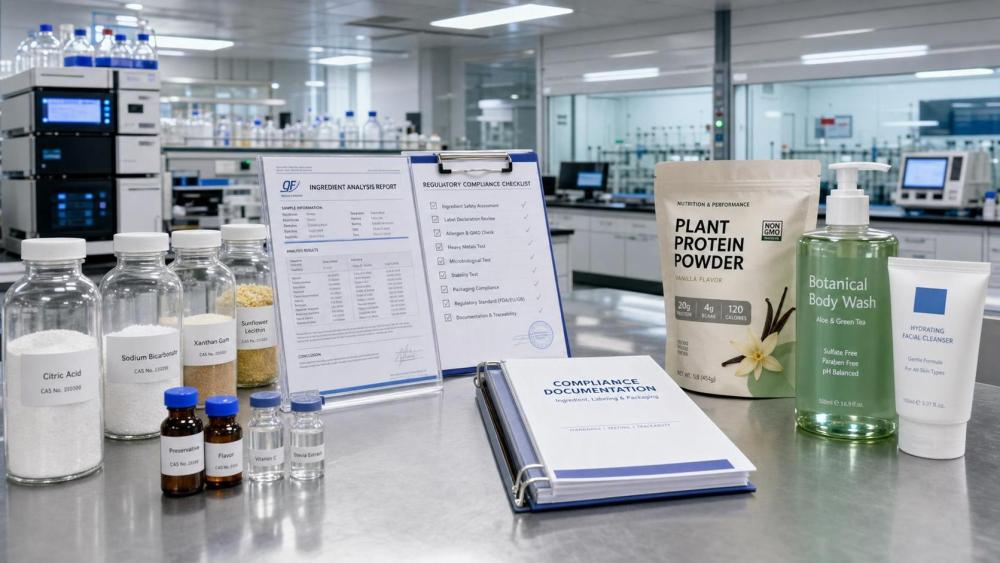
Across global consumer goods, formulas move through more markets, more channels, and more scrutiny than before. One raw material may need to satisfy food, personal care, household, or cross-border labeling expectations at the same time.
Ingredient compliance is no longer limited to confirming legal use. It also covers identity, purity, usage restrictions, documentation quality, contaminant limits, and evidence behind claims attached to the ingredient.
For businesses operating around sensory performance and safety, that distinction matters. Preservatives must keep shelf life stable. Thickeners must perform under process stress. Fragrance materials must respect allergen rules. Cosmetic actives must align with safety and notification frameworks.
This is where FFAI’s market focus becomes relevant. The portal tracks the ingredient systems that give products texture, scent, stability, efficacy, and clean-label appeal, while keeping attention on the regulatory evidence needed to bring those systems to market.
What a useful checklist should actually confirm
A strong checklist is not a pile of documents. It is a decision tool that shows whether a material is ready for formulation, ready for registration, and ready for commercial scale.
The core review points usually include the following:
- Clear ingredient identity, including chemical name, INCI, CAS, source, grade, and intended function.
- Regulatory status by market, such as GRAS position, food additive permissions, cosmetic notifications, or restricted substance listings.
- Current specification sheet, with assay, impurities, microbiology, heavy metals, residual solvents, and stability data where relevant.
- Safety files, including SDS, toxicology summaries, allergen declarations, and exposure-related supporting information.
- Claim support, especially for natural, biodegradable, anti-aging, clean label, or performance-driven positioning.
- Supply chain traceability, change control history, and confirmation of manufacturing consistency.
When these elements are checked early, ingredient compliance becomes easier to defend during internal review and external submission.
Where approval friction usually starts
Most delays come from mismatches, not from obviously banned materials. A supplier may provide a valid specification, yet the usage level in the formula exceeds a regional threshold. A natural claim may look harmless, yet the extraction solvent weakens the label story.
In food systems, preservatives and antioxidants face scrutiny around dosage, carry-over, and compatibility with shelf-life statements. In fragrance and flavor work, restricted components and disclosure rules can create hidden problems at launch.
Cosmetic actives create another layer. Expensive peptide or anti-aging compounds may have attractive efficacy narratives, but product approval can stall if penetration claims, concentration ranges, or market-specific notifications are weak.
Surfactants and hydrocolloids are often seen as low-risk workhorses. Even so, impurity profiles, process residues, biodegradability claims, and labeling language can affect ingredient compliance just as much as performance data.
A quick review matrix
The table below shows how review priorities shift by ingredient type.
How to apply the checklist in real workflows
The fastest teams use ingredient compliance at the moment of ingredient selection, not after pilot production. That approach helps avoid reformulation caused by late legal review or unsupported claims.
In practice, the checklist works best when linked to stage gates. During sourcing, it screens whether the supplier file is complete. During development, it confirms fit with intended use. Before launch, it validates market-specific documentation.
That workflow is valuable for complex portfolios. A thickener used in dairy may need a different support package when considered for a beauty texture system. A fragrance component may be acceptable in one geography and restricted in another.
FFAI’s intelligence model fits this reality. Its strength lies in connecting regulatory tracking with molecular function, so formulation choices are reviewed through both performance logic and approval logic.
Practical checkpoints before sign-off
- Check whether the latest supplier version matches the file used by formulation and labeling teams.
- Confirm that the intended claim language can be defended by ingredient-level evidence.
- Review whether thermal, pH, or processing conditions change impurity or efficacy expectations.
- Verify that notification, registration, or export requirements are mapped to the target market list.
- Make sure change control triggers a fresh ingredient compliance review, not just a purchasing update.
Why cross-functional context matters
Ingredient compliance is often treated as a regulatory file issue. In reality, it sits between R&D, sourcing, quality, safety, and commercial teams. Delays happen when each function assumes another group has checked the risky detail.
A premium active may look commercially attractive because it supports a higher selling price. Yet without stable documentation, the same ingredient can extend approval time and dilute launch value. The same pattern appears with amino acid surfactants, botanical extracts, and natural colors.
Better review comes from linking three questions early. Is the ingredient legal? Is the ingredient technically suitable? Is the ingredient commercially supportable in the markets that matter?
When those questions are answered together, ingredient compliance supports both risk control and smarter portfolio design.
What to refine next
A useful next step is to rank ingredients by approval sensitivity. High-priority materials usually include novel actives, allergen-sensitive aroma materials, preservation systems, natural claims drivers, and ingredients with regional restrictions.
From there, build a checklist that separates mandatory evidence from desirable evidence. That makes review faster and shows where a product is truly blocked versus where it is simply missing optimization.
It is also worth tracking recurring failure points. If the same gaps appear in specifications, claim substantiation, or notification readiness, the issue is probably structural, not incidental.
For businesses working across food, fragrance, cosmetic, and home care ingredient systems, stronger ingredient compliance starts with better comparability. Standardize the review logic, then adapt it to market rules, formula function, and the proof level each launch actually needs.
That is usually the shortest path to faster product approval: fewer assumptions, cleaner files, and earlier decisions on whether an ingredient is ready to move forward.
Related News
- How to verify a cosmetic nanotechnology supplier's safety documentationOct 04, 2026Dr. Chloe Vance
- How to set a control sensory flavour standard for panel consistencySep 27, 2026Dr. Chloe Vance
- How to verify compliance documents for cosmetic active compoundsSep 19, 2026Dr. Chloe Vance
- How to verify food grade flavor formulation ingredients for safetySep 18, 2026Dr. Chloe Vance
Related News
- 00
0000-00
Verifying halal status of hydrocolloid ingredients in the Middle East - 00
0000-00
How to interpret active matter on a surfactant specification sheet - 00
0000-00
What Quality Checks Should You Run on Fragrance Ingredient Suppliers? - 00
0000-00
How to assess a flavor chemistry manufacturer's batch consistency - 00
0000-00
What drives fragrance ingredients price changes in bulk orders?
Dr. Chloe Vance
Weekly Insights
Stay ahead with our curated technology reports delivered every Monday.