





Using food ingredient information platforms for GRAS verification has become a practical necessity across food, flavor, and broader FMCG development. When formulas move faster than manual research, a dependable food ingredient information platform GRAS process helps reduce review time, surface regulatory context, and support cleaner documentation for ingredients that may appear simple on paper but carry real safety and labeling implications.
Why GRAS verification now demands better information tools
GRAS stands for “Generally Recognized as Safe” under intended conditions of use. The phrase sounds straightforward, yet verification rarely is.
A single ingredient can have different identities, purity ranges, sources, processing aids, and use levels. Those differences change the compliance picture quickly.
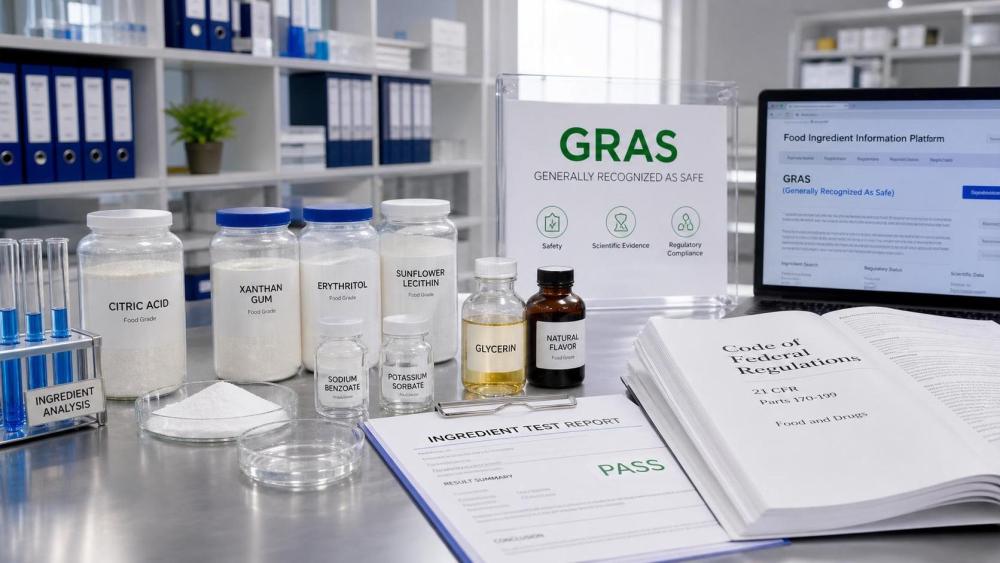
This is especially true in categories shaped by preservation, texture, aroma, and functionality. Antioxidants, hydrocolloids, flavor compounds, and specialty actives often sit at the center of both performance and regulatory review.
In that environment, spreadsheets and scattered PDFs are not enough. A food ingredient information platform GRAS workflow creates a more reliable path from ingredient screening to internal approval.
What a food ingredient information platform GRAS workflow really means
The value is not just storing ingredient names. It is the ability to connect identity, regulatory status, technical function, and evidence in one usable view.
A strong platform helps answer several questions at once. Is the substance correctly named? Is the intended use covered? Are there limits, conditions, or formulation assumptions?
It should also show context around source material, manufacturing route, compositional variation, and links to supporting notices or safety assessments.
That context matters because GRAS verification is not a box-ticking exercise. It is a judgment process tied to evidence, intended application, and defensible internal records.
Where the pressure is coming from across FMCG categories
The current market rewards fast reformulation, cleaner labels, and cross-border launches. At the same time, ingredient scrutiny is rising.
Preservatives must preserve without damaging label claims. Thickeners must deliver texture while fitting regional expectations. Flavor systems must balance sensory impact with documented safety status.
This is where intelligence portals such as FFAI become useful in a broader sense. They connect technical ingredient performance with compliance interpretation, market signals, and formulation logic.
For example, food-grade antioxidants may perform well in bakery systems, but thermal stability and degradation behavior still affect how safely and confidently they can be evaluated.
Hydrocolloids such as xanthan gum may be familiar, yet sourcing, blending, and application level still matter when verifying use conditions.
Even when a business spans fragrance, personal care, and home care, the discipline built around food ingredient information platform GRAS review often improves internal governance more broadly.
Typical verification scenarios that benefit from platform-based review
Not every ingredient review carries the same level of complexity. Some cases are routine. Others require deeper checking before a formula can move forward.
In practice, the best use case is not only faster approval. It is faster approval with stronger traceability.
What to look for during GRAS verification
A food ingredient information platform GRAS check should go beyond headline status. Several details usually determine whether the review is actually dependable.
- Ingredient identity: confirm chemical name, common name, CAS reference, and any synonym used by suppliers.
- Source and process: natural extraction, fermentation, synthesis, or blended preparation can affect equivalence.
- Intended use: GRAS relevance depends on food category, technical purpose, and expected inclusion rate.
- Purity and specifications: contaminants, residual solvents, and assay ranges may change the risk picture.
- Supporting basis: notice history, expert panel conclusions, published literature, and safety rationale should align.
- Change control: supplier updates, revised specifications, or process shifts should trigger re-verification.
Usually, errors happen when teams assume that similar ingredients share the same status. Similar is not identical, and identical names do not always mean identical materials.
How FFAI-style intelligence adds practical value
A useful platform does more than list approvals. It helps interpret what an approval means inside an actual formulation environment.
That matters in categories where technical behavior and compliance are tightly linked. Preservatives, pigments, thickeners, and flavor compounds often need both regulatory and formulation context.
FFAI’s broader intelligence model is relevant here. It combines compliance tracking, molecular performance insight, and commercial awareness across food, fragrance, active ingredients, and adjacent FMCG segments.
For a review team, this means fewer blind spots. A platform can show not only whether an ingredient appears acceptable, but also where temperature, matrix, sensory targets, or sourcing strategy may introduce hidden risk.
That integrated perspective is valuable when premium ingredients are involved. Expensive actives and differentiated sensory materials need stronger evidence before they belong in a launch-ready formula.
Building a workable internal process
The most effective food ingredient information platform GRAS process is consistent rather than overly complicated. It should be easy to repeat across ingredients and suppliers.
A practical sequence
Start with identity confirmation. Then review intended use, use level, and available evidence. After that, record any assumptions, gaps, or required follow-up.
Next, compare supplier documentation with platform intelligence. Mismatches should be resolved before commercial use, not after scale-up.
Finally, store the rationale in a searchable format. Future audits, reformulations, and supplier changes become much easier when decisions are documented clearly.
Common weak points
Reviews often weaken when evidence is fragmented across email threads, specification sheets, and informal notes. Another weak point is failing to revisit older decisions after process or sourcing changes.
A platform-centered workflow helps by making those dependencies visible earlier, when correction is cheaper and less disruptive.
What to evaluate before relying on any platform
Not every database is equally useful. Before adopting a food ingredient information platform GRAS approach, evaluate the quality of the underlying information.
- How often regulatory references are updated.
- Whether technical and compliance data are linked or isolated.
- How clearly intended use conditions are described.
- Whether source, purity, and specification differences are visible.
- How easy it is to export or archive evidence for internal files.
The right platform should improve judgment, not replace it. Strong tools support human review by making the evidence trail more complete and easier to defend.
A sensible next step
For any organization handling preservatives, thickeners, flavors, or other functional materials, the next step is to map current verification points against actual information gaps.
Identify which ingredients create the most repeated questions, which supplier files are hardest to validate, and where internal records are least consistent.
From there, a structured food ingredient information platform GRAS workflow can be assessed on practical terms: evidence quality, decision speed, traceability, and fit with the formulation pipeline.
That approach keeps GRAS verification anchored in real business use, where compliance, safety, and product performance need to move together rather than compete for attention.
Related News
- How to verify a cosmetic nanotechnology supplier's safety documentationOct 04, 2026Dr. Chloe Vance
- How to set a control sensory flavour standard for panel consistencySep 27, 2026Dr. Chloe Vance
- How to verify compliance documents for cosmetic active compoundsSep 19, 2026Dr. Chloe Vance
- How to verify food grade flavor formulation ingredients for safetySep 18, 2026Dr. Chloe Vance
Related News
- 00
0000-00
What drives fragrance ingredients price changes in bulk orders? - 00
0000-00
How to assess a food antioxidants distributor’s traceability practices - 00
0000-00
How minimum order quantities shape private label ingredient sourcing costs - 00
0000-00
What drives personal care ingredient price volatility in sourcing - 00
0000-00
What drives micelles price differences in cosmetic formulations?
Dr. Chloe Vance
Weekly Insights
Stay ahead with our curated technology reports delivered every Monday.