





Why does aroma chemicals bulk price move so much between quotes?
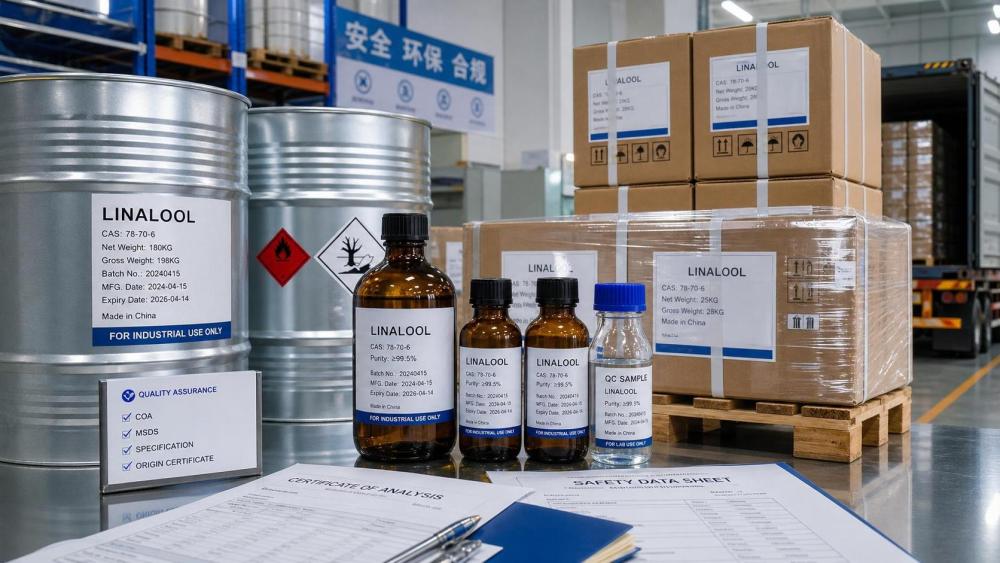
Aroma chemicals rarely have a single market price. The number on a quote reflects chemistry, supply chain structure, and compliance burden at the same time.
That matters in food, fragrance, personal care, and household formulations, where sensory consistency often decides whether a reformulation succeeds or fails.
In practical terms, aroma chemicals bulk price is shaped by feedstock volatility, purity targets, origin, minimum order quantity, packaging format, and shipping route.
A synthetic coffee top note molecule and a perfume base note material may both be sold in drums, yet their risk profile can differ sharply.
This is where market intelligence becomes useful. FFAI follows not only flavors and fragrances, but also preservatives, thickeners, cosmetic actives, and surfactants.
That wider view helps explain pricing behavior. The same raw material pressure affecting antioxidants or peptide intermediates can also disturb aroma chemistry sourcing.
So the better question is not, “What is the price?” It is, “What exactly is this quote including, and what cost risk is still hidden?”
Which cost drivers deserve the closest look first?
Most quote gaps come from a small group of variables. Reviewing these early usually explains most of the difference between attractive pricing and reliable landed cost.
Feedstock and synthesis route
Some aroma molecules depend on petrochemical derivatives. Others rely on terpene streams, botanical extraction fractions, or multi-step synthesis with tighter yield control.
When upstream materials tighten, aroma chemicals bulk price usually reacts quickly. Multi-step routes amplify the effect because every stage adds conversion loss and energy cost.
Purity, isomer profile, and odor performance
Two materials may share the same common name yet perform differently in a formula. Minor isomer variation can change odor lift, stability, or interaction with other notes.
Higher purity is not always the only value point. In many cases, odor consistency from batch to batch is more important than a headline assay number.
Compliance and documentation
A low quote becomes expensive when key documents are missing. REACH status, IFRA relevance, allergen disclosure, food-contact suitability, and traceability all influence sourcing cost.
FFAI’s compliance lens is useful here because formulation decisions often cross into FDA GRAS, cosmetics notification, or export documentation territory.
Logistics and pack size
Drum, pail, IBC, and lined container formats change freight efficiency, handling loss, and warehouse cost. Hazard classification may further reshape the landed price.
The result is simple: aroma chemicals bulk price on paper is not the same as delivered cost into production.
When is a lower aroma chemicals bulk price actually the wrong choice?
Usually when the quote saves money only at the invoice stage. Once reformulation time, requalification work, or shipment delay is added, the cheaper option can lose its advantage.
This happens often in high-sensitivity applications. Beverage flavors, premium fine fragrance accords, anti-aging cosmetics, and fabric care systems all punish inconsistency differently.
For example, a lower-cost material may carry broader odor variation. It can pass a specification sheet yet still alter top-note brightness or dry-down character.
Another common issue is oxidation stability. Materials used beside antioxidants, pigments, or surfactants can behave differently during heating, storage, or emulsification.
A practical comparison table helps separate visible price from total sourcing value.
Used this way, aroma chemicals bulk price becomes a screening tool, not a standalone decision trigger.
How should quotes be benchmarked across suppliers without comparing the wrong things?
Benchmarking works only when the quote basis is normalized. Otherwise, the comparison can be neat on paper and misleading in execution.
Start with a controlled specification set. Align assay, odor description, acceptable color, solvent status, packaging, Incoterms, and destination point.
Then separate three numbers. First, ex-works or FOB price. Second, landed cost. Third, qualified cost after testing, approval, and expected supply risk.
This matters especially for fragrance and flavor houses serving broader FMCG categories. A material may look competitive until one delayed lot disrupts a launch window.
In practice, a useful benchmark sheet usually includes:
- Quoted basis and validity period
- Lead time by order size
- Batch consistency evidence
- Regulatory file completeness
- Claims affecting end-use acceptance
- Backup production site or alternate route
FFAI often frames ingredients as part of a wider sensory-and-safety system. That is a useful way to benchmark because aroma performance rarely stands alone.
A fragrance ingredient can interact with preservatives, thickeners, pigments, or surfactants. Price should be judged in the context of finished formula behavior.
What risks are commonly missed when estimating total aroma chemicals bulk price?
The first missed risk is assuming stable monthly pricing. Some materials are exposed to abrupt swings in feedstock, energy, and freight within one quarter.
The second is treating documentation as administrative detail. A delayed declaration can block customs clearance or force internal rework across several regions.
The third is underestimating substitution cost. If a backup source changes odor shape slightly, formula tuning may consume more time than the quote difference justified.
There is also inventory risk. Lower aroma chemicals bulk price at larger volume sounds efficient, but only if shelf life and demand visibility support that decision.
A compact decision table can keep reviews disciplined.
So what is a practical sourcing benchmark before placing the order?
A workable benchmark usually combines commercial, technical, and compliance signals into one decision frame. It is less about finding the cheapest drum and more about repeatable supply.
A solid short list often includes three conditions. The quote is competitive, the quality is reproducible, and the documentation is ready for the intended market.
When comparing aroma chemicals bulk price, keep the evaluation sequence simple:
- Define exact technical and regulatory requirements before requesting price.
- Normalize supplier quotes to the same Incoterm, pack size, and lead-time assumption.
- Test retained samples or pilot lots where odor precision affects product acceptance.
- Check whether lower unit cost increases inventory, insurance, or obsolescence exposure.
- Build one backup option for materials tied to narrow feedstock or single-region production.
That approach fits the broader FFAI view of ingredient sourcing. In modern FMCG systems, molecular performance, market timing, and compliance discipline are tightly linked.
The most useful next step is to turn each quote into a comparison sheet with landed cost, approval burden, and substitution risk shown side by side.
Once that structure is in place, aroma chemicals bulk price becomes easier to judge, and sourcing decisions become far less reactive.
Related News
- How to interpret active matter on a surfactant specification sheetOct 14, 2026Prof. Elian Thorne
- What Quality Checks Should You Run on Fragrance Ingredient Suppliers?Oct 14, 2026Prof. Elian Thorne
- How to assess a flavor chemistry manufacturer's batch consistencyOct 13, 2026Prof. Elian Thorne
- What drives fragrance ingredients price changes in bulk orders?Oct 12, 2026Prof. Elian Thorne
Related News
- 00
0000-00
Can biomimetic peptides in cosmetics reduce the look of wrinkles? - 00
0000-00
How to assess a bio-based thickener manufacturer's batch consistency - 00
0000-00
Verifying halal status of hydrocolloid ingredients in the Middle East - 00
0000-00
How to interpret active matter on a surfactant specification sheet - 00
0000-00
How Do You Test Hydrocolloid Viscosity After Changing a Thickener?
Prof. Elian Thorne
Weekly Insights
Stay ahead with our curated technology reports delivered every Monday.