





China’s updated registration rule for overseas food manufacturers took effect on 2026-06-01, changing how imported food suppliers maintain market access and how new applicants enter the system. The change matters not only to overseas producers, but also to importers, procurement teams, processors, distributors, and compliance service providers because registration timing, renewal handling, and entry documentation can directly affect supply continuity and delivery planning.
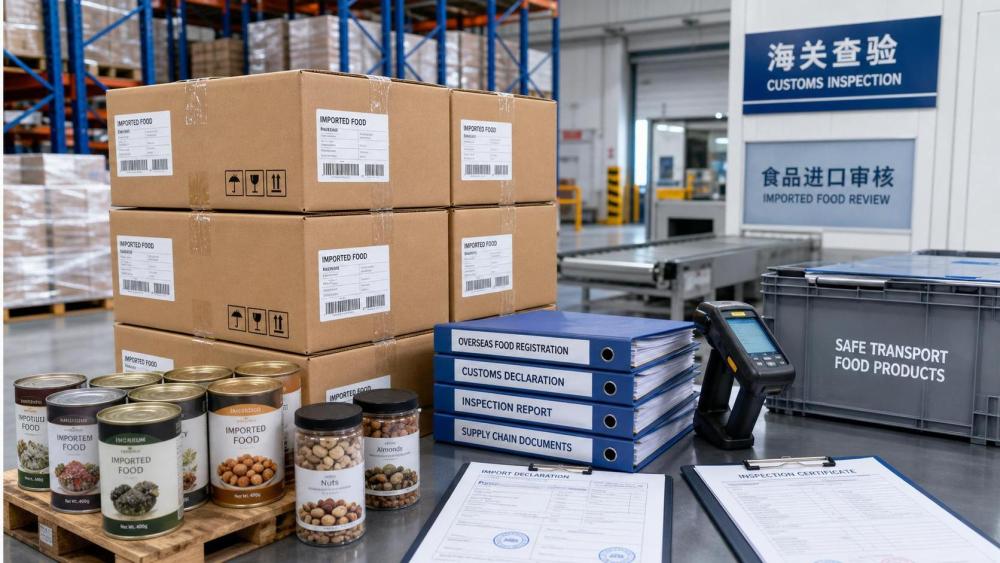
What the rule change confirms
The new provisions under General Administration of Customs Order No. 280, the Regulations on the Registration and Administration of Overseas Manufacturers of Imported Food, formally came into effect on 2026-06-01. According to the provided information, the updated rule streamlines the registration process, enables automatic renewal for 95% of already registered enterprises, adds a fast-track “list registration” channel for new applications, and expands the renewal filing window to 3 to 12 months before expiry. Among 96,000 enterprises worldwide, the large majority are expected to transition without interruption, reducing compliance costs and the risk of market-entry delays for overseas suppliers.
Where the operational impact is likely to appear
For importers and procurement teams, continuity becomes easier to plan
From an industry perspective, importers and purchasing teams are likely to be affected first because overseas manufacturer registration status is closely tied to sourcing continuity. If most existing suppliers can move through renewal automatically, the immediate pressure around supplier replacement, emergency sourcing, and registration-related delivery disruption may ease. What deserves closer attention is whether internal supplier qualification files, onboarding records, and procurement checks are updated to reflect the new renewal timing and application pathways.
For overseas food manufacturers, access management becomes more procedural
Analysis shows that overseas producers may see the clearest change in compliance workload. Automatic renewal for most already registered companies suggests lower administrative friction, while the new list-registration route may shorten the path for eligible new applicants. Even so, companies still need to watch how registration status, supporting documentation, and timing requirements are handled in practice, because a simpler rule design does not remove the need for accurate submission and record control.
For processors, distributors, and supply-chain service providers, scheduling risk may decline
Businesses that depend on imported food inputs or finished products may feel the change through more stable delivery arrangements. Observably, if renewal bottlenecks are reduced and new applicants gain a faster route, the risk of registration-related delays across procurement, warehousing, and distribution may also decrease. The practical point to monitor is whether contracts, shipment planning, and supplier compliance checks continue to match the updated registration framework.
What companies should monitor now
Review renewal calendars and supplier status
Companies that buy from or represent overseas food manufacturers should recheck renewal schedules against the expanded 3-to-12-month filing window. This is not only a timing issue; it also affects how compliance teams set reminders, how procurement confirms supplier validity, and how cross-border orders are scheduled.
Watch how the fast-track path is used for new applications
The newly added list-registration channel is one of the most relevant changes for new entrants. Analysis shows that businesses planning to add suppliers, launch new sourcing relationships, or prepare future market entry should pay attention to how this route is described in official wording and reflected in actual application practice.
Keep document control aligned with registration changes
What deserves closer attention is the document side of compliance. Even where the rule lowers friction, enterprises should still verify whether supplier files, qualification records, technical documents, and trade paperwork are aligned with the updated registration process and renewal cycle. The provided information does not set out detailed execution standards, so this remains an area to monitor rather than assume.
Track implementation signals beyond the rule text
Observably, the rule has already taken effect, but some business decisions will depend on execution signals rather than headline changes alone. Companies may need to continue watching for follow-up wording, practical review criteria, and any adjustments in how registration-related requirements appear in transaction documents or internal compliance workflows.
Why this looks more like an execution signal than a headline-only change
Analysis shows that this development is better understood as an implemented rule change with immediate operational relevance, rather than as a policy direction awaiting activation. The automatic renewal coverage for most registered enterprises and the wider renewal window both point to a more stable compliance pathway. At the same time, it is more appropriate to understand this as a rule whose business effect will still depend on how companies, intermediaries, and market participants translate the new process into supplier management and trade execution.
How the market is likely to read it
From an industry perspective, the most reasonable reading is that the measure reduces procedural friction in imported food market access without removing the need for active compliance management. It signals a more workable registration framework for most existing suppliers and a more structured entry route for new ones. The current takeaway is not that all execution uncertainty has disappeared, but that the registration system has moved toward smoother continuity and lower delay risk for a large share of affected enterprises.
Basis of this article
This article is generated from the user-provided news title, event date, and event summary. For this type of development, commonly relevant source categories include official notices, releases from regulatory authorities, customs or trade administration updates, industry association information, standards-related documents, and reporting by authoritative media. A specific official source link was not provided in the input, so the exact reference path still requires further verification. Follow-up observation should focus on implementation details, compliance interpretation, procurement document changes, market feedback, and how enterprises apply the new rule in practice.
Related News
- How rheological thickeners for shampoo affect suspension stabilityOct 03, 2026Prof. Elian Thorne
- When does OEM ingredient sourcing support make custom formulations viable?Sep 29, 2026Prof. Elian Thorne
- What to check in a transdermal penetration supplier for skincareSep 26, 2026Prof. Elian Thorne
- How farnesene market pricing affects renewable ingredient sourcingSep 26, 2026Prof. Elian Thorne
Related News
- 00
0000-00
How to assess color stability from a natural food colors manufacturer - 00
0000-00
When does amino acid surfactant powder improve cleanser mildness? - 00
0000-00
How to verify a cosmetic nanotechnology supplier's safety documentation - 00
0000-00
How rheological thickeners for shampoo affect suspension stability - 00
0000-00
How to assess recombinant collagen ingredients for cream stability
Prof. Elian Thorne
Weekly Insights
Stay ahead with our curated technology reports delivered every Monday.