





In premium beauty, cosmetic active delivery is where efficacy, cost, and sustainability truly diverge. For business evaluators comparing technologies, the real question is not just how much active is added, but how efficiently it reaches the target site—and how much is wasted across formulation, packaging, and application. This article outlines a practical framework for assessing delivery performance, waste, and commercial value with greater precision.
Why cosmetic active delivery changes commercial outcomes
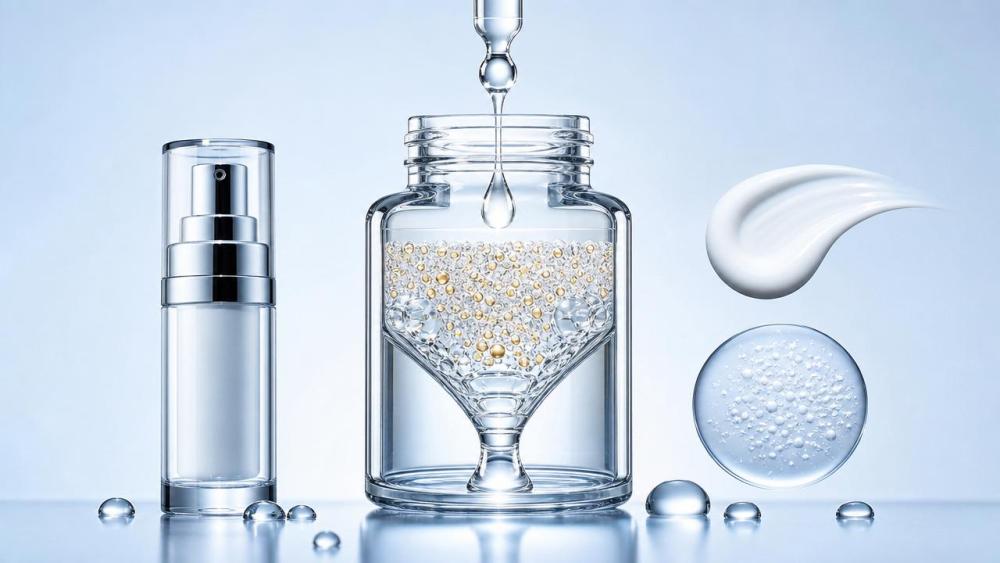
Cosmetic active delivery is not a narrow formulation detail. It directly affects claim support, dosage economics, user experience, stability, and brand margin. In anti-aging, brightening, scalp care, and barrier repair, the delivery system often determines whether a premium active performs consistently or disappears into the base with limited skin uptake.
For procurement and business evaluation teams, this creates a familiar problem. Two ingredients may show similar headline concentrations, yet one drives better in-use efficacy, lower required dosage, and fewer returns. The other may look cheaper on paper while producing hidden waste through oxidation, adsorption to packaging, poor release, or rinse-off loss.
FFAI follows this issue from a broader FMCG perspective. The same logic used to judge antioxidant survival in food systems or fragrance retention in complex matrices also matters in dermal delivery. Molecules do not create value in isolation. They create value only when they remain stable, bioavailable, compatible, and commercially translatable.
- A higher active loading does not automatically mean higher net efficacy.
- A sophisticated delivery carrier can reduce dosage needs and improve premium positioning.
- Waste must be measured across the full chain, not only at formula input stage.
- Compliance, packaging, and sensory performance can change the true business value of the same active.
How to compare cosmetic active delivery efficiency in practical terms
Business evaluators need a framework that goes beyond laboratory language. The most useful approach is to compare cosmetic active delivery in terms of retained potency, target-site availability, application loss, and cost per effective dose. This shifts evaluation from nominal concentration to delivered value.
Four checkpoints that matter most
- Stability before use: assess oxidation, hydrolysis, heat sensitivity, pH tolerance, and light exposure during storage and filling.
- Release during application: confirm whether the active remains trapped in the carrier or is released under realistic skin conditions.
- Penetration and residence: estimate how much reaches the intended layer such as surface film, stratum corneum, or upper viable epidermis.
- Loss after use: include transfer to hands, evaporation of volatile co-components, rinse-off, wipe-off, and degradation on contact with air.
This is particularly important for high-cost actives such as peptides, retinoid derivatives, ferulic acid systems, encapsulated vitamins, and biomimetic lipids. A small difference in delivery efficiency can materially change gross margin when the formula is scaled across regions and channels.
The table below translates cosmetic active delivery into procurement language that can support supplier screening and cross-functional review.
A useful pattern emerges from this table. Cosmetic active delivery should never be judged by concentration alone. Procurement teams need evidence of what survives, what releases, and what reaches the consumer in a usable form.
Where waste happens: formulation, packaging, and consumer use
When teams talk about waste, they often mean excess ingredient cost. In reality, waste in cosmetic active delivery occurs at multiple stages. Some losses are visible in process yield. Others are hidden in shelf-life decay, packaging residue, consumer misuse, or weak deposition on skin.
Three major waste zones
- Formulation waste: degradation from water activity, incompatible pH, metal ions, surfactants, or heat during manufacturing.
- Packaging waste: oxidation in headspace, ingredient adsorption on internal surfaces, and poor evacuation in standard pumps or jars.
- Application waste: overdosing by consumers, transfer to palms, rapid wipe-off, rinse-off, and low retention on the target area.
This multi-stage view matters across FMCG. FFAI’s cross-category intelligence is relevant here because ingredient efficiency is never only a chemistry problem. It is also a systems problem involving matrix design, sensory behavior, filling operations, compliance constraints, and retail economics.
The following comparison table helps evaluators identify where cosmetic active delivery systems can reduce waste and where hidden losses may remain.
The commercial lesson is simple. A delivery platform that costs more per kilogram may still produce less overall waste and a lower cost per effective application. That is the comparison that matters in premium programs.
Which delivery technologies are easier to evaluate?
Not all cosmetic active delivery technologies are equally transparent for business review. Some are easy to explain but hard to validate. Others appear technically complex yet provide clearer evidence and tighter manufacturing control. Evaluators should look at both scientific logic and operational simplicity.
Common technology families
- Simple solubilized systems: lower cost and easier scale-up, but often weaker protection for unstable actives.
- Liposomal or vesicular systems: attractive for skin affinity, but batch consistency and long-term stability must be checked carefully.
- Polymeric encapsulation: useful for controlled release, though release profile and sensory drag can become trade-offs.
- Anhydrous or low-water systems: often excellent for oxidation-sensitive actives, but packaging and user tolerance need review.
- Powder-to-serum or dual-chamber formats: can improve freshness, though they increase component cost and supply complexity.
For anti-aging compounds, the right technology depends on the target claim. Barrier support may need prolonged surface residence. A peptide program may prioritize protection and gradual release. A vitamin C derivative may depend more on oxidation control and pH strategy than on deep transport narratives.
Procurement guide: what business evaluators should ask before approval
A strong cosmetic active delivery review requires more than a technical brochure. Purchasing, formulation, compliance, and commercial teams should align on a common screening checklist before comparing quotations. This reduces the risk of buying a premium story without measurable performance.
Recommended decision checklist
- Ask for active assay data at release and after storage in a representative finished formula, not only in the supplied concentrate.
- Check whether the claimed cosmetic active delivery mechanism is relevant for leave-on, rinse-off, scalp, eye-area, or body applications.
- Review total delivered cost, including dosage, overfill, packaging upgrades, handling conditions, and minimum order size.
- Verify documentation needed for target markets, such as INCI clarity, safety data, impurity limits, and notification readiness.
- Confirm pilot-scale reproducibility and whether the ingredient tolerates your manufacturing sequence and transport profile.
This is where FFAI provides practical value. Our intelligence model connects transdermal pharmacology, matrix behavior, compliance awareness, and commercial positioning. For business evaluators, that means fewer blind spots between R&D promise and market execution.
Cost, alternatives, and total value per effective dose
The cheapest option is rarely the lowest-cost option in cosmetic active delivery. Premium actives become expensive when they are overdosed to compensate for instability, or when a weak carrier forces brands to rely on higher concentrations for visible results. A more disciplined method is to calculate value per effective dose delivered to the user.
How to think about alternatives
- Compare free active versus encapsulated active under the same finished-formula conditions.
- Test whether a lower-cost derivative plus packaging upgrade outperforms a higher-cost unstable form.
- Assess if sensory adjustments can reduce consumer overuse and improve net dose control.
- Consider whether targeted hero-product use justifies a premium carrier while mass SKUs use a simpler system.
In many cases, the best business answer is not the most advanced platform. It is the platform with the best balance of evidence, manufacturing fit, compliance ease, and brand-level profitability.
Compliance and documentation: a hidden filter in cosmetic active delivery
Delivery performance alone is not enough. Business evaluators must also consider whether the cosmetic active delivery system creates documentation burdens, claim limitations, or regional approval delays. This is especially relevant when dealing with novel carriers, biotechnology-derived actives, or complex preservation strategies.
Key documentation areas
- INCI naming consistency and composition disclosure for the active-carrier system.
- Safety support for impurities, residual solvents, allergens, and microbiological limits.
- Market-specific data expectations linked to cosmetic notifications and product information files.
- Claims wording discipline so delivery language does not drift into drug-like territory.
FFAI’s compliance and strategic intelligence perspective is useful here because ingredient choice is rarely isolated from export pathways and positioning strategy. A technically impressive system can lose commercial momentum if its documentation chain is slow, ambiguous, or difficult to defend.
FAQ: common questions when comparing cosmetic active delivery
How can I tell whether cosmetic active delivery is truly efficient?
Start with retained potency in the finished formula, then examine release, deposition, and user-stage loss. Efficiency is not proven by a carrier name alone. It is shown by how much active remains functional through shelf life and reaches the intended skin layer under realistic use.
Which formats usually waste more active?
Jar packs, transparent packs for light-sensitive systems, and rinse-off formats with short contact time often create more risk. That does not make them unsuitable, but they require tighter formula design, packaging review, and clearer dosing strategy.
Should procurement always prefer encapsulated actives?
No. Encapsulation can improve protection and marketing value, but it may increase complexity, cost, or release uncertainty. The right decision depends on the active’s fragility, the formula base, the product format, and the evidence available from supplier testing.
What is the most common mistake in business evaluation?
The most common mistake is comparing purchase price per kilogram instead of cost per effective dose. A lower-cost ingredient that degrades quickly or needs a larger dosage can become the more expensive option after scale-up.
Why work with us on cosmetic active delivery assessment
FFAI helps business evaluators move from ingredient claims to decision-grade intelligence. Our strength is not limited to one ingredient class. We connect molecular stability, sensory design, transdermal logic, regulatory awareness, and pricing strategy across the broader FMCG ingredient landscape.
If you are screening cosmetic active delivery solutions, we can support discussions around parameter confirmation, technology selection, likely waste points, documentation readiness, packaging fit, and route-to-market constraints. We can also help frame supplier conversations around sample support, quotation comparison, delivery timing, and custom evaluation criteria for premium anti-aging programs.
- Clarify which delivery metrics actually matter for your target claim and product format.
- Compare alternatives by effective-dose economics instead of input cost alone.
- Review compliance expectations before technical selection locks the project path.
- Identify whether packaging, process, or dosage redesign can reduce active waste.
For teams evaluating high-end peptides, vitamin systems, fermented actives, or other premium compounds, a better cosmetic active delivery decision often begins with better questions. Contact us to discuss specification review, solution comparison, sample planning, certification concerns, project timelines, or commercial feasibility for your next formulation program.
Related News
- How rheological thickeners for shampoo affect suspension stabilityOct 03, 2026Prof. Elian Thorne
- When does OEM ingredient sourcing support make custom formulations viable?Sep 29, 2026Prof. Elian Thorne
- What to check in a transdermal penetration supplier for skincareSep 26, 2026Prof. Elian Thorne
- How farnesene market pricing affects renewable ingredient sourcingSep 26, 2026Prof. Elian Thorne
Related News
- 00
0000-00
How to assess color stability from a natural food colors manufacturer - 00
0000-00
When does amino acid surfactant powder improve cleanser mildness? - 00
0000-00
How to verify a cosmetic nanotechnology supplier's safety documentation - 00
0000-00
How rheological thickeners for shampoo affect suspension stability - 00
0000-00
How to assess recombinant collagen ingredients for cream stability
Prof. Elian Thorne
Weekly Insights
Stay ahead with our curated technology reports delivered every Monday.