





Cosmetic Active Delivery System Price: What Drives Total Cost?
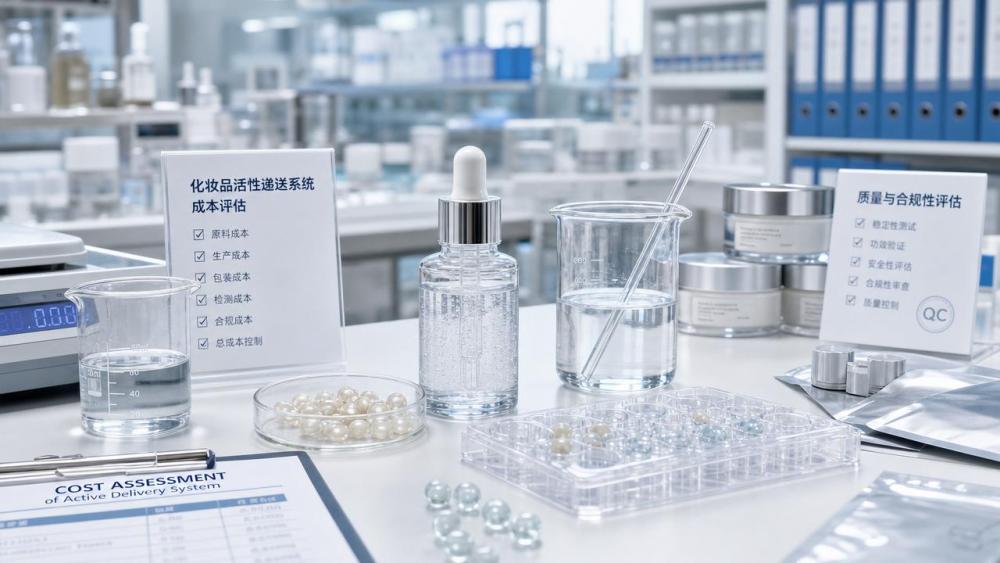
For procurement teams, cosmetic active delivery system price rarely starts and ends with a supplier quote.
The visible unit price is only one layer of the real cost picture.
In practice, delivery technology, compliance burden, yield loss, and scale-up risk often matter more.
That is why cosmetic active delivery system price should be reviewed as a total landed cost question.
A lower quote can still become an expensive choice after reformulation, testing delays, and batch failures.
A higher quote, by contrast, may reduce waste, improve claims support, and shorten launch time.
This is especially true for peptides, retinoids, ceramides, antioxidants, and other fragile high-value actives.
In those categories, the delivery system can determine whether the active works at all.
From a sourcing view, that makes cosmetic active delivery system price a performance-adjusted buying decision.
The smartest comparison is not price per kilogram, but cost per stable, compliant, usable dose.
Why the quoted price tells only part of the story
Many suppliers present cosmetic active delivery system price as a neat number on a quotation sheet.
Yet two systems with similar quotes can create very different costs inside manufacturing and product development.
One may offer better encapsulation efficiency, lower odor impact, and stronger oxidation resistance.
The other may need cold-chain transport, special mixing equipment, or extra preservative support.
Those hidden conditions change the total cost quickly.
Recent market changes make this even clearer.
Brands want stronger efficacy claims, cleaner labels, and faster product cycles.
That raises the technical and documentary burden attached to cosmetic active delivery system price.
In real buying situations, the best value usually comes from systems that reduce uncertainty.
The biggest cost drivers behind cosmetic active delivery system price
Several technical variables explain most cosmetic active delivery system price differences.
The first is encapsulation method.
Liposomes, nanoemulsions, polymeric capsules, cyclodextrin complexes, and solid lipid carriers have very different cost structures.
Some methods require expensive phospholipids, tighter particle control, or higher energy processing.
The second driver is active loading.
A lower-priced system may carry less active, forcing higher dosage in the finished formula.
That can erase any savings immediately.
The third driver is stability target.
Protection against heat, light, oxygen, pH stress, and metal contamination adds formulation complexity.
The fourth driver is release profile.
Immediate release often costs less than time-release or targeted penetration systems.
The fifth driver is manufacturing yield.
If production losses are high, cosmetic active delivery system price rises even when raw materials look reasonable.
The sixth driver is required evidence.
Suppliers with penetration data, stability files, and safety support usually charge more, but reduce downstream risk.
A simple framework for evaluating cost
- Check cost per delivered active, not only cost per kilogram.
- Review loading rate, loss rate, and recommended dosage together.
- Add testing, storage, freight, and documentation expenses.
- Estimate reformulation risk if the system fails in your base.
Regulatory and documentation costs are often underestimated
A more subtle factor in cosmetic active delivery system price is compliance readiness.
For many buying teams, this becomes visible only after qualification begins.
If a supplier lacks clear INCI support, allergen data, residual solvent control, or toxicology summaries, internal costs climb.
The same happens when particle size claims are vague or unsupported.
Teams then spend more time on audits, technical clarifications, and legal review.
This matters even more in cross-border projects.
Requirements tied to EU cosmetic notifications, ingredient status, and dossier completeness can delay launch plans.
So when reviewing cosmetic active delivery system price, buyers should ask what documentation is already included.
A supplier with stronger regulatory discipline may appear expensive, but often protects margin better.
How MOQ, scale-up, and supply reliability affect total price
Another major issue is purchase scale.
Cosmetic active delivery system price often looks attractive at pilot volume, then shifts at commercial demand.
Some suppliers can make small development batches, but struggle with industrial consistency.
Others require large MOQs that tie up cash and increase inventory risk.
This is where supply assurance becomes part of pricing.
If a system depends on rare lipids, specialized reactors, or imported encapsulation materials, lead times can widen suddenly.
That may trigger expedited freight, substitute sourcing, or production rescheduling.
All of those costs belong inside cosmetic active delivery system price evaluation.
More clearly than before, resilient sourcing now carries a financial premium for good reason.
Questions worth asking suppliers early
- What is the commercial MOQ by region and package size?
- Can pilot specifications match commercial production specifications?
- Which raw materials create the highest supply interruption risk?
- What shelf life applies after opening and after blending?
- Is cold-chain storage required during transit or warehousing?
Compare suppliers with a landed-cost view
A practical sourcing model makes cosmetic active delivery system price easier to compare.
Start with the quoted unit cost, then build outward.
This kind of comparison helps teams see why cosmetic active delivery system price should not be judged in isolation.
It also creates stronger leverage during negotiations.
Instead of asking only for a discount, buyers can request better documents, smaller MOQ flexibility, or extra technical support.
Those terms may improve the total economics more than a simple unit-price cut.
How to buy for value, not just for a lower quote
The most effective buying strategy is to connect cosmetic active delivery system price with commercial outcomes.
Ask whether the system supports your product claim, launch timing, and manufacturing reality.
Ask whether the science is strong enough to survive marketing and regulatory review.
And ask whether the supplier can still perform when volume grows.
In actual business, the best cosmetic active delivery system price is usually the one that lowers total uncertainty.
That means fewer surprises in formulation, faster approvals, steadier inventory planning, and stronger end-product performance.
A disciplined sourcing process should therefore combine technical review, cost modeling, and supplier risk screening.
When those pieces come together, cosmetic active delivery system price becomes easier to justify internally and easier to optimize externally.
That is the practical path to buying delivery systems that support efficacy, compliance, and margin at the same time.
Related News
- How to interpret active matter on a surfactant specification sheetOct 14, 2026Prof. Elian Thorne
- What Quality Checks Should You Run on Fragrance Ingredient Suppliers?Oct 14, 2026Prof. Elian Thorne
- How to assess a flavor chemistry manufacturer's batch consistencyOct 13, 2026Prof. Elian Thorne
- What drives fragrance ingredients price changes in bulk orders?Oct 12, 2026Prof. Elian Thorne
Related News
- 00
0000-00
Verifying halal status of hydrocolloid ingredients in the Middle East - 00
0000-00
How to interpret active matter on a surfactant specification sheet - 00
0000-00
What Quality Checks Should You Run on Fragrance Ingredient Suppliers? - 00
0000-00
How to assess a flavor chemistry manufacturer's batch consistency - 00
0000-00
What drives fragrance ingredients price changes in bulk orders?
Prof. Elian Thorne
Weekly Insights
Stay ahead with our curated technology reports delivered every Monday.