





Food sensory science starts shaping decisions long before launch
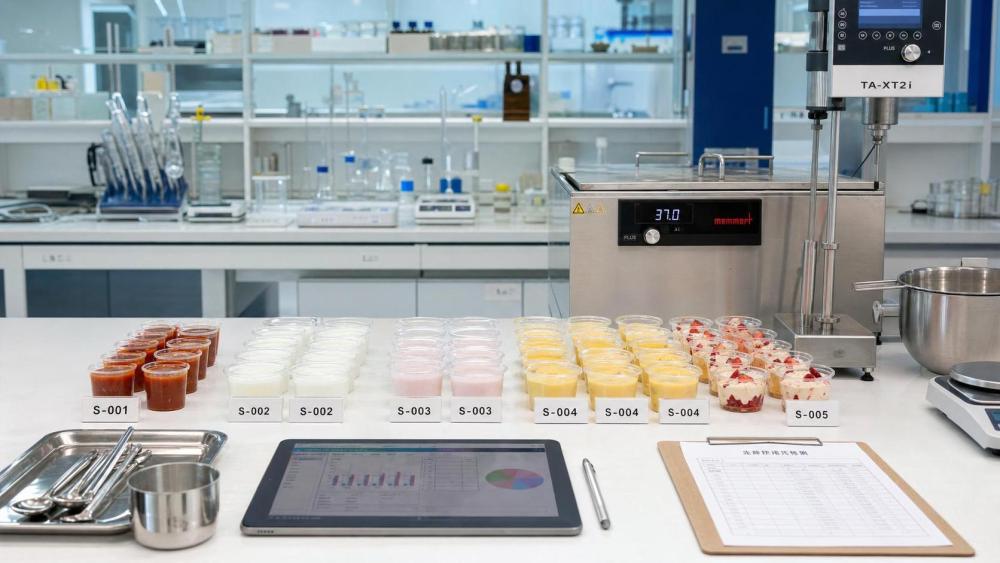
Food sensory science often looks precise on paper, yet small testing flaws can quietly reshape million-dollar product choices.
A sweeter prototype may appear stronger only because serving order favored it. A cleaner-label formula may seem weaker because texture shifted panel expectations.
In fast-moving FMCG categories, that kind of distortion affects reformulation timing, pricing confidence, and whether a concept deserves scale-up.
This matters even more across preservation systems, hydrocolloids, flavor systems, and functional actives, where sensory response links directly to technical performance.
Within that wider context, food sensory science is not just about taste preference. It is a decision filter for risk, compliance, and product positioning.
That is why intelligence-led platforms such as FFAI track molecular behavior, regulatory boundaries, and commercial implications together rather than in isolation.
Why the same test design fails across different product realities
One common mistake in food sensory science is assuming all products can be judged under one stable testing framework.
That rarely holds in real development. A shelf-stable sauce, an ice cream base, and a fortified beverage create very different sensory decision conditions.
Preservatives may protect shelf life while introducing aftertaste. Thickeners can improve body but delay flavor release. Natural pigments may support clean-label appeal yet alter sweetness perception.
Food sensory science becomes unreliable when those interactions are treated as background noise instead of core test variables.
More practical judgment starts with three questions: what sensory attribute drives purchase, when the product is consumed, and what formulation trade-off is under review.
Different conditions create different decision risks
When panel design turns preference into a false signal
Panel design errors are among the most damaging problems in food sensory science because they look statistically respectable.
The issue is not simply panel size. It is whether the panel reflects the product question being asked.
For example, expert tasters are useful when comparing subtle aroma shifts in flavor systems. They are less useful when predicting broad retail acceptance.
In contrast, a mainstream acceptance panel may overlook fine bitterness changes caused by antioxidants or heat-stressed extracts.
In practical food sensory science, one panel rarely answers both questions well. The safer route is staged testing.
- Use trained assessors to isolate attribute differences.
- Use broader preference testing after the formulation direction is stable.
- Separate first-impression liking from repeat-consumption acceptance.
- Check whether usage frequency changes tolerance for sweetness, acidity, or aroma intensity.
This is especially relevant in categories where fragrance-like top notes, creamy rheology, or preservative systems shape perception within seconds.
Sample handling mistakes often appear in texture-heavy and shelf-life-sensitive products
Another frequent food sensory science problem is treating sample preparation as an operational detail instead of a test variable.
That approach breaks down quickly in products influenced by hydrocolloids, fat systems, pigments, and thermal stress.
A yogurt sample served too cold may suppress aroma and exaggerate thickness. A baked filling assessed too soon may hide oxidative notes.
In beverages, inconsistent dilution water or glass type can alter sweetness, volatility, and color expectations.
The result is not a small technical error. It can push teams toward the wrong thickener level, flavor dosage, or preservative choice.
Where preparation bias usually enters
- Serving temperatures do not match actual consumption conditions.
- Hold times differ across samples, changing aroma release and texture set.
- Packaging is removed too early, allowing volatile loss.
- Freshly produced samples are tested without transport or storage simulation.
- Visual cues reveal formula identity and bias liking scores.
In food sensory science, sample control should mirror the product’s commercial life, not merely laboratory convenience.
Real-use environments matter more than controlled rooms in some categories
Controlled booths support consistency, but they can also strip away the context that drives actual consumer response.
This is where food sensory science often gets oversimplified. A product may score well in isolation and still disappoint in market conditions.
Snacks compete with ambient noise and rapid consumption. Sauces are judged with carrier foods. Functional beverages are evaluated alongside wellness expectations.
For products tied to indulgence or premium cues, aroma evolution and lingering mouthfeel may matter more than the first bite.
That is why food sensory science should sometimes include contextual testing after core discrimination work is complete.
The principle resembles FFAI’s broader intelligence view: molecular performance only becomes meaningful when linked to use conditions and commercial outcomes.
Data interpretation becomes risky when teams chase a single winning score
Misreading sensory data is often less visible than a poor panel or bad sample protocol, yet it creates equally expensive decisions.
In food sensory science, one top-line liking number rarely explains why a prototype wins or loses.
Sometimes the average score improves because a subgroup loved the flavor intensity while others rejected it sharply.
Sometimes a prototype underperforms initially but shows better repeat acceptance because sweetness fatigue is lower.
That difference matters in categories with daily consumption, shelf-life drift, or premium ingredient costs.
Better reading of food sensory science results usually includes
- Attribute-level analysis instead of overall liking alone.
- Segmentation by usage pattern, not only demographics.
- Comparison between fresh and aged sensory profiles.
- Cross-checking sensory outcomes with formula cost and stability data.
- Review of whether the “winner” still fits labeling, compliance, and process limits.
Without that wider lens, food sensory science can reward the loudest signal instead of the most commercially durable one.
Common misjudgments show up when similar products are treated as identical
A recurring error is assuming adjacent categories share the same sensory logic.
A fruit drink with natural pigments is not judged like a dairy dessert thickened for spoon feel. A preserved bakery filling is not judged like a fresh sauce.
Food sensory science becomes more reliable when teams resist that shortcut and map product behavior more carefully.
What stronger sensory decisions look like before the next reformulation round
The most useful food sensory science programs are built around decision quality, not testing volume.
That means defining which trade-off matters most before testing begins: cleaner label, longer shelf life, richer texture, stronger aroma, or better premium justification.
Once that priority is clear, the test can reflect actual product conditions instead of generic best practice.
- Map the exact use scenario, including storage, preparation, and consumption temperature.
- Separate diagnostic sensory work from launch-go or launch-no-go testing.
- Document visual, aroma, texture, and aftertaste bias risks before panel execution.
- Pair sensory findings with formulation physics, ingredient limits, and cost exposure.
- Create a repeatable scenario standard for future benchmark studies.
Food sensory science is most valuable when it prevents false confidence. That usually happens before launch, but only if testing matches reality.
The next useful step is to review current protocols against actual product scenarios, then identify where panel design, preparation, environment, and interpretation may be distorting decisions.
Related News
- How to interpret active matter on a surfactant specification sheetOct 14, 2026Prof. Elian Thorne
- What Quality Checks Should You Run on Fragrance Ingredient Suppliers?Oct 14, 2026Prof. Elian Thorne
- How to assess a flavor chemistry manufacturer's batch consistencyOct 13, 2026Prof. Elian Thorne
- What drives fragrance ingredients price changes in bulk orders?Oct 12, 2026Prof. Elian Thorne
Related News
- 00
0000-00
Verifying halal status of hydrocolloid ingredients in the Middle East - 00
0000-00
How to interpret active matter on a surfactant specification sheet - 00
0000-00
What Quality Checks Should You Run on Fragrance Ingredient Suppliers? - 00
0000-00
How to assess a flavor chemistry manufacturer's batch consistency - 00
0000-00
What drives fragrance ingredients price changes in bulk orders?
Prof. Elian Thorne
Weekly Insights
Stay ahead with our curated technology reports delivered every Monday.