





For project managers and engineering leads, a disciplined formula R&D checklist can cut screening time, reduce compliance risk, and improve decision-making across ingredients, performance, and cost. In fast-moving FMCG markets, faster ingredient screening is not just about speed—it is about balancing sensory appeal, efficacy, safety, and scalability from the very first evaluation step.
Why does formula R&D slow down at the screening stage?
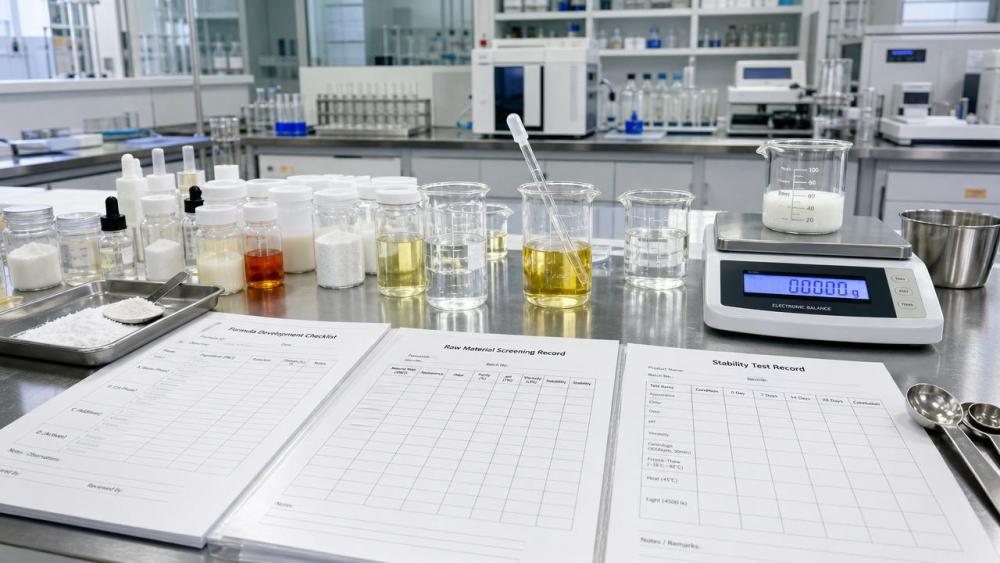
Many formula R&D projects lose momentum before lab validation is complete. Teams often compare suppliers too late, define target specifications too loosely, or separate technical review from compliance review. The result is repeated trials, unstable timelines, and avoidable cost escalation.
This problem is especially visible in food, fragrance, personal care, and cleaning formulations. An ingredient may look promising on paper, yet fail under heat, pH shift, odor interaction, emulsification stress, or regional regulatory review. Project leaders need a screening framework that filters early and filters hard.
- Performance targets are not translated into measurable screening gates such as viscosity range, odor retention, oxidation stability, or active loading tolerance.
- Commercial teams push for speed, while technical teams need compatibility, safety, and scale-up evidence before approving a candidate.
- Regulatory data, documentation quality, and export readiness are reviewed after prototype success instead of during ingredient preselection.
A practical formula R&D checklist reduces this friction by aligning screening with actual launch constraints. It helps teams compare ingredients not just by headline claims, but by formulation fit, processing behavior, and supply reliability.
What should a faster ingredient screening checklist include?
A strong formula R&D checklist works best when it is modular. Instead of one generic approval form, project managers should break screening into technical, sensory, compliance, cost, and supply modules. That structure allows faster elimination of weak candidates and clearer escalation for promising ones.
The table below summarizes the core screening dimensions that matter across antioxidants, thickeners, flavors, cosmetic actives, and surfactants. It is designed for early-stage decisions when time is short and cross-functional input is essential.
For project owners, the key insight is simple: formula R&D screening should reject candidates on total project fit, not on one attractive property. An antioxidant that survives oxidation but fails high-temperature baking, or a peptide with strong efficacy claims but poor skin delivery logic, is not a fast-track option.
A five-step screening flow for cross-functional teams
- Define the intended claim, sensory target, and processing window before requesting samples.
- Set go or no-go thresholds for stability, compatibility, and documentation completeness.
- Rank candidates by functional dose economics rather than kilogram price alone.
- Run a small matrix of stress tests tied to the real product system, not just ideal lab conditions.
- Escalate only screened finalists to sensory panels, claims review, and scale-up planning.
How do screening priorities change by ingredient category?
Not every formula R&D program screens ingredients the same way. The risk profile of a preservative is different from that of a fragrance blend or a luxury cosmetic active. Project managers should adapt the checklist to the scientific role of the material and to the market promise of the finished product.
The comparison below helps engineering leads set category-specific priorities without losing consistency across product lines.
This category view matters because screening speed comes from asking better first questions. FFAI’s industry intelligence is valuable here: it connects molecular behavior with real FMCG constraints, helping teams avoid broad, expensive sample rounds that produce more data than decisions.
What project managers should ask suppliers first
- What is the effective dosage range under the intended process conditions, not just in standard brochures?
- What documentation is available for safety, specification control, and target-market compliance?
- How does the ingredient behave in systems with competing oils, acids, salts, proteins, or active compounds?
- What supply risks exist around lead time, source concentration, or batch-to-batch variation?
Which technical and compliance checks prevent late-stage reformulation?
Fast formula R&D is not reckless formula R&D. The biggest scheduling losses often happen after a prototype looks successful. A candidate passes the bench test, then fails on export documentation, claim language, thermal stability, or packaging interaction. Early checklist discipline is cheaper than rework.
Technical checks that deserve early attention
- Stress response under realistic processing conditions such as heating, cooling, homogenization, or repeated mixing.
- Interaction with the full system, including fragrance masking, emulsifier competition, or rheology shift at production-scale shear.
- Shelf-life relevance, including oxidation drift, microbial exposure, color fade, or active degradation pathway.
Compliance checks that should not wait
- Food ingredients may require attention to intended use, additive status, and documentation aligned with target jurisdictions.
- Cosmetic ingredients may need support for ingredient notification pathways, restricted use review, and claims positioning.
- Cleaning ingredients increasingly face sustainability, biodegradability, and consumer-safety scrutiny in procurement review.
FFAI’s Strategic Intelligence Center is useful in this phase because it bridges science and documentation. Compliance tracking, molecular mechanism analysis, and pricing logic should not operate in silos. When those streams are integrated, project managers can decide earlier whether an ingredient deserves serious development resources.
How should teams compare cost, speed, and substitution options?
Budget pressure is a constant issue in formula R&D. However, low unit price does not always mean lower project cost. A cheaper thickener that requires a higher inclusion rate, a fragrance that fades too quickly, or a premium active without differentiated market value can all damage margin and schedule.
Use the following comparison when discussing substitutions or tiered development plans across mainstream and premium product lines.
The best formula R&D choice is usually the option with the strongest cost-per-outcome logic. That includes processing robustness, dosage efficiency, claim potential, and regional launch feasibility. FFAI’s pricing and market perspective helps teams explain why some expensive ingredients create downstream premium value while others simply add cost.
What common mistakes weaken ingredient screening?
Even experienced teams can make screening errors when speed pressure rises. Most mistakes come from evaluating ingredients in isolation instead of in their intended formula and commercial context.
- Using supplier claims as screening criteria without translating them into measurable internal acceptance rules.
- Running too many candidates at once, which creates data overload and slows cross-functional decisions.
- Ignoring packaging, transport, and storage conditions that can alter aroma, color, or active stability.
- Treating compliance as a late paperwork step instead of a real screening filter.
A disciplined formula R&D checklist corrects these habits by turning each screening round into a decision engine. The objective is not to test everything. The objective is to identify the few candidates worth deeper formulation investment.
FAQ for project managers leading formula R&D
How many ingredient candidates should be screened in the first round?
In most formula R&D programs, three to five candidates per functional role is a workable range. Fewer options can create supplier dependency too early. Too many options often delay decisions unless the screening criteria are unusually strict and automated.
What matters more: ingredient price or effective dosage?
Effective dosage usually matters more. A lower-cost ingredient may still be less economical if it requires higher loading, additional stabilizers, more rework, or tighter process controls. Project managers should compare cost per functional result, not purchase price alone.
When should compliance review begin?
It should begin during preselection. Early review of intended use, safety documents, labeling implications, and target-market acceptability can prevent late reformulation. This is especially important for export-oriented food, cosmetic, and cleaning product development.
How can teams shorten the path from sample to pilot?
Use a checklist that combines technical fit, sensory fit, documentation status, and supply feasibility in one scorecard. Then move only top-ranked candidates into pilot work. This avoids spreading lab time across ingredients that were never commercially viable.
Why choose us for faster ingredient screening and formula R&D support?
FFAI supports project managers and engineering leads who need sharper decisions across food preservation, rheology, flavors and fragrances, cosmetic actives, and washing surfactants. Our advantage is not generic information. It is structured intelligence that links molecular behavior, compliance risk, sensory outcome, and market value.
If your team is evaluating ingredient options, we can help you review screening parameters, compare functional alternatives, discuss documentation requirements, and clarify where premium ingredients create real commercial leverage. We can also support conversations around sample priorities, target dosage logic, supply considerations, and launch-market constraints.
- Confirm critical parameters for antioxidants, thickeners, aroma systems, actives, or surfactants.
- Discuss product selection logic based on performance, compliance, and cost-per-outcome.
- Review delivery timing, sample support priorities, and documentation readiness for target markets.
- Explore customized screening frameworks for multi-market FMCG formula R&D projects.
For teams under deadline pressure, the right conversation is rarely “Which ingredient is cheapest?” It is “Which candidate can survive the formula, the factory, the market, and the margin target?” That is the level where better formula R&D decisions start.
Related News
- How to interpret active matter on a surfactant specification sheetOct 14, 2026Prof. Elian Thorne
- What Quality Checks Should You Run on Fragrance Ingredient Suppliers?Oct 14, 2026Prof. Elian Thorne
- How to assess a flavor chemistry manufacturer's batch consistencyOct 13, 2026Prof. Elian Thorne
- What drives fragrance ingredients price changes in bulk orders?Oct 12, 2026Prof. Elian Thorne
Related News
- 00
0000-00
Verifying halal status of hydrocolloid ingredients in the Middle East - 00
0000-00
How to interpret active matter on a surfactant specification sheet - 00
0000-00
What Quality Checks Should You Run on Fragrance Ingredient Suppliers? - 00
0000-00
How to assess a flavor chemistry manufacturer's batch consistency - 00
0000-00
What drives fragrance ingredients price changes in bulk orders?
Prof. Elian Thorne
Weekly Insights
Stay ahead with our curated technology reports delivered every Monday.