





High-Purity Ingredients Raw Materials: Why does higher purity often lower total cost?
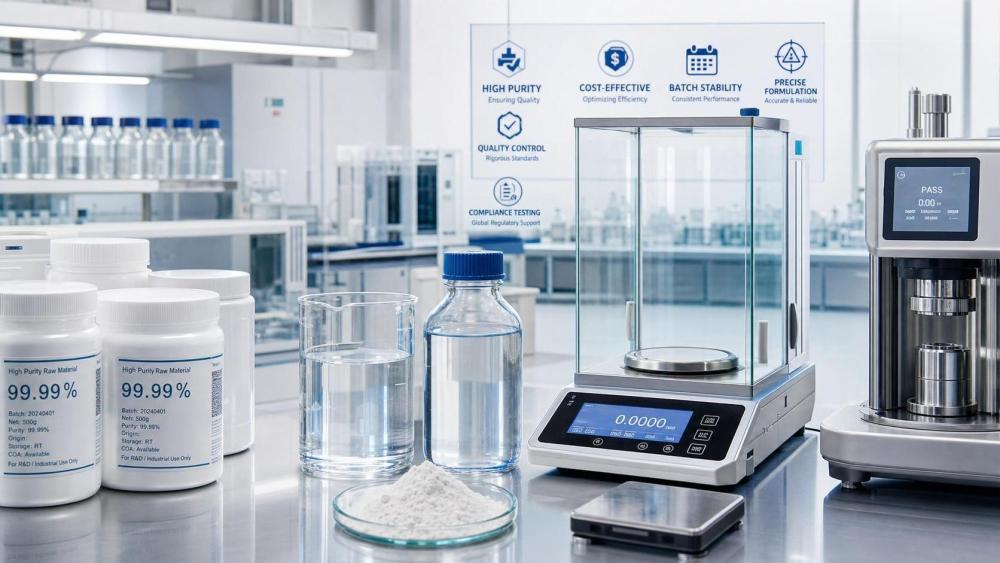
High-purity ingredients raw materials look expensive at first glance. The unit price is usually the first objection raised in sourcing discussions.
Yet in food, fragrance, personal care, and active compounds, price per kilogram rarely tells the full story.
A higher-purity input can reduce rework, shorten formulation adjustment, and stabilize sensory or efficacy performance across batches.
That matters when a formula depends on precise oxidation control, rheology behavior, odor clarity, skin tolerance, or premium anti-aging claims.
In practical terms, high-purity ingredients raw materials improve cost efficiency when hidden losses are larger than the apparent price gap.
Those hidden losses often sit in failed pilot runs, unstable color, off-notes, microbial risk, dosage drift, and extra compliance work.
This is why FFAI follows purity closely across preservatives, thickeners, fragrance molecules, cosmetic actives, and surfactant systems.
The real question is not whether purity is better in theory. It is when purity produces measurable business efficiency.
When does paying more for purity make economic sense?
The strongest case appears when ingredient variability creates downstream cost that is hard to see in procurement spreadsheets.
For antioxidants and preservatives, impurity can accelerate degradation or weaken shelf-life protection under heat, light, or transport stress.
For natural pigments and thickeners, lower purity may introduce unwanted ash, odor, color shift, or inconsistent viscosity curves.
For flavors and essential oil extracts, trace contaminants can blur top notes and change the dry-down profile.
For peptides or advanced cosmetic actives, purity directly affects dosage confidence, irritation risk, and claim support.
For washing surfactants, impurity can affect foam profile, odor, mildness, and residue behavior across different water conditions.
A useful way to judge high-purity ingredients raw materials is to compare them against the cost of inconsistency.
In other words, high-purity ingredients raw materials make sense when they protect formula economics, not just technical elegance.
What should be checked beyond the purity percentage itself?
A single purity number can be misleading. Two materials may both claim 98%, yet behave very differently in production.
The more reliable approach is to review purity together with impurity profile, residual solvents, heavy metals, microbial load, and stability data.
For food preservation and bakery systems, thermal stability matters as much as nominal purity.
For hydrocolloids and thickeners, particle distribution and hydration behavior often decide plant performance.
For fragrance compounds, chirality, oxidation markers, and trace odor impurities can matter more than headline assay.
For cosmetic actives, delivery compatibility and skin tolerance must be reviewed alongside purity claims.
FFAI’s intelligence perspective is useful here because purity is not a standalone lab value. It is a performance and compliance variable.
- Ask for batch-to-batch specification ranges, not only a typical value.
- Confirm the analytical method used for purity reporting.
- Review storage sensitivity, especially for oxidizable or moisture-sensitive materials.
- Check whether the impurity profile affects regulatory filing in target markets.
- Test the material in the final matrix, not only in a simplified lab base.
That last point is often missed. High-purity ingredients raw materials must prove value inside the actual product architecture.
Which categories gain the most from high-purity ingredients raw materials?
Not every application needs the highest available grade. The commercial return depends on formulation sensitivity and market positioning.
The best candidates usually share one feature: small molecular deviations create large downstream consequences.
Food preservation and shelf-life systems
Here, purity supports reproducible antioxidant or antimicrobial behavior. That is critical for cross-border supply chains and long storage windows.
Natural pigments and rheology thickeners
A cleaner ingredient can improve dispersion, mouthfeel, visual consistency, and process predictability in dairy, sauces, and frozen desserts.
Flavors, aroma chemicals, and essential oils
Premium sensory products need note accuracy. Unwanted residues can flatten aroma development or distort dry-down behavior.
Cosmetic actives and anti-aging compounds
This is where high-purity ingredients raw materials often create the clearest margin story.
A peptide or advanced active may be expensive, but a purer version can support lower dosage uncertainty and stronger premium claims.
Mild surfactant systems
In shampoos and cleansers, purity can improve mildness profile, reduce odor interference, and simplify fragrance balancing.
Across these categories, the point is similar: better purity often protects formulation intent from invisible variation.
Where do buyers misread the cost picture?
The most common mistake is treating high-purity ingredients raw materials as a direct cost increase rather than a total-cost decision.
A lower-priced grade can look efficient until it triggers additional filtration, masking, stabilization, or complaint handling.
Another mistake is assuming technical pass equals commercial fit. A material may pass pilot testing but fail during scale-up or export review.
There is also a timing issue. Purity decisions made late can delay launch because the supporting documentation is incomplete.
This is why compliance intelligence matters. FFAI’s view across FDA GRAS, CPNP, and formula performance helps connect sourcing with market access.
The cost picture becomes clearer when each option is compared across five lines: dose efficiency, process stability, claim support, compliance burden, and complaint exposure.
How can a sourcing team judge high purity without overbuying?
The goal is not maximum purity at any cost. The goal is fit-for-purpose purity with proven economic return.
Start with the failure point in the formula. Is it shelf life, odor clarity, viscosity drift, irritation, or claim substantiation?
Then match the purity upgrade to that risk, instead of applying the same standard to every ingredient.
A practical evaluation path usually works better than broad supplier claims.
- Identify the ingredients that most strongly influence product failure or premium differentiation.
- Compare at least two grades using real formulation trials and accelerated stability checks.
- Convert test results into business metrics such as dosage shift, scrap rate, and launch risk.
- Review compliance files early, especially for multi-region products.
- Build a grade-selection rule so future sourcing stays consistent.
That process is especially relevant in the FMCG environment tracked by FFAI, where sensory impact, safety, and speed to market are tightly linked.
High-purity ingredients raw materials are most valuable when they support a repeatable standard, not a one-off technical win.
So, what is the smart next step?
If purity is being discussed only as a price issue, the review is too narrow.
High-purity ingredients raw materials should be assessed through total formulation economics, compliance readiness, and end-market positioning.
That is especially true for preservatives, hydrocolloids, aroma compounds, premium actives, and mild surfactants.
The better approach is to shortlist the materials that drive the highest failure cost or the strongest premium value.
Then compare grades using formulation trials, impurity review, regulatory fit, and commercial impact in parallel.
When that discipline is in place, high purity stops being an abstract quality claim and becomes a measurable sourcing advantage.
For teams operating across taste, beauty, and household categories, that shift usually leads to better decisions, fewer surprises, and stronger long-term margins.
Related News
- How to interpret active matter on a surfactant specification sheetOct 14, 2026Prof. Elian Thorne
- What Quality Checks Should You Run on Fragrance Ingredient Suppliers?Oct 14, 2026Prof. Elian Thorne
- How to assess a flavor chemistry manufacturer's batch consistencyOct 13, 2026Prof. Elian Thorne
- What drives fragrance ingredients price changes in bulk orders?Oct 12, 2026Prof. Elian Thorne
Related News
- 00
0000-00
Verifying halal status of hydrocolloid ingredients in the Middle East - 00
0000-00
How to interpret active matter on a surfactant specification sheet - 00
0000-00
What Quality Checks Should You Run on Fragrance Ingredient Suppliers? - 00
0000-00
How to assess a flavor chemistry manufacturer's batch consistency - 00
0000-00
What drives fragrance ingredients price changes in bulk orders?
Prof. Elian Thorne
Weekly Insights
Stay ahead with our curated technology reports delivered every Monday.