





How Sensory Analytics Improves Plant-Based Meat Acceptance
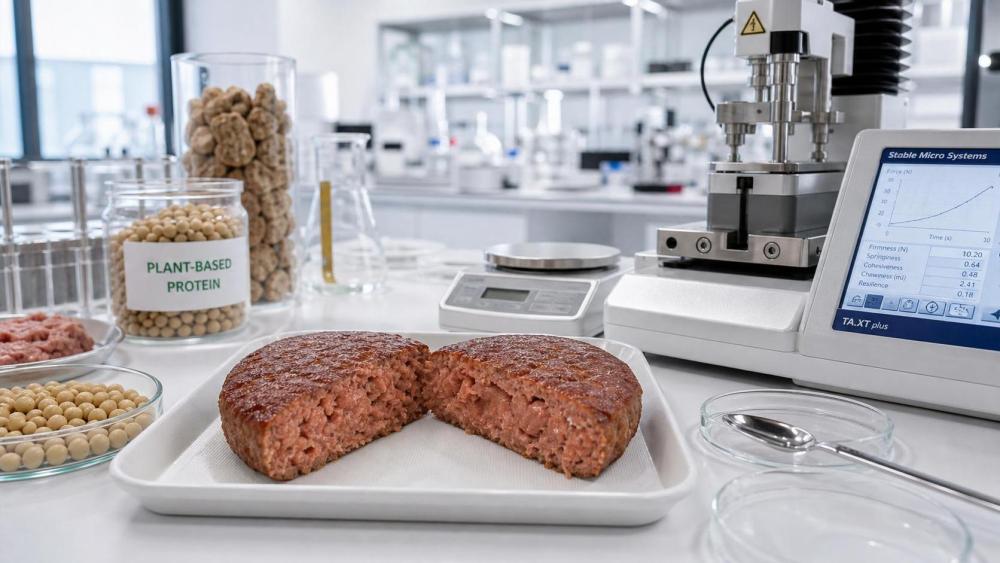
For business leaders navigating the fast-growing alternative protein market, sensory analytics for plant-based meat offers a decisive path to stronger consumer acceptance.
It turns taste, aroma, texture, and mouthfeel into measurable signals.
That matters because category growth no longer depends on novelty alone.
Consumers now compare plant-based products with animal meat on everyday eating experience, not just values.
In practical terms, sensory analytics for plant-based meat helps companies reduce reformulation risk, improve repeat purchase, and guide faster product decisions.
For organizations operating across food innovation, ingredients, and consumer insight, this is no longer a nice-to-have capability.
It is becoming a commercial filter for which products scale and which stall.
Why acceptance remains the real market bottleneck
Many plant-based launches reach shelves with strong claims but uneven eating performance.
The common issues are familiar.
- Beany, grassy, or oxidized aroma notes
- Dry, rubbery, or pasty bite
- Weak juiciness and poor fat release
- Aftertaste that lingers too long
- Flavor loss during heating or holding
These gaps directly affect trial, repeat purchase, and menu retention.
More importantly, they raise cost across R&D, sourcing, and commercialization.
This is where sensory analytics for plant-based meat becomes commercially useful.
Instead of relying on broad preference scores, teams can isolate which sensory drivers actually shape liking and rejection.
That level of clarity supports better formulation choices and more disciplined launch timing.
What sensory analytics for plant-based meat really includes
Sensory analytics for plant-based meat is broader than a taste test.
It combines sensory science, instrumental testing, and market interpretation.
The goal is simple.
Translate perception into decisions that improve product-market fit.
Core measurement areas
- Aroma mapping for cooked, raw, and reheated states
- Texture profiling for firmness, chew, springiness, and breakdown
- Mouthfeel analysis for juiciness, coating, and fat perception
- Flavor release tracking across first bite and aftertaste
- Consumer segmentation by usage occasion and expectation set
Advanced programs often connect trained panel data with instrumental outputs.
That may include rheology, volatile compound analysis, water retention, or thermal stability.
For ingredient-led organizations, this creates a stronger bridge between molecular design and eating performance.
That bridge is especially important when flavor systems, thickeners, antioxidants, or fats interact in unexpected ways.
How sensory analytics improves commercial outcomes
The strongest value of sensory analytics for plant-based meat is speed with direction.
It helps teams move beyond subjective debates.
Instead, decisions can be linked to measurable acceptance drivers.
1. Sharper formulation priorities
Not every defect deserves equal attention.
A slight beany note may be tolerated if juiciness and savory depth perform well.
A dry, dense bite, however, can immediately lower liking.
Sensory analytics for plant-based meat shows which variables deserve budget first.
2. Lower reformulation waste
Repeated trial-and-error cycles are expensive.
By linking sensory feedback with ingredient performance, teams avoid chasing the wrong fix.
That is especially useful when multiple suppliers contribute oils, proteins, binders, and flavors.
3. Better market positioning
Not every product must mimic beef in the same way.
Some winning products lean into burgers, others into mince, nuggets, or ready meals.
Sensory analytics for plant-based meat helps define where a product performs credibly and where it does not.
4. Stronger supplier alignment
Cross-functional language matters.
When procurement, R&D, quality, and commercial teams use shared sensory metrics, collaboration improves.
That makes ingredient negotiations and specification management far more efficient.
A practical framework for implementation
In real business settings, the best programs are structured, not overly academic.
A workable approach usually follows five steps.
- Define the product benchmark and target eating occasion.
- Build a sensory attribute map for key acceptance drivers.
- Test prototypes against trained panel and consumer reactions.
- Connect sensory results with formulation and process variables.
- Use insights to prioritize the next reformulation cycle.
This process sounds simple, but discipline matters.
For example, testing a retail burger like a foodservice patty can distort the findings.
The same applies to preparation method, hold time, and serving temperature.
Sensory analytics for plant-based meat only works when context stays close to actual use.
Where ingredient intelligence creates an edge
Ingredient choices sit at the center of sensory performance.
That makes intelligence-led analysis especially valuable.
Organizations like FFAI operate at this exact intersection.
They track how flavors, antioxidants, thickeners, natural pigments, and functional actives behave under commercial constraints.
For plant-based meat, that means insight into more than ingredient labels.
It means understanding how molecules perform during mixing, heating, storage, and consumption.
Examples of high-impact ingredient questions
- Which antioxidant system best protects flavor during shelf life?
- Which hydrocolloid improves juiciness without creating gumminess?
- Which aroma profile survives high-heat cooking most effectively?
- Which fat system delivers better melt, release, and mouth coating?
- Which natural color remains appealing from raw to cooked state?
When these questions are paired with sensory analytics for plant-based meat, decision-making becomes much more precise.
That precision supports faster commercialization and stronger margin control.
Common risks and how to avoid them
Even well-funded teams can misuse sensory programs.
The most common mistakes are operational, not scientific.
The broader lesson is straightforward.
Sensory analytics for plant-based meat works best as a business system, not a one-off test.
What decision-makers should do next
The market signal is becoming clearer.
Plant-based meat wins when sensory performance feels reliable, familiar, and satisfying.
Price, sustainability, and nutrition still matter.
But without a convincing eating experience, scale remains fragile.
That is why sensory analytics for plant-based meat deserves a central role in innovation planning.
Start by auditing your current products against clear sensory benchmarks.
Then identify the two or three attributes most strongly linked to repeat purchase.
From there, align ingredient strategy, process control, and consumer validation around those priorities.
Teams that do this well turn sensory insight into a practical growth engine, with less waste, better products, and stronger market acceptance.
Related News
- How minimum order quantities shape private label ingredient sourcing costsOct 10, 2026Prof. Elian Thorne
- What drives personal care ingredient price volatility in sourcingOct 08, 2026Prof. Elian Thorne
- What drives micelles price differences in cosmetic formulations?Oct 07, 2026Prof. Elian Thorne
- How rheological thickeners for shampoo affect suspension stabilityOct 03, 2026Prof. Elian Thorne
Related News
- 00
0000-00
How to assess a food antioxidants distributor’s traceability practices - 00
0000-00
How minimum order quantities shape private label ingredient sourcing costs - 00
0000-00
What drives personal care ingredient price volatility in sourcing - 00
0000-00
What drives micelles price differences in cosmetic formulations? - 00
0000-00
How to assess color stability from a natural food colors manufacturer
Prof. Elian Thorne
Weekly Insights
Stay ahead with our curated technology reports delivered every Monday.