





How Supplier References Reduce Risk in Ingredient Specification Reviews
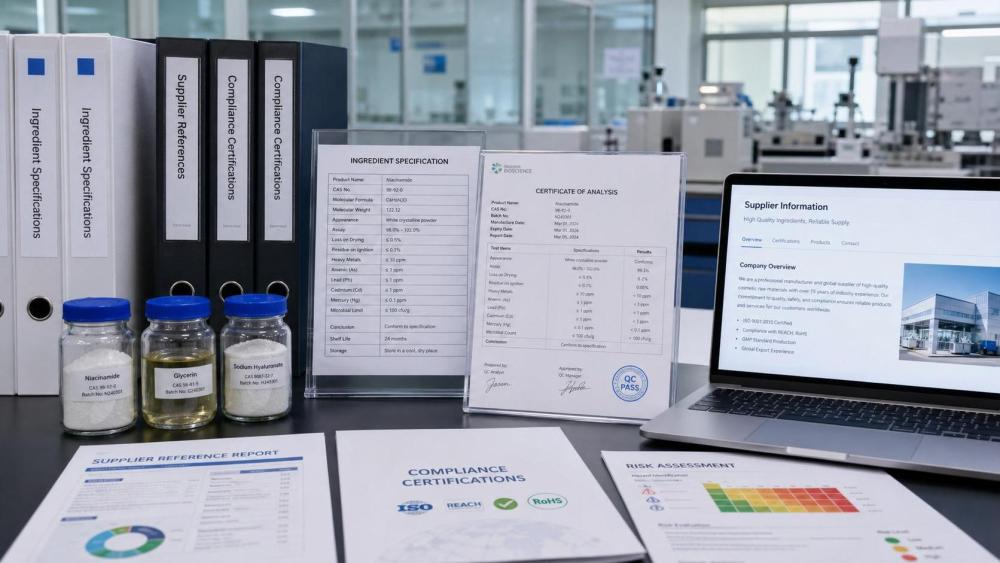
For business evaluators, ingredient specification reviews are not just technical checks. They work as risk filters that protect approval speed, product stability, and supplier credibility.
That is why strong ingredient specification resources matter. They help teams compare claims, confirm documents, and test whether each supplier reference holds up under scrutiny.
In fast-moving FMCG sectors, weak reviews create hidden costs. A missing allergen note, vague purity range, or outdated regulatory statement can delay launches or trigger reformulation.
A verified supplier reference changes that. It adds context behind the specification and shows whether the document reflects real production, real compliance, and real delivery capability.
This matters across preservatives, thickeners, flavors, essential oils, cosmetic actives, and surfactants. In each category, the review process must connect paper claims with operational evidence.
Why Specification Reviews Often Miss Risk
Many teams already use ingredient specification resources. The problem is not access. The problem is relying on files without testing the trustworthiness behind them.
A specification can look complete and still hide risk. It may list assay ranges, microbiological limits, or storage conditions, yet omit supplier change controls or source variability.
This becomes more serious when ingredients cross markets. A food antioxidant acceptable in one region may need extra documentation elsewhere. The same is true for fragrance allergens or cosmetic actives.
In practical reviews, three gaps appear again and again:
- Specifications are checked without validating the supplier reference history.
- Ingredient specification resources are used as archives, not as decision tools.
- Commercial and compliance data stay separated from technical review.
When those gaps remain, risk moves downstream. It reaches procurement, formulation, claims review, and customer audits much later, when fixes cost more.
What a Strong Supplier Reference Actually Proves
A supplier reference is more than a contact name or past buyer list. In an ingredient review, it is supporting evidence that the supplier can consistently meet the stated specification.
The best supplier reference confirms four things at once. It supports quality consistency, compliance discipline, supply continuity, and responsiveness when deviations happen.
For example, if a xanthan gum supplier claims stable viscosity and clean-label suitability, the supplier reference should show repeated performance across batches and customers.
If a peptide supplier claims premium purity and anti-aging efficacy support, the reference should indicate robust documentation, handling discipline, and reliable lot traceability.
A useful supplier reference usually helps answer questions like these:
- Does the delivered material match the approved specification over time?
- How quickly does the supplier handle out-of-spec events or document updates?
- Have there been source, plant, or process changes affecting the ingredient?
- Can the supplier support different market compliance expectations?
This is where ingredient specification resources become more valuable. They help compare supplier reference signals against technical data, regulatory files, and sourcing history.
How to Use Ingredient Specification Resources More Effectively
A better review starts by treating ingredient specification resources as a working intelligence system. They should connect specifications, certifications, audit notes, references, and change records.
That approach is especially useful in sectors covered by FFAI. Preservatives, flavors, hydrocolloids, surfactants, and cosmetic actives often face different technical and regulatory pressures.
A practical review flow usually includes the following steps:
- Check whether the specification version matches the latest production and market use.
- Compare claimed limits with COA patterns from recent lots.
- Review each supplier reference for industry relevance and recency.
- Match compliance statements to the target market, not only the source market.
- Flag any unresolved changes in origin, manufacturing site, or raw material source.
This process makes ingredient specification resources actionable. Instead of storing files passively, teams use them to challenge assumptions before approving a supplier.
More importantly, each supplier reference becomes part of a pattern. One strong reference helps, but several aligned records create a much clearer risk picture.
Key Risks That References Can Expose Early
Reference-based review is valuable because it reveals risks that technical tables often miss. Those risks usually sit between documentation and real operations.
These issues are easier to catch when ingredient specification resources include both current specs and historical supplier reference evidence. That combination reduces surprises later.
Building a More Defensible Review Process
A defensible process does not have to be complicated. It has to be consistent, documented, and tied to decision thresholds that teams actually use.
Start by ranking ingredients by exposure and business impact. A niche fragrance solvent may need one level of review. A core preservative or anti-aging active may need deeper validation.
Then define what counts as an acceptable supplier reference. Recency, market similarity, product type, and issue history should all matter.
Many teams also benefit from a simple scoring model:
- Specification completeness
- Quality evidence from recent lots
- Compliance fit for target markets
- Supplier reference strength
- Supply continuity confidence
This helps reviewers defend approvals internally. It also makes ingredient specification resources easier to compare across suppliers competing for the same business.
Over time, the process becomes faster. The reason is simple: better supplier reference validation reduces repeated back-and-forth after provisional approval.
Turning Reviews Into Faster, Safer Decisions
The real goal is not more paperwork. It is better decisions with fewer late-stage surprises. That only happens when ingredient specification resources and each supplier reference are reviewed together.
In recent market conditions, that combined review is becoming more important. Global sourcing remains volatile, while clean-label, safety, and efficacy claims face sharper scrutiny.
For ingredients linked to taste, texture, preservation, cleansing, or premium beauty performance, risk is rarely only technical. It is commercial, regulatory, and reputational at the same time.
That is why disciplined reference-based review stands out. It helps teams approve with confidence, reject with evidence, and escalate only where the risk truly justifies it.
Use ingredient specification resources as living decision support. Test every supplier reference against quality history, compliance fit, and supply performance. That is how specification review becomes a real control point, not just an administrative step.
Related News
- How to interpret active matter on a surfactant specification sheetOct 14, 2026Prof. Elian Thorne
- What Quality Checks Should You Run on Fragrance Ingredient Suppliers?Oct 14, 2026Prof. Elian Thorne
- How to assess a flavor chemistry manufacturer's batch consistencyOct 13, 2026Prof. Elian Thorne
- What drives fragrance ingredients price changes in bulk orders?Oct 12, 2026Prof. Elian Thorne
Related News
- 00
0000-00
Verifying halal status of hydrocolloid ingredients in the Middle East - 00
0000-00
How to interpret active matter on a surfactant specification sheet - 00
0000-00
What Quality Checks Should You Run on Fragrance Ingredient Suppliers? - 00
0000-00
How to assess a flavor chemistry manufacturer's batch consistency - 00
0000-00
What drives fragrance ingredients price changes in bulk orders?
Prof. Elian Thorne
Weekly Insights
Stay ahead with our curated technology reports delivered every Monday.