





Choosing cosmetic actives for serums is rarely about chasing the most fashionable ingredient. It starts with the skin concern being treated, then moves through dose, stability, texture, tolerance, and regulatory fit.
That is why cosmetic actives for serums matter across the wider FMCG ingredient landscape. Performance claims now sit beside safety expectations, clean-label pressure, and a sharper demand for evidence-backed formulation choices.
Within that context, serum development has become a practical meeting point between molecular science and consumer use. A good formula must feel elegant, remain stable, and deliver visible benefits without creating new skin problems.
Start with the concern, not the ingredient list
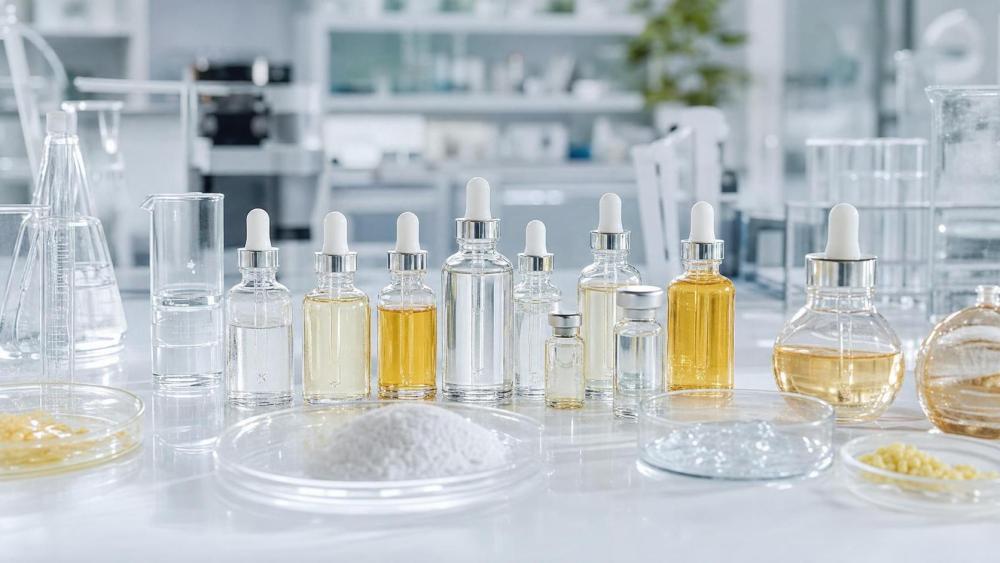
The simplest way to select cosmetic actives for serums is to define the primary concern first. Dryness, acne, dullness, sensitivity, and visible aging each require a different mechanism of action.
Dry skin usually needs water retention, barrier repair, and reduced transepidermal water loss. Acne-prone skin needs sebum balance, pore clarity, and anti-inflammatory support, not only stronger exfoliation.
Dullness often points to uneven turnover, dehydration, oxidation, or pigmentation. Sensitive skin needs low-irritation support and barrier recovery. Aging concerns may involve lines, elasticity, dehydration, and slower visible repair.
This concern-first method keeps formulation decisions grounded. It also prevents the common mistake of combining too many actives with overlapping claims but poor compatibility.
What makes a serum active worth using
Not every trending ingredient performs well in a serum. The best cosmetic actives for serums are selected through four filters: efficacy, stability, compatibility, and skin tolerance.
Efficacy means the ingredient has a clear pathway. Niacinamide supports barrier function and tone. Salicylic acid helps exfoliate within pores. Peptides target signs linked to firmness and wrinkle appearance.
Stability matters because a strong active that degrades quickly may underperform. Vitamin C is the classic example. The form chosen, pH system, packaging, and antioxidant support all affect real-world results.
Compatibility is equally important. Some ingredients work well together, while others compete, irritate, or force difficult pH compromises. Skin tolerance then decides whether performance can be sustained over time.
This is where FFAI’s broader ingredient perspective becomes useful. The same discipline applied to preservatives, thickeners, and sensory systems also shapes successful serum formulas.
Matching cosmetic actives for serums to common skin concerns
In practice, skin concerns rarely appear alone, but a lead target still helps organize the formula. The table below shows a practical selection framework.
The strongest formulas usually pair a hero active with support ingredients. For example, anti-aging serums often perform better when peptides are supported by humectants, antioxidants, and texture stabilizers.
Why the industry is paying closer attention
High-end cosmetic actives now carry more strategic weight than before. They influence brand positioning, price architecture, product claims, and the consumer’s idea of what premium efficacy should feel like.
At the same time, scrutiny has increased. Buyers expect scientific anti-aging language, but they also expect absolute safety, elegant sensory profiles, and transparent compliance pathways.
That broader market logic aligns with FFAI’s view of ingredient intelligence. A serum active is not isolated from the rest of formulation science. Rheology, preservation, oxidation control, and skin delivery all shape its commercial value.
In other words, the best cosmetic actives for serums are not only biologically interesting. They also need to survive manufacturing realities, shelf-life demands, and market-facing claim review.
Formulation details that change real performance
Concentration is only one part of the story
A higher percentage does not automatically mean a better serum. Some actives show strong results at low use levels, while higher loading can damage feel, clarity, or tolerance.
The base system matters
Water-based gels, emulsified serums, and anhydrous systems support different active profiles. A peptide serum and an oil-soluble retinoid serum may need completely different structural choices.
Preservation and packaging are part of efficacy
Airless packs, light protection, and compatible preservatives protect active integrity. This echoes a familiar FMCG truth: shelf stability is not a back-end issue, but part of product performance.
Sensory quality affects continued use
A serum that pills, feels sticky, or leaves residue often fails in use, even when the active profile looks strong on paper. Repeated use depends on texture as much as claim language.
A practical screening checklist for selection
Before choosing cosmetic actives for serums, it helps to pressure-test the formula against a few grounded questions.
- Is the active matched to one primary skin concern and one secondary concern?
- Does the chosen form remain stable in the target pH and solvent system?
- Can the formula support the active without unnecessary irritation?
- Do supporting ingredients improve delivery, hydration, or barrier comfort?
- Will packaging protect the serum through shipping, storage, and daily use?
- Are claims, compliance documents, and regional regulations aligned?
This checklist is especially useful when comparing suppliers. Two ingredients may sound similar, yet differ sharply in purity, supporting data, sensory effect, and recommended use conditions.
How to move from ingredient interest to better decisions
A useful next step is to organize cosmetic actives for serums by concern, mechanism, and formulation constraints rather than by trend value alone. That creates a clearer starting point for testing.
Then compare each option through a tighter lens: clinical support, sensory impact, compatibility, preservation needs, and compliance readiness. This is often where expensive mistakes become visible early.
For anyone evaluating serum concepts in a broader FMCG setting, the strongest decisions connect molecular efficacy with the less glamorous parts of formulation. Stability, safety, and user experience still decide whether an active earns its place.
That is also the most durable way to read the market. Track the skin concern first, test the system around it, and let evidence guide which cosmetic actives for serums deserve to move forward.
Related News
- How rheological thickeners for shampoo affect suspension stabilityOct 03, 2026Prof. Elian Thorne
- When does OEM ingredient sourcing support make custom formulations viable?Sep 29, 2026Prof. Elian Thorne
- What to check in a transdermal penetration supplier for skincareSep 26, 2026Prof. Elian Thorne
- How farnesene market pricing affects renewable ingredient sourcingSep 26, 2026Prof. Elian Thorne
Related News
- 00
0000-00
How to assess color stability from a natural food colors manufacturer - 00
0000-00
When does amino acid surfactant powder improve cleanser mildness? - 00
0000-00
How to verify a cosmetic nanotechnology supplier's safety documentation - 00
0000-00
How rheological thickeners for shampoo affect suspension stability - 00
0000-00
How to assess recombinant collagen ingredients for cream stability
Prof. Elian Thorne
Weekly Insights
Stay ahead with our curated technology reports delivered every Monday.