





How to Compare High Purity Protein Ingredients for Clean-Label Formulas
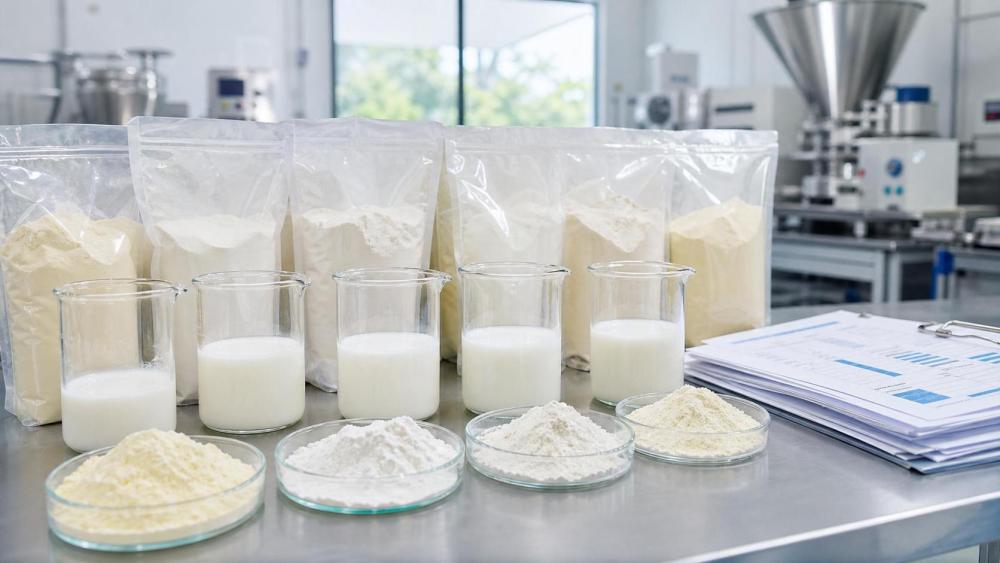
Selecting the right high purity protein ingredients for clean-label formulas requires more than checking protein percentages.
A strong comparison starts with source quality, process fit, sensory impact, and regulatory clarity.
That matters even more as clean-label claims face tighter scrutiny across food, nutrition, and wellness products.
In practice, high purity protein ingredients must perform well in the factory and still read simply on pack.
This guide breaks down how to compare high purity protein ingredients in a way that supports real formulation decisions.
Start With the Real Definition of Purity
Purity is often treated as a single number, but that is too narrow for clean-label formulas.
High purity protein ingredients should be assessed through composition, contaminant profile, and process residue risk.
A protein isolate at 90% may still differ sharply from another isolate at the same declared level.
The meaningful question is what makes up the remaining fraction.
Look at ash, fat, residual sugars, off-flavor compounds, and potential carrier systems.
More importantly, verify whether purification relies on solvents, harsh chemicals, or processing aids.
For clean-label positioning, the production route can matter almost as much as the protein assay.
Core checks at this stage
- Protein basis: dry basis versus as-is basis.
- Non-protein nitrogen contribution.
- Residual moisture and water activity.
- Heavy metals, pesticides, and microbiological limits.
- Allergen cross-contact controls.
This first screen quickly separates marketing claims from technically useful high purity protein ingredients.
Compare Source Integrity, Not Just Source Type
Whey, pea, rice, soy, fava, and fermentation-derived proteins can all fit clean-label goals.
Still, source type alone does not predict performance or claim strength.
A better comparison looks at origin consistency, supply chain transparency, and lot-to-lot compositional variation.
For example, plant proteins may vary with cultivar, growing region, and harvest conditions.
That variation changes color, flavor, viscosity, and hydration speed.
Animal-derived proteins may offer tighter functionality, yet they can raise labeling and lifestyle concerns.
Newer precision fermentation proteins may score highly on purity, but documentation depth becomes critical.
From a decision standpoint, compare the evidence behind the source, not just the source story.
Useful supplier questions
- What is the raw material origin and seasonal variability history?
- What specifications are tracked beyond protein content?
- How are off-notes reduced without weakening clean-label positioning?
- What traceability data is available for each commercial lot?
Evaluate Functionality Under Real Process Conditions
High purity protein ingredients can look similar on paper and behave very differently during production.
That is where many clean-label projects lose time.
Functionality should be tested against the actual process window, not an ideal lab setup.
Focus on solubility, dispersibility, heat stability, emulsification, gelation, and pH tolerance.
In beverages, poor solubility may create sediment, foaming, or a chalky finish.
In baked systems, denaturation behavior can weaken texture or reduce moisture retention.
In dairy alternatives, hydration speed and emulsifying capacity may matter more than peak protein level.
This also means side-by-side pilot trials are hard to replace.
Functionality scorecard
The most useful high purity protein ingredients are the ones that solve multiple formulation problems at once.
Do Not Underestimate Sensory and Label Tradeoffs
Clean-label success is rarely driven by purity alone.
If high purity protein ingredients create bitterness, beany notes, or a dry mouthfeel, the formula often expands.
Extra flavors, sweeteners, hydrocolloids, or texturizers may be needed to recover acceptance.
That can weaken a clean-label claim even when the base protein is technically impressive.
So the better comparison includes total formula impact, not just the ingredient spec sheet.
A slightly lower-purity protein with cleaner taste may support a shorter, more credible label.
This is one of the clearest signals in current product development.
Sensory cost should be quantified early through benchmark tasting and stability storage.
Watch for these hidden costs
- Masking flavors that complicate label language.
- Extra gums needed for body recovery.
- Sweetness adjustments to offset bitterness.
- Color correction for darker plant protein systems.
Check Compliance, Claims, and Documentation Depth
A smart comparison of high purity protein ingredients always includes documentation quality.
This becomes critical when formulas move across regions or target premium claims.
Ask for allergen statements, non-GMO status, residual solvent data, microbiological standards, and claim support letters.
Review whether the supplier can support organic, vegan, kosher, halal, or specific regional compliance needs.
For clean-label programs, naming conventions also matter.
An ingredient that requires complicated declaration language may create friction with consumers and retailers.
This is why FFAI-style intelligence work often connects formulation questions with compliance realities early.
The strongest suppliers make technical and regulatory answers easy to audit.
Build a Practical Selection Framework
At the final stage, comparison should move from discussion to scoring.
A weighted matrix helps rank high purity protein ingredients against business priorities.
Typical categories include purity, functionality, sensory fit, compliance strength, supply reliability, and cost-in-use.
Cost-in-use is especially important because the cheapest protein can become the most expensive formula.
That happens when hydration losses, rework rates, or masking needs rise.
In actual projects, three disciplined steps usually work best.
- Screen candidates using specification and documentation filters.
- Run pilot trials in the intended process and dosage range.
- Score total formula performance after sensory and shelf-life review.
This approach keeps the focus on decision quality, not marketing noise.
When comparing high purity protein ingredients for clean-label formulas, the winner is usually the ingredient that simplifies the whole system.
Use purity as a starting point, then test source integrity, process behavior, sensory burden, and claim readiness with equal discipline.
That is how cleaner labels and stronger product performance can move together.
Related News
- How to interpret active matter on a surfactant specification sheetOct 14, 2026Prof. Elian Thorne
- What Quality Checks Should You Run on Fragrance Ingredient Suppliers?Oct 14, 2026Prof. Elian Thorne
- How to assess a flavor chemistry manufacturer's batch consistencyOct 13, 2026Prof. Elian Thorne
- What drives fragrance ingredients price changes in bulk orders?Oct 12, 2026Prof. Elian Thorne
Related News
- 00
0000-00
Verifying halal status of hydrocolloid ingredients in the Middle East - 00
0000-00
How to interpret active matter on a surfactant specification sheet - 00
0000-00
What Quality Checks Should You Run on Fragrance Ingredient Suppliers? - 00
0000-00
How to assess a flavor chemistry manufacturer's batch consistency - 00
0000-00
What drives fragrance ingredients price changes in bulk orders?
Prof. Elian Thorne
Weekly Insights
Stay ahead with our curated technology reports delivered every Monday.