





How to Evaluate a Rheology Modifiers Exporter in China for Supply Risk
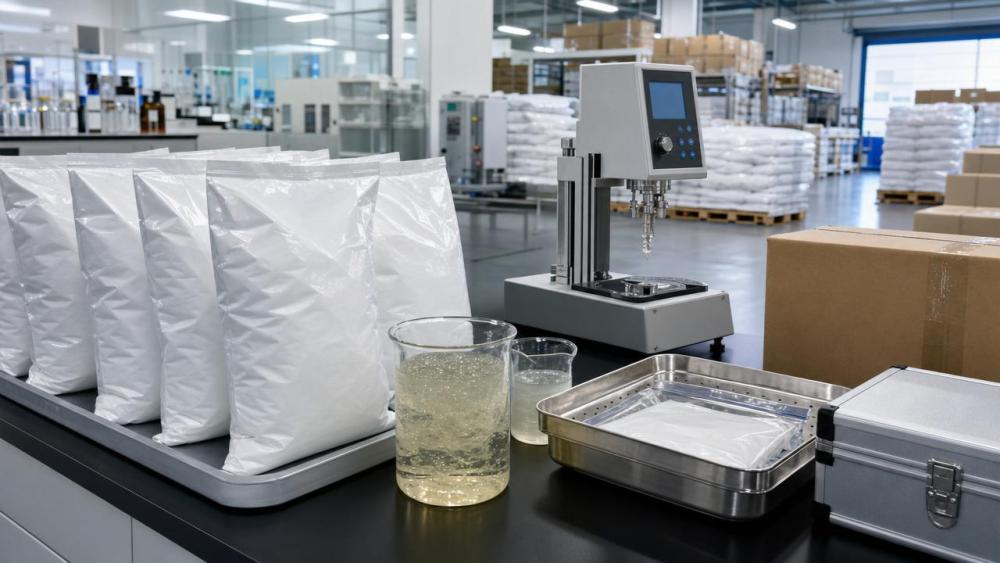
Choosing a reliable rheology modifiers exporter China is no longer just a price decision. It is now a practical supply risk strategy tied to quality, lead time, and margin control.
That shift is easy to understand. Rheology modifiers influence viscosity, suspension, texture, flow, and processing stability across food, personal care, and household formulations.
If the exporter fails, the problem rarely stays at the ingredient level. It can quickly become a production delay, a reformulation cost, or a customer complaint.
In real sourcing work, the best supplier is not always the cheapest one. The better choice is usually the rheology modifiers exporter China that reduces uncertainty across the full buying cycle.
This guide breaks down the main checks that matter before placing repeat orders or signing long-term supply agreements.
Start with Product Fit, Not Just Product Name
Many buyers begin with a short list based on product names like xanthan gum, CMC, HEC, carbomer, or associative thickeners. That is a useful start, but not enough.
A qualified rheology modifiers exporter China should explain how each grade performs under real formulation conditions. That includes pH range, electrolyte tolerance, shear behavior, clarity, and compatibility.
Ask for application-specific data, not only a generic specification sheet. A supplier serving sauces, lotions, and detergents should understand that thickening targets differ widely.
Useful questions include:
- Which grades are recommended for high-shear processing?
- How stable is viscosity after heat, freeze-thaw, or long storage?
- What performance changes appear in salt-rich or acidic systems?
- Can the exporter share benchmark samples for side-by-side trials?
If answers stay vague, supply risk is already visible. A reliable rheology modifiers exporter China usually connects technical fit with commercial fit from the start.
Check Manufacturing Depth Behind the Export Profile
Some exporters are manufacturers. Others are traders with strong logistics skills. Neither model is automatically bad, but the risk profile is different.
A manufacturer-backed rheology modifiers exporter China usually offers better process visibility, tighter batch control, and more direct problem solving during quality incidents.
A trading company may still be valuable if it manages several audited factories and provides backup supply routes. The key is transparency.
Ask for evidence on these points:
- Factory location, ownership, and production lines
- Main raw material sources and substitution options
- Monthly capacity by product grade
- Peak-season allocation policy
- Emergency plans for outages or utility disruptions
From a risk view, capacity stability often matters more than headline capacity. A large number on paper means little if output swings every quarter.
Audit Consistency at the Batch Level
For rheology modifiers, consistency is where many sourcing projects succeed or fail. A product can meet spec and still behave differently in the plant.
That is why a capable rheology modifiers exporter China should provide more than a COA. Look for trend data across batches.
Important indicators include viscosity range, particle size, moisture, microbial limits where relevant, and dispersion time.
It also helps to request retained sample policy and complaint investigation workflow. Fast replacement is helpful, but root-cause analysis is better.
In practice, a dependable rheology modifiers exporter China can usually show:
- Batch history over six to twelve months
- Defined internal control limits tighter than sales spec
- Change control records for process or raw material updates
- Clear sample retention and traceability records
This level of detail lowers the chance of hidden variation reaching production.
Review Compliance and Export Readiness Early
Regulatory gaps create expensive surprises. A rheology modifiers exporter China should be prepared for destination-market documentation before price negotiation goes too far.
Depending on end use, this may involve food safety declarations, allergen status, non-GMO statements, residual solvent data, cosmetic compliance files, or REACH-related support.
If the ingredient enters sensitive categories, document speed becomes a risk signal. Slow responses often suggest weak systems behind the sales team.
Check whether the exporter can provide:
- SDS, TDS, COA, and product specification
- Food or cosmetic compliance declarations by market
- Packaging statements and storage recommendations
- HS code accuracy and export document support
- English-language responsiveness from technical staff
This also affects customs clearance. Even a good product can become a bad purchase if paperwork causes port delays.
Assess Commercial Risk Beyond Unit Price
Low pricing can hide future cost. When comparing a rheology modifiers exporter China, use total landed risk instead of FOB price alone.
A cheaper offer may come with wider quality variation, longer lead times, unstable packaging, or weak after-sales support. Those costs usually appear later.
Build a simple sourcing scorecard around:
- Quoted price versus approved quality window
- MOQ flexibility and sample-to-order alignment
- Lead time reliability and shipment frequency
- Payment terms and exposure before inspection
- Claim handling speed and replacement commitment
More importantly, ask how the exporter handles raw material inflation. A mature rheology modifiers exporter China normally explains price drivers instead of making unrealistic promises.
That kind of honesty supports better forecasting and fewer emergency purchases.
Look at Logistics Discipline and Supply Continuity
Export success is not only about making the product. It is also about moving it consistently and protecting it in transit.
A strong rheology modifiers exporter China should know container loading patterns, moisture protection, palletizing standards, and seasonal shipping risks.
This matters even more for powders and moisture-sensitive thickeners. Poor packaging can change handling behavior before the goods reach the warehouse.
Review the supplier’s continuity planning:
- Primary and backup ports
- Normal and rush lead times
- Inventory policy for export grades
- Packaging options for humid or long-haul routes
- Incoterm flexibility and freight coordination
Recent market changes make this even more important. Logistics disruption often hits planning first, then cost, then customer service levels.
Use Trials, Audits, and Small Orders to Reduce Exposure
Even a promising rheology modifiers exporter China should earn trust step by step. Risk falls sharply when qualification happens in stages.
A practical path looks like this:
- Screen documents and confirm product fit.
- Run lab trials against current approved material.
- Review batch data and compliance files.
- Place a pilot order with tight inspection terms.
- Measure on-time delivery and production performance.
- Only then discuss annual volume or exclusive supply.
This approach is slower at the beginning, but usually faster overall. It prevents expensive resets after a full-scale launch.
Where possible, combine commercial review with a remote or onsite audit. The best rheology modifiers exporter China will treat technical scrutiny as a normal part of business.
What Strong Suppliers Usually Have in Common
After enough supplier reviews, patterns become clear. Reliable exporters tend to share a few habits that are hard to fake.
- They answer technical questions with application detail.
- They discuss limits as openly as advantages.
- They maintain stable documentation and traceability.
- They plan for disruption instead of denying it.
- They price with logic, not only pressure tactics.
That is why evaluating a rheology modifiers exporter China should feel like risk mapping, not just quote comparison.
The strongest sourcing decisions usually come from balancing four things: technical fit, operational stability, regulatory readiness, and commercial realism.
When those four line up, the supplier becomes easier to scale, easier to forecast, and safer to keep in the portfolio.
Before choosing any rheology modifiers exporter China, build a shortlist, ask harder questions, and validate with real data. That extra discipline is often the cheapest risk reduction available.
Related News
- How rheological thickeners for shampoo affect suspension stabilityOct 03, 2026Prof. Elian Thorne
- When does OEM ingredient sourcing support make custom formulations viable?Sep 29, 2026Prof. Elian Thorne
- What to check in a transdermal penetration supplier for skincareSep 26, 2026Prof. Elian Thorne
- How farnesene market pricing affects renewable ingredient sourcingSep 26, 2026Prof. Elian Thorne
Related News
- 00
0000-00
How to assess color stability from a natural food colors manufacturer - 00
0000-00
When does amino acid surfactant powder improve cleanser mildness? - 00
0000-00
How to verify a cosmetic nanotechnology supplier's safety documentation - 00
0000-00
How rheological thickeners for shampoo affect suspension stability - 00
0000-00
How to assess recombinant collagen ingredients for cream stability
Prof. Elian Thorne
Weekly Insights
Stay ahead with our curated technology reports delivered every Monday.