





Choosing the right transdermal penetration enhancer supplier is no longer a simple price comparison—it is a risk-control decision that affects product efficacy, regulatory clearance, consumer safety, and brand credibility. For procurement teams sourcing cosmetic actives, topical health products, or advanced delivery systems, the supplier must prove not only chemical quality, but also formulation compatibility, compliance documentation, traceability, and scalable consistency. This guide outlines the key checkpoints buyers should use to evaluate partners with confidence.
In premium cosmetics, topical wellness, and functional personal care, a delivery ingredient can decide whether an active remains on the surface or performs as intended. Buyers need evidence, not claims.
Why Supplier Vetting Matters in Transdermal Delivery
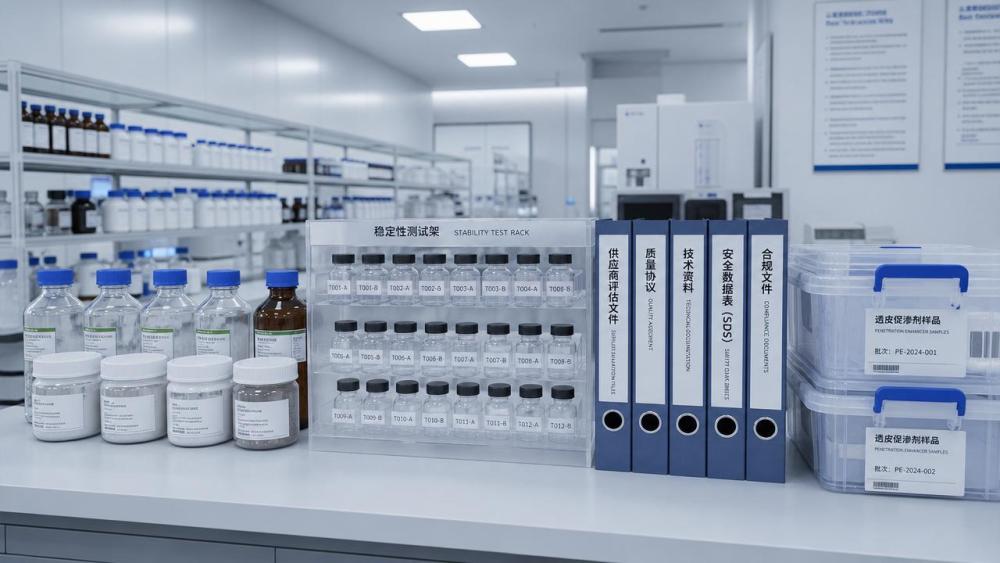
A transdermal penetration enhancer supplier influences 4 critical outcomes: active delivery, skin tolerance, regulatory acceptance, and production repeatability. Weakness in one area can delay launches by months.
Penetration enhancers may interact with peptides, retinoids, botanical extracts, essential oils, preservatives, emulsifiers, and surfactants. These interactions must be understood before commercial procurement begins.
The Procurement Risk Is Larger Than Unit Price
A low quotation can hide higher total cost. Reformulation, failed stability tests, missing documentation, or inconsistent batches may create 2–6 extra validation cycles.
For B2B buyers, the first filter should be technical reliability. Price negotiation should come after identity, purity, safety, compatibility, and logistics are verified.
- Confirm whether the supplier supports cosmetic, topical health, or pharmaceutical-adjacent applications.
- Check if batch-to-batch variation is controlled within agreed specifications.
- Request evidence for stability in at least 3 formulation formats.
- Review safety data before requesting large samples or pilot volumes.
What a Serious Supplier Should Understand
A credible transdermal penetration enhancer supplier should understand the stratum corneum, lipid disruption, partition coefficient, solubility balance, irritation risk, and active molecule stability.
The supplier should also speak the language of FMCG manufacturing: lead time, MOQ, shelf life, packaging compatibility, customs documents, and change-control notice periods.
Core Evaluation Criteria for Procurement Teams
Procurement teams need a structured scoring model. A 100-point supplier scorecard can prevent emotional decisions and align purchasing, R&D, compliance, and quality teams.
The following table summarizes practical checkpoints when comparing a transdermal penetration enhancer supplier across technical, regulatory, and operational dimensions.
The strongest candidates provide data without hesitation. If basic files take more than 1 week to prepare, expect slower responses during audits or claims review.
Technical Documentation Should Be Complete
At minimum, buyers should collect 6 documents: COA, SDS, technical data sheet, allergen statement, regulatory declaration, and recommended storage conditions.
For high-value cosmetic actives, request formulation guidance covering pH range, temperature tolerance, suggested dosage, solubility, and incompatibilities with preservatives or surfactants.
Suggested Technical Questions
- What dosage range is normally used in leave-on systems, and what is the upper safety boundary?
- Has the ingredient been tested with peptides, retinoids, niacinamide, botanical actives, or essential oil blends?
- What packaging materials are preferred: HDPE, aluminum, glass, or fluorinated containers?
- What stability changes occur at 40°C, freeze-thaw cycles, or high-humidity storage?
Assessing Formulation Compatibility and Performance Evidence
A transdermal penetration enhancer supplier should help procurement bridge laboratory promise and factory reality. Compatibility failures often appear after scale-up, not during small beaker trials.
Typical screening should include 3 temperatures, at least 2 packaging materials, and 4–12 weeks of observation before committing to large-volume purchasing.
Match the Enhancer to the Application
Different products need different delivery profiles. A facial serum, pain-relief gel, scalp essence, and patch system rarely share the same ideal enhancer strategy.
The supplier should explain why its material fits the vehicle system, target active, contact time, and consumer tolerance expectations.
Use the table below to align purchasing questions with common FMCG and topical product scenarios.
The table shows why one universal enhancer is rarely enough. Procurement should ask suppliers to support the exact vehicle, active, and consumer claim.
Do Not Accept Performance Claims Without Context
Statements such as “improves absorption” are incomplete unless linked to test method, active ingredient, dosage, vehicle, control group, and exposure duration.
Useful evidence may include in vitro diffusion testing, skin model data, formulation screening notes, or comparative release curves over 6–24 hours.
A reliable transdermal penetration enhancer supplier will clearly separate internal screening data from finished-product claims that require brand-side validation.
Regulatory, Safety, and Traceability Checks
Regulatory exposure differs by market. A formula sold in the United States, European Union, ASEAN, or Middle East may require different ingredient checks.
Procurement should involve compliance teams before final supplier approval. Early review can prevent blocked customs clearance, label revision, or delayed CPNP notification.
Safety Documents Are Not Administrative Formalities
The safety data sheet should match the supplied material. Watch for inconsistent names, outdated revision dates, or missing transport and storage sections.
Ask whether the material has restrictions for leave-on products, eye-area cosmetics, children’s products, pregnancy-positioned products, or sensitive-skin claims.
- Check the SDS revision date; many buyers require updates within 3–5 years.
- Confirm INCI naming if the enhancer is intended for cosmetic formulations.
- Review impurity limits against internal safety thresholds and target-market rules.
- Require written notification for specification changes at least 60–90 days in advance.
Traceability Should Reach Raw Material Origin
A competent transdermal penetration enhancer supplier should trace each batch through raw material origin, production date, packaging lot, and warehouse release status.
Traceability is especially important for natural-source enhancers, essential oil derivatives, and hybrid systems where allergen, odor, or oxidation risks can vary.
Red Flags During Compliance Review
- The supplier refuses to provide a full COA until after payment.
- Documents use different product names across invoice, SDS, and technical sheet.
- The recommended storage condition is vague, such as “store normally.”
- No process exists for recall, complaint investigation, or nonconforming batch handling.
Commercial Terms, Scale-Up, and Service Capability
After technical approval, procurement must evaluate whether the supplier can support pilot production, commercial launch, and repeat orders over 12–24 months.
A promising laboratory sample is not enough. The buyer needs stable lead time, realistic MOQ, responsive documentation, and transparent deviation management.
Clarify MOQ, Lead Time, and Packaging Early
Common procurement stages include 100–500 g lab samples, 1–5 kg pilot orders, and 25 kg or larger commercial packaging, depending on material type.
Lead times can range from 7–15 days for stock items to 4–8 weeks for made-to-order or specialty purity grades.
- Ask whether commercial batches use the same process as samples.
- Confirm shelf life, retest date, and recommended inventory rotation.
- Define acceptable delivery variance, such as plus or minus 5% quantity.
- Check whether export packaging resists heat, moisture, and long transit time.
Service Response Is Part of Supplier Quality
A qualified transdermal penetration enhancer supplier should respond to urgent technical questions within 24–48 hours, especially during stability failures or regulatory review.
Buyers should also assess whether the supplier can support R&D calls, sample reformulation, document updates, and bilingual export documentation when required.
A Practical 5-Step Approval Workflow
- Screen supplier background, application focus, and initial documentation completeness.
- Run lab compatibility testing in the buyer’s target formula.
- Review compliance files against destination market requirements.
- Conduct pilot production using commercial-intent packaging and process conditions.
- Approve commercial terms, change-control rules, and annual quality review cadence.
Common Mistakes When Selecting a Supplier
Many sourcing failures follow predictable patterns. Procurement teams can avoid them by separating supplier marketing language from measurable technical and operational evidence.
In high-end active systems, a minor incompatibility can damage texture, fragrance stability, preservation robustness, or consumer skin feel within 30–90 days.
Mistake 1: Comparing Only Quoted Price
The cheapest transdermal penetration enhancer supplier may cost more if documentation is incomplete, shipment is delayed, or the enhancer destabilizes the final formula.
A better comparison includes landed cost, testing cost, reformulation risk, storage requirements, and the value of reliable regulatory support.
Mistake 2: Skipping Sensory and Odor Evaluation
In cosmetics and personal care, delivery performance cannot compensate for poor sensory acceptance. Odor, tackiness, cooling effect, or greasiness affects repurchase.
Evaluate the enhancer at intended dosage, not only neat material. Some ingredients are acceptable at 1% but unpleasant at 5%.
Mistake 3: Ignoring Preservation and Rheology
Penetration enhancers can alter preservative efficiency, emulsion structure, or thickener performance. This matters for gels, creams, serums, and scalp products.
Procurement should request cross-functional review from R&D, microbiology, sensory, and packaging teams before locking annual supply agreements.
How FFAI Helps Buyers Make Smarter Ingredient Decisions
FFAI connects molecular insight with FMCG procurement reality. Our intelligence focus spans cosmetic actives, thickeners, preservatives, fragrances, surfactants, and high-purity functional ingredients.
For buyers evaluating a transdermal penetration enhancer supplier, this cross-category perspective is valuable because delivery ingredients rarely work in isolation.
Procurement Intelligence Beyond the Specification Sheet
A specification sheet confirms what an ingredient is. Procurement intelligence explains how it behaves in a real formula, supply chain, and regulatory environment.
FFAI emphasizes 3 buyer priorities: compliance clarity, efficacy plausibility, and sensory-commercial value. These priorities help prevent overpaying for weak technical differentiation.
Recommended Buyer Checklist
- Define target application before requesting quotations or samples.
- Request 3 recent COAs and compare key assay values.
- Run stability checks for at least 4 weeks before scale-up approval.
- Confirm regulatory suitability for every planned sales region.
- Document change-control terms before issuing a long-term purchase order.
The right supplier should reduce uncertainty across science, compliance, and operations. That is why procurement should treat supplier vetting as a structured risk-control project.
When choosing a transdermal penetration enhancer supplier, prioritize evidence, transparency, and application support over a simple price advantage. A disciplined process protects launch schedules and brand trust.
If your team is comparing enhancer options for cosmetic actives, topical health products, or advanced delivery systems, FFAI can help clarify supplier risks and technical questions. Contact us to discuss product details, obtain tailored sourcing guidance, or explore more ingredient intelligence solutions.
Related News
- How to interpret active matter on a surfactant specification sheetOct 14, 2026Prof. Elian Thorne
- What Quality Checks Should You Run on Fragrance Ingredient Suppliers?Oct 14, 2026Prof. Elian Thorne
- How to assess a flavor chemistry manufacturer's batch consistencyOct 13, 2026Prof. Elian Thorne
- What drives fragrance ingredients price changes in bulk orders?Oct 12, 2026Prof. Elian Thorne
Related News
- 00
0000-00
How to interpret active matter on a surfactant specification sheet - 00
0000-00
What Quality Checks Should You Run on Fragrance Ingredient Suppliers? - 00
0000-00
How to assess a flavor chemistry manufacturer's batch consistency - 00
0000-00
What drives fragrance ingredients price changes in bulk orders? - 00
0000-00
How to assess a food antioxidants distributor’s traceability practices
Prof. Elian Thorne
Weekly Insights
Stay ahead with our curated technology reports delivered every Monday.