





A biodegradable ingredients manufacturer’s claim is credible only when the evidence matches the material being purchased, the conditions under which it was tested, and the environmental setting implied by the claim. A statement on a specification sheet is a starting point; a complete test report reveals what actually degraded, how degradation was measured, and whether the result supports the wording proposed for a finished product.
Begin with the exact grade and intended application. A surfactant discharged through wastewater treatment raises different questions from a thickener used in a solid product or an ingredient incorporated into packaging. The same ingredient can behave differently across test environments, and a result obtained for a raw material does not automatically establish the biodegradability of the complete formulation.
Define the claim before examining the evidence
Ask for the proposed claim in writing, including its subject and intended context. Does “biodegradable” refer to the active substance, the supplied mixture, or the finished product? Does it describe degradation in an aerobic wastewater test, or imply breakdown in soil, freshwater, marine water, or compost? These distinctions determine which evidence is relevant.
For example, a liquid surfactant concentrate may contain water, a primary active substance, a co-surfactant, preservatives, and residual processing materials. A report on the primary active alone does not establish that every component in the concentrate meets the same criterion. Request the identity and concentration range of the tested substance and compare them with the composition of the grade being offered. Where confidential formulation details cannot be disclosed, a controlled disclosure or a component-level assessment can establish what is and is not covered.
Claims such as “plant-based,” “natural,” and “renewable” describe origin or sourcing, not the outcome of a biodegradation test. Conversely, a synthetically produced ingredient is not automatically resistant to biodegradation. Keep the evidence for origin, biodegradability, environmental safety, and product performance separate.
Read the test report, not just the certificate
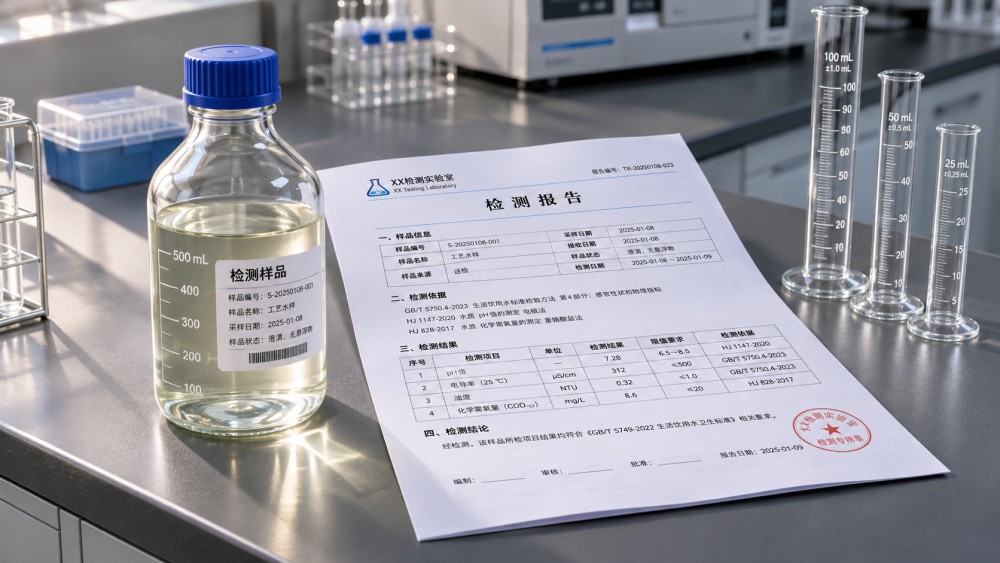
A useful report identifies the laboratory, the test method, the test item, its batch or sample reference, the conditions, the measured endpoint, and the results. A certificate or summary can help locate the evidence, but it rarely contains enough detail to judge its relevance. Where a laboratory issues a report, verify its identity and accreditation scope where applicable; accreditation alone does not prove that a particular test was performed under that scope or that the result supports a broader claim.
Recognized methods for assessing biodegradation include OECD test guidelines. The method number matters because different tests measure different endpoints under different conditions. Ask for the edition used, any deviations, the validity criteria, and the laboratory’s interpretation. A report referencing a recognized method is stronger when the underlying observations are available and the test conditions suit the claim.
Distinguish disappearance from mineralization
Some measurements track the loss of a parent substance or a change in a property such as dissolved organic carbon. Others estimate conversion to inorganic end products by measuring oxygen consumption or carbon dioxide production. These endpoints do not tell the same story. A decrease in the original substance can reflect transformation, adsorption, or removal from solution; it does not by itself establish complete mineralization.
Read the graph or time-series data alongside the reported final value. A single percentage without the test duration, endpoint, and denominator is difficult to interpret. For a mixture, confirm whether the reported result relates to the whole test item, its organic carbon content, or a particular component. If a result is calculated on a theoretical basis, the report should explain the calculation and any correction for blanks.
Understand what “readily biodegradable” covers
Ready biodegradability tests are designed as stringent screening tests under defined laboratory conditions. A qualifying result supports the conclusion specified by the method; it does not guarantee rapid breakdown in every receiving environment. Conversely, failure to meet a ready biodegradability criterion does not prove that a substance will never biodegrade. A substance may require adaptation, different conditions, or a different assessment, although further evidence is needed before making a broader claim.
Where a report claims a pass, examine the method-specific criteria rather than judging only the final percentage. Some methods include a time-window requirement in addition to a degradation threshold, and the interpretation can differ for mixtures or substances with complex compositions. The laboratory should explain the basis for its conclusion.
Match the tested sample to the supplied grade
The link between report and purchase specification is often where an otherwise convincing claim becomes uncertain. Compare the chemical identity or composition description, grade name, active content, physical form, and manufacturing route. A report on a closely related substance is supporting information, not necessarily direct evidence for the material offered.
Pay particular attention to families of ingredients. Surfactants with similar commercial descriptions can differ in carbon-chain distribution, degree of modification, or co-formulants. Thickeners derived from the same feedstock can differ in molecular structure and chemical substitution. Those differences can affect how microorganisms access and transform the material. A report for one member of a family should not be applied to another without a documented scientific justification.
Batch-specific testing is not automatically required for every delivery, but the supplier should explain how production controls keep the supplied material representative of the tested sample. A specification, change-control procedure, and traceable batch records are more useful than an assurance that the formula is “essentially unchanged.” Identify which changes trigger review: a new raw-material source, altered composition, different processing aid, or a material change in active content can all affect the relevance of an existing assessment.
If evidence comes from read-across, request the rationale connecting the tested substance to the supplied material. It should address structural similarity, relevant differences, impurities, and uncertainty. A shared product category or marketing name alone is a weak basis for transferring a result.
Examine conditions that can change the result
Biodegradation is a biological process, so the test environment matters. The report should identify the inoculum, whether oxygen was present, the test concentration, temperature, duration, and any preparation used to disperse the material. A well-aerated laboratory screening test does not reproduce every condition in a wastewater plant or the environment after discharge.
Concentration deserves particular attention for antimicrobial ingredients and some surfactants. A substance can inhibit the microorganisms used in a test, making a low degradation result difficult to interpret. Look for an inhibition or toxicity control where required by the method, and ask how the laboratory resolved any observed inhibition. A low result caused by inhibition at the test concentration and a low result caused by poor inherent biodegradability require different follow-up.
Physical behavior can also complicate interpretation. Poorly soluble ingredients may be difficult to disperse; volatile substances may be lost from the test system; and adsorption to vessels or biomass can reduce the amount measured in solution. The report should describe how the test item was introduced and how relevant losses or interferences were handled. An unexplained disappearance of material should not be presented as proof of complete degradation.
Environmental conditions beyond the laboratory test can be restrictive. Oxygen availability, temperature, dilution, contact time, microbial communities, and the presence of other ingredients all influence the outcome. A claim about marine biodegradation, for example, requires evidence relevant to that setting; a standard aerobic screening result alone should not be represented as a direct measurement of degradation in seawater.
Evaluate ingredient evidence against the final formulation
Ingredient data are valuable for screening formulations, but the finished product introduces interactions. A preservative can suppress microbial activity, a high concentration can change test behavior, and encapsulation or a matrix can limit access to an otherwise biodegradable ingredient. Other components may also contribute substantially to the product’s organic content.
For a rinse-off formulation, map the claim to the likely wastewater route and consider whether the evidence covers the concentrate or the diluted material entering treatment. For a leave-on cosmetic, the route to the environment and the composition of residues differ. A thickener embedded in a solid product presents a different exposure pattern again. The evidence should follow the claimed setting rather than assume that one raw-material result resolves all three.
When the proposed statement concerns the entire finished product, obtain an assessment that covers the formulation and its intended claim. Component data can support that assessment, but adding individual biodegradation percentages together does not create a validated whole-product result. Confirm separately that any environmental marketing language is substantiated for the markets where it will appear; the acceptable wording and supporting evidence are subject to the rules applicable there.
Resolve gaps before the grade is approved
Request a clear answer when the report and specification do not align. The response should identify whether the issue is a naming difference, a formulation change, missing component data, or a claim that exceeds the test scope. A revised technical statement, a justified read-across assessment, or additional testing can resolve different gaps; none should be treated as interchangeable without examining the underlying issue.
The following findings warrant closer review:
- A percentage is quoted without an endpoint, test duration, or full report.
- The test item cannot be traced to the supplied grade, or its composition is described only by a broad trade category.
- A laboratory result is presented as proof of degradation in an untested environment.
- The report records failed validity criteria, unexplained deviations, or interference that is absent from the marketing summary.
- Only the main active has been evaluated, while the claim covers a mixture or finished product.
Record the approved claim alongside the supporting report, material specification, grade, and relevant change-control commitments. If the evidence supports biodegradability under a defined test but not a broader environmental claim, keep that distinction in the purchasing and product documentation. Reassess the claim when the material, formulation, intended use, or evidence changes.
Related News
- Wissen Research: Global Cosmetics Market to Reach $497.2 Billion by 2031Nov 13, 2026Prof. Elian Thorne
- China Records 543 New Cosmetic Ingredients, Including 167 in 2026Nov 12, 2026Prof. Elian Thorne
- Australia and New Zealand Weigh Wider Steviol Glycoside Use in Griddle ProductsNov 11, 2026Prof. Elian Thorne
- China Announces Risk-Based Cosmetic Change Reviews and Shorter TimelinesNov 10, 2026Prof. Elian Thorne
Related News
- 00
0000-00
Wissen Research: Global Cosmetics Market to Reach $497.2 Billion by 2031 - 00
0000-00
Can biomimetic peptides improve skin firmness? - 00
0000-00
China Records 543 New Cosmetic Ingredients, Including 167 in 2026 - 00
0000-00
How to check a fragrance raw material specification for IFRA compliance - 00
0000-00
Australia and New Zealand Weigh Wider Steviol Glycoside Use in Griddle Products
Prof. Elian Thorne
Weekly Insights
Stay ahead with our curated technology reports delivered every Monday.