





Ingredient Specification Resources: What Matters Before a Supplier Is Approved
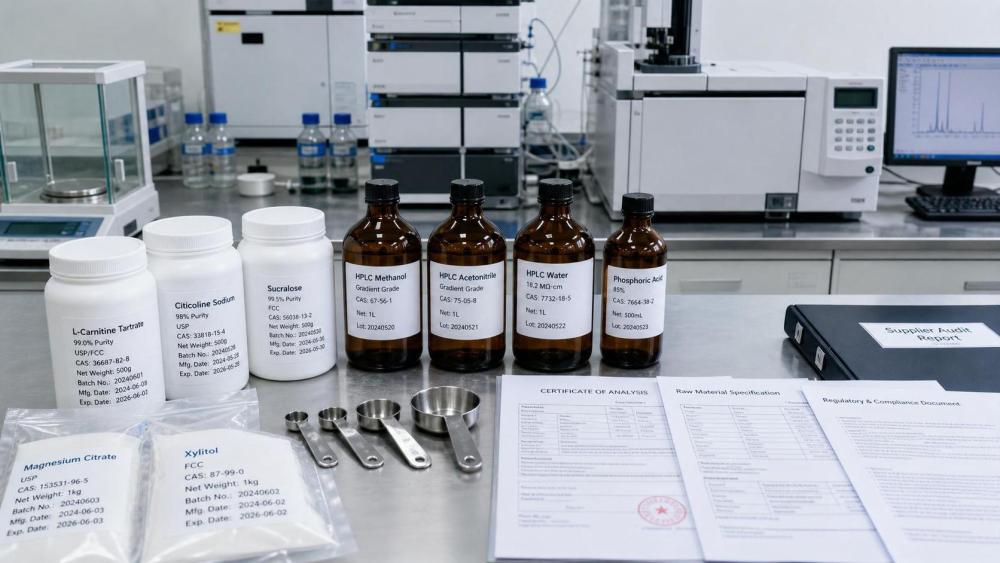
A new supplier can look acceptable on price, lead time, and samples, then fail under routine verification.
That is why ingredient specification resources matter long before the first commercial lot arrives.
In food, fragrance, cosmetic actives, and surfactants, small specification gaps create outsized consequences.
A missing impurity limit, an unclear assay method, or a weak allergen statement can trigger recalls, reformulation, or border delays.
Reliable ingredient specification resources help teams judge purity, consistency, legality, and functional fit in one framework.
This is especially relevant across the FFAI universe, where preservatives, thickeners, aroma materials, peptides, and surfactants behave very differently.
The practical question is not whether a specification exists.
The real question is whether the specification is decision-grade.
What counts as usable ingredient specification resources, not just paperwork?
Many supplier files look complete because they include a specification sheet, COA template, and safety document.
Usable ingredient specification resources go further.
They connect identity, test methods, acceptance criteria, regulatory position, and actual performance in the intended formula.
For example, a thickener may meet viscosity range on paper but still collapse after heat processing or pH shift.
A fragrance ingredient may pass identity testing but still create oxidation issues in finished goods.
A peptide may have strong purity claims yet poor stability in the real carrier system.
Better ingredient specification resources usually include:
- A precise material name, grade, and CAS or INCI mapping where applicable
- Defined test methods instead of undefined internal claims
- Limits for assay, moisture, impurities, microbes, solvents, or heavy metals
- Storage, retest, and shelf-life controls tied to packaging format
- Regulatory statements matched to target markets, not generic global language
In practice, the best resources answer both laboratory and compliance questions without forcing guesswork.
Which specification checkpoints should be reviewed first?
When the document pack is large, review order matters.
Start with the items that determine whether the ingredient is even reviewable.
This review sequence keeps non-viable suppliers from consuming unnecessary validation time.
It also makes ingredient specification resources easier to compare across categories with very different risk profiles.
How do requirements change between preservatives, thickeners, flavors, actives, and surfactants?
A common mistake is using one approval template for every ingredient family.
That usually misses the true failure modes.
FFAI’s coverage is useful here because it reflects how technical expectations shift by application, not just by document type.
For food-grade antioxidants and preservatives, focus on potency retention, decomposition products, and microbial relevance in the finished matrix.
For natural pigments and thickeners, source variation, rheology profile, hydration behavior, and clean-label positioning need closer review.
For flavors and essential oil extracts, check oxidation stability, allergen disclosure, residual solvents, and consistency of sensory markers.
For cosmetic actives, peptide purity alone is not enough.
You also need evidence around stability, carrier compatibility, and relevant safety support.
For surfactants, active matter, dioxane or related impurity controls, foaming profile, and biodegradability claims often decide suitability.
So the right ingredient specification resources are category-shaped.
They should tell you what the ingredient is, and also what can go wrong in processing, storage, or consumer use.
Is a supplier acceptable if the COA looks fine but the methods stay vague?
Usually, no.
A clean-looking COA can still hide poor controls if methods are undefined or non-transferable.
This matters when incoming testing, dispute resolution, or regulatory audit requires direct comparison.
More reliable ingredient specification resources describe whether the method is pharmacopeial, ISO-based, AOAC-based, or internally validated.
They should also clarify critical preparation conditions.
Viscosity at which temperature?
Assay by HPLC against which reference standard?
Micro limits before or after blending?
Where methods stay vague, ask for three things before approval advances:
- Method summary with acceptance basis
- Recent batch trend data, not one ideal lot
- Cross-reference between specification sheet and released COA
Without that, ingredient specification resources remain descriptive, not auditable.
Where do approval teams usually misjudge compliance and risk?
The most common error is treating regulatory language as universal.
An ingredient may be acceptable in one market, concentration band, or use category, but not in another.
That is why ingredient specification resources should be read alongside the intended application and sales geography.
Another weak point is relying on a supplier declaration without checking whether the underlying manufacturing route changed.
A process shift can alter solvent residues, impurity profile, odor character, or allergen carryover.
In actual review practice, several risk flags deserve immediate follow-up:
- Specifications copied across multiple grades with no technical distinction
- No revision history or no change notification commitment
- Shelf life stated without packaging or storage assumptions
- Claims such as natural, biodegradable, or clean label without criteria
- No explanation of out-of-spec handling, rework, or retention samples
The stronger suppliers usually answer these questions quickly because their internal control system already links science, compliance, and market access.
That integrated view is very close to how FFAI frames ingredient intelligence across FMCG categories.
What is a practical approval workflow when time is limited?
Speed matters, but compression should happen in the workflow, not in the evidence standard.
A workable sequence starts with a document gate, then moves to a technical gate, then a use-case gate.
First, collect ingredient specification resources, COA examples, safety data, compliance statements, and change-control commitments.
Next, compare specification limits against internal risk thresholds and finished product needs.
Then confirm whether the ingredient survives the real process window.
That may involve heat, shear, pH, oxidation, fragrance interaction, or transdermal delivery context.
If the supplier passes those steps, move to trial lots and trend review rather than one-off acceptance.
The final decision should be supported by a short internal checklist:
- Are the ingredient specification resources complete and method-linked?
- Do impurity and micro limits fit the intended market and product type?
- Has functional performance been confirmed under realistic conditions?
- Is there a defined notification path for process or specification changes?
- Can future lots be compared against the same technical baseline?
That approach keeps approvals disciplined without slowing every project to a full audit pace.
When decisions involve sensitive categories such as anti-aging actives, flavor systems, or preservation chemistry, deeper technical intelligence is worth the extra step.
The next move is straightforward: map your highest-risk ingredients, tighten the specification checklist by category, and review whether current supplier files are truly decision-ready.
Related News
- How to interpret active matter on a surfactant specification sheetOct 14, 2026Prof. Elian Thorne
- What Quality Checks Should You Run on Fragrance Ingredient Suppliers?Oct 14, 2026Prof. Elian Thorne
- How to assess a flavor chemistry manufacturer's batch consistencyOct 13, 2026Prof. Elian Thorne
- What drives fragrance ingredients price changes in bulk orders?Oct 12, 2026Prof. Elian Thorne
Related News
- 00
0000-00
Can biomimetic peptides in cosmetics reduce the look of wrinkles? - 00
0000-00
How to assess a bio-based thickener manufacturer's batch consistency - 00
0000-00
Verifying halal status of hydrocolloid ingredients in the Middle East - 00
0000-00
How to interpret active matter on a surfactant specification sheet - 00
0000-00
How Do You Test Hydrocolloid Viscosity After Changing a Thickener?
Prof. Elian Thorne
Weekly Insights
Stay ahead with our curated technology reports delivered every Monday.