





Molecular Sensory Analysis Equipment: Features That Matter
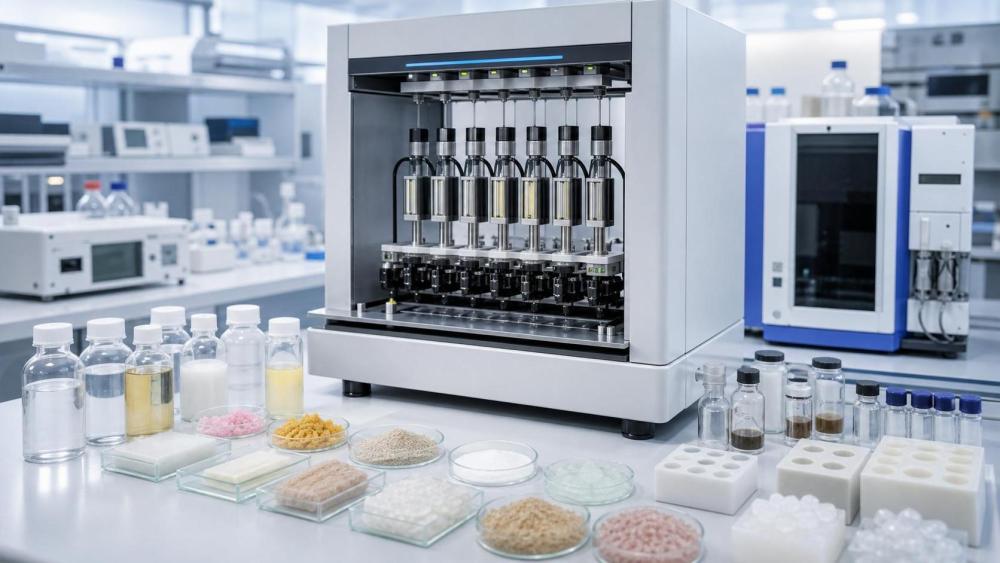
For procurement teams evaluating molecular sensory analysis equipment, accuracy is only the starting point.
The stronger question is whether the system supports faster, safer, and more profitable decisions over time.
That matters even more across food, fragrance, and cosmetic active ingredients, where sensory performance drives product value.
A weak buying decision can create hidden costs.
Those costs appear as failed qualification runs, inconsistent data, delayed launches, and supplier disputes.
A well-chosen molecular sensory analysis equipment platform helps avoid those issues before they spread.
In practical sourcing, the best systems balance technical depth with operational simplicity.
They also fit changing market needs, including clean label claims, sensory consistency, and stricter compliance expectations.
This is where FFAI’s market lens becomes useful.
Across preservatives, thickeners, fragrances, surfactants, and anti-aging actives, molecular interaction is no longer a niche concern.
It now sits close to product differentiation, compliance confidence, and premium pricing logic.
Why molecular sensory analysis equipment matters in modern sourcing
Recent market changes make sensory data more valuable than before.
Ingredient buyers are no longer comparing only price, purity, and lead time.
They also need evidence for aroma release, mouthfeel behavior, texture stability, and skin feel performance.
That is exactly where molecular sensory analysis equipment creates measurable value.
For food applications, it helps connect volatile release and texture response with shelf-life expectations.
For fragrances, it supports profile consistency from top notes to dry-down behavior.
For cosmetic actives, it can support claims around feel, absorption, and formulation compatibility.
This also means equipment selection affects more than laboratory work.
It influences supplier qualification, internal approval speed, and the reliability of commercial negotiations.
Core features that deserve priority
Not every premium specification improves purchasing outcomes.
The most useful molecular sensory analysis equipment usually performs well in a few critical areas.
1. Repeatability across operators and batches
Repeatability protects the buying process from noise.
If results shift with each operator, every sourcing review becomes slower and harder to defend.
Look for systems with strong calibration routines, stable sensors, and validated testing protocols.
2. Multi-matrix application flexibility
A narrow platform often creates future replacement costs.
Good molecular sensory analysis equipment should handle liquids, emulsions, powders, gels, and volatile compounds.
That matters when portfolios span preservatives, essential oils, hydrocolloids, and active cosmetic molecules.
3. Data integration and traceability
Isolated instruments create isolated decisions.
The better option is molecular sensory analysis equipment that exports structured data into LIMS, ERP, or quality platforms.
Traceable records help during audits, vendor disputes, and cross-site comparison work.
4. Compliance support
In regulated sectors, equipment documentation matters almost as much as performance.
This includes IQ, OQ, PQ support, audit trails, method control, and vendor documentation quality.
When global standards shift, strong compliance support reduces downstream risk.
5. Maintenance burden and uptime
Low purchase price can hide high ownership cost.
Review spare part availability, calibration intervals, service response, and cleaning complexity before selection.
Reliable molecular sensory analysis equipment should stay productive without constant specialist intervention.
How to compare systems on total cost, not sticker price
Cost-focused buying often fails when it ignores operational impact.
A cheaper unit may consume more labor, require more recalibration, and generate slower approvals.
That makes the real cost much higher.
A practical sourcing model should include direct and indirect factors.
- Initial purchase and installation cost
- Calibration materials and consumables
- Operator training time
- Software licensing and data storage
- Downtime risk and service delay exposure
- Method transfer cost between sites
This broader view is especially useful when sourcing molecular sensory analysis equipment for multinational operations.
Standardized methods across regions can save far more than a discounted initial quote.
Quick comparison framework
Application fit by sector
One reason molecular sensory analysis equipment selection becomes difficult is that use cases differ sharply.
The right answer depends on what sensory problem the business is trying to solve.
Food and beverage ingredients
Here, texture, aroma release, oxidation behavior, and shelf-life stability are closely linked.
The equipment should support rapid comparison of preservatives, thickeners, pigments, and flavor systems.
Fragrance and essential oils
Volatile profile resolution becomes more important here.
Good molecular sensory analysis equipment should capture note evolution, concentration effects, and batch consistency.
Cosmetic actives and surfactants
Skin feel, spreadability, residue perception, and compatibility become priority indicators.
This is particularly relevant for premium peptides, recombinant materials, and mild surfactant systems.
In each case, application fit should rank above feature inflation.
A system with fewer but more relevant functions often performs better commercially.
Questions to ask before signing a purchase order
The final selection stage should test vendor claims against business reality.
These questions usually reveal whether the molecular sensory analysis equipment will hold value after installation.
- Can the supplier show repeatability data from similar matrices?
- How long does calibration remain stable under routine use?
- What validation documents are included in the quotation?
- Does the software integrate with existing quality systems?
- What is the average service response time in your region?
- Can methods be transferred easily to another site?
- Which consumables are proprietary, and how are they priced?
These points improve negotiation quality as well.
They shift the conversation from list price to lifecycle value and risk control.
A smarter path to long-term value
The best molecular sensory analysis equipment is not simply the most advanced unit on paper.
It is the one that delivers stable data, practical workflows, compliance confidence, and room for future portfolio growth.
That balance is especially important in industries shaped by subtle sensory performance and strict formulation demands.
From the FFAI perspective, molecular insight has become a commercial tool, not just a laboratory metric.
The stronger your evaluation framework, the lower your sourcing risk.
Start with application fit, verify repeatability, measure total cost, and confirm compliance support early.
That sequence leads to faster approvals, cleaner supplier comparisons, and better long-term returns from molecular sensory analysis equipment.
Related News
- How to interpret active matter on a surfactant specification sheetOct 14, 2026Prof. Elian Thorne
- What Quality Checks Should You Run on Fragrance Ingredient Suppliers?Oct 14, 2026Prof. Elian Thorne
- How to assess a flavor chemistry manufacturer's batch consistencyOct 13, 2026Prof. Elian Thorne
- What drives fragrance ingredients price changes in bulk orders?Oct 12, 2026Prof. Elian Thorne
Related News
- 00
0000-00
Can biomimetic peptides in cosmetics reduce the look of wrinkles? - 00
0000-00
How to assess a bio-based thickener manufacturer's batch consistency - 00
0000-00
Verifying halal status of hydrocolloid ingredients in the Middle East - 00
0000-00
How to interpret active matter on a surfactant specification sheet - 00
0000-00
How Do You Test Hydrocolloid Viscosity After Changing a Thickener?
Prof. Elian Thorne
Weekly Insights
Stay ahead with our curated technology reports delivered every Monday.