





Retail Sourcing Solutions with Compliance Support Start with Real Risk Context
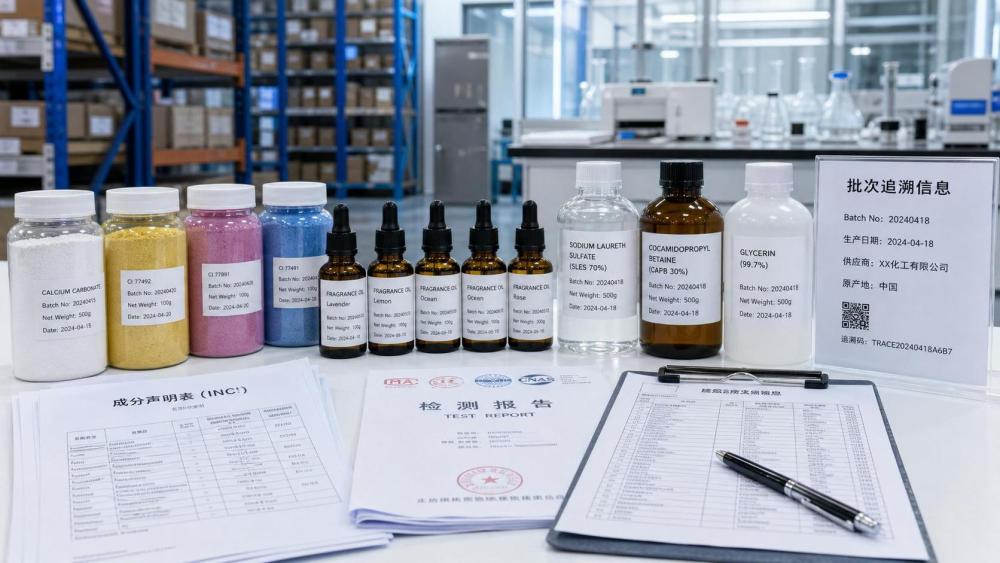
Retail sourcing solutions compliance support now sits at the center of cross-border ingredient decisions.
Price and availability still matter, yet they no longer decide viability on their own.
A fragrance oil, peptide, preservative, pigment, or surfactant may look commercially attractive, then fail under documentation review.
That gap is where delays, reformulation costs, relabeling pressure, and customs disruption usually begin.
In practical sourcing work, the harder question is not whether a material performs.
It is whether the supplier can prove origin, safety, legal status, and batch consistency fast enough.
This is especially true across FMCG categories shaped by shelf life, sensory claims, and health-facing expectations.
FFAI follows these pressure points closely because ingredient value depends on both molecular performance and regulatory defensibility.
Its coverage of food preservation, rheology, fragrances, cosmetic actives, and surfactants reflects one operational reality.
Retail sourcing solutions compliance support works only when technical intelligence and compliance checks move together.
Different Sourcing Scenarios Create Different Compliance Burdens
Similar ingredients often travel through very different approval paths.
A food antioxidant, a clean-label thickener, and an anti-aging active do not face the same evidence standard.
The label claim also changes the risk profile.
“Natural,” “skin repairing,” “long-lasting fragrance,” or “biodegradable” each trigger different validation needs.
More importantly, route to market changes the urgency of checks.
A direct import for one launch market needs one set of files.
A multi-region retail rollout needs a document structure that can survive repeated audits and reformulation cycles.
Retail sourcing solutions compliance support should therefore be built around usage context, not generic supplier promises.
Where the assessment usually changes
- Food ingredients rely heavily on legal use conditions, purity, stability, and migration into final formulations.
- Fragrance and flavor materials require closer review of allergens, composition disclosure, and restricted substances.
- Cosmetic actives need stronger support for efficacy wording, exposure assumptions, and regional notification readiness.
- Surfactants and functional additives often raise biodegradability, residual impurity, and formulation compatibility questions.
When the Product Depends on Shelf Life, Traceability Comes First
In food preservation and stability-driven categories, traceability is usually the first hard gate.
A supplier may provide a specification sheet, yet that alone rarely explains batch variation or source changes.
For antioxidants and preservatives, retail sourcing solutions compliance support should test three linked questions.
Is the ingredient legally permitted, technically stable, and traceable back to a controlled manufacturing process?
This matters more when materials face high heat, long shipping cycles, or mixed packaging environments.
FFAI often tracks how fragile ingredients behave under processing stress because compliance risk can start with performance drift.
If an antioxidant degrades during baking, the issue is not only efficacy loss.
It can also create labeling inconsistency and shelf-life claims that no longer hold.
Key checks in this setting
- Country of origin and manufacturing site consistency.
- CoA alignment with retained sample testing.
- GRAS, additive, or local food-use status by market.
- Storage, transport, and thermal stability evidence.
- Change-control notices for raw material or process shifts.
Sensory-Led Categories Need More Than a Clean Spec Sheet
Flavors, fragrances, pigments, and thickeners create another sourcing reality.
Commercial success depends on sensory impact, but compliance pressure often hides inside composition details.
A vibrant natural pigment may be perfect visually, then collapse under local labeling rules or stability requirements.
A fragrance accord may benchmark well, yet trigger disclosure problems because of allergens or restricted carriers.
In these scenarios, retail sourcing solutions compliance support has to examine what is declared and what remains commercially masked.
That distinction matters when finished goods cross into markets with stricter transparency expectations.
FFAI’s intelligence lens is useful here because molecular sensory design and market acceptance are deeply connected.
The right check is often not “Does the formula smell right?”
It is “Can the formula keep that sensory profile without creating documentation friction later?”
High-Value Cosmetic Actives Require Tighter Proof Discipline
Premium cosmetic ingredients create a different kind of exposure.
The commercial risk is not only non-compliance.
It is paying for efficacy positioning that cannot be defended consistently across markets.
Peptides, recombinant collagens, and advanced anti-aging compounds need supplier files that go beyond marketing summaries.
Retail sourcing solutions compliance support should look at INCI naming, concentration logic, impurity profile, and claim support together.
A strong in vitro result may still be weak sourcing evidence if stability, penetration, or formulation compatibility remain unclear.
This is where FFAI’s blend of compliance tracking and molecular interpretation becomes practical.
It helps separate actives with real formulation value from actives that mainly carry presentation premium.
Useful decision filters before approval
- Check whether safety files match intended dosage, not just supplier reference dosage.
- Confirm whether regional cosmetic notification pathways are already understood.
- Review if efficacy claims rely on controlled studies or generalized ingredient literature.
- Ask how the active behaves in real formulation pH, temperature, and packaging systems.
Common Misreads That Weaken Retail Sourcing Solutions Compliance Support
A frequent mistake is treating similar materials as interchangeable because specifications look close.
In reality, source route, impurity burden, and regional legal status may differ sharply.
Another common miss is checking product compliance but ignoring supplier compliance maturity.
Late answers, weak version control, and unclear change notices often predict future disruption.
Some teams also overfocus on unit price.
That works poorly when relabeling, retesting, or emergency substitution costs are likely.
Retail sourcing solutions compliance support should reduce total decision risk, not only purchase price.
Signals that deserve early escalation
- Documents issued by multiple entities for the same product.
- Unclear difference between sample quality and commercial batch quality.
- Claims of “natural” or “clean” without a supporting definition framework.
- No documented answer on restricted substances or contamination controls.
- No timeline for notifying formulation or source changes.
A More Reliable Way to Match Sourcing Decisions to Market Reality
Better results usually come from building a simple but strict review path.
Start with the intended market, claim language, and formulation stress conditions.
Then verify legal status, technical fit, and supplier responsiveness in that order.
Retail sourcing solutions compliance support becomes much stronger when each ingredient family has its own decision checklist.
Food preservatives should not be screened like fragrance oils.
Luxury actives should not be approved with the same evidence depth used for commodity surfactants.
In practice, the next step is to map current sourcing lines against real exposure points.
List the materials tied to strict claims, volatile regulation, or unstable supply history.
Compare existing files against destination-market requirements and actual formulation conditions.
That is usually where retail sourcing solutions compliance support stops being a paperwork exercise and starts protecting commercial performance.
Related News
- How to interpret active matter on a surfactant specification sheetOct 14, 2026Prof. Elian Thorne
- What Quality Checks Should You Run on Fragrance Ingredient Suppliers?Oct 14, 2026Prof. Elian Thorne
- How to assess a flavor chemistry manufacturer's batch consistencyOct 13, 2026Prof. Elian Thorne
- What drives fragrance ingredients price changes in bulk orders?Oct 12, 2026Prof. Elian Thorne
Related News
- 00
0000-00
Verifying halal status of hydrocolloid ingredients in the Middle East - 00
0000-00
How to interpret active matter on a surfactant specification sheet - 00
0000-00
What Quality Checks Should You Run on Fragrance Ingredient Suppliers? - 00
0000-00
How to assess a flavor chemistry manufacturer's batch consistency - 00
0000-00
What drives fragrance ingredients price changes in bulk orders?
Prof. Elian Thorne
Weekly Insights
Stay ahead with our curated technology reports delivered every Monday.