





Launching a new product without reliable consumer evidence is expensive, slow, and increasingly difficult to justify. For project managers and engineering leads, sensory analytics offers a practical way to reduce launch uncertainty by turning taste, aroma, texture, and usage feedback into structured decision support. Instead of relying on intuition alone, teams can use sensory analytics to compare prototypes, predict consumer acceptance, shorten reformulation cycles, and make stronger go or no-go decisions before commercial rollout.
What project leaders are really trying to solve with sensory analytics
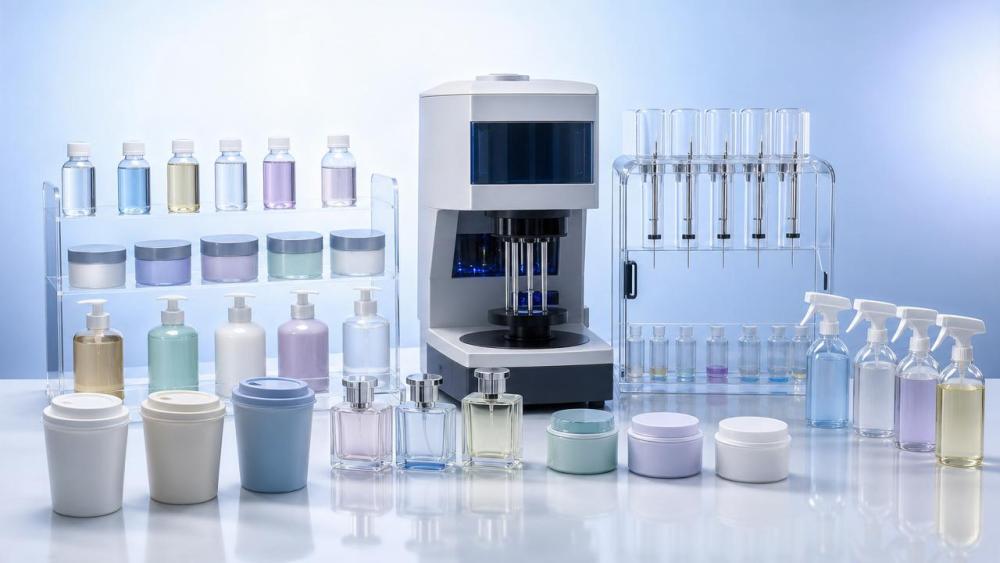
The core search intent behind sensory analytics is not academic curiosity. It is operational risk reduction. Decision-makers want to know whether these tools can improve launch confidence, reduce failed iterations, and connect product experience data to commercial outcomes.
Project managers usually care less about sensory theory and more about practical questions. Which tool fits a current development process? What data is worth collecting? How early should testing begin? Can the insights justify the cost and timeline impact?
For engineering and product leaders in FMCG, the bigger concern is coordination. A product can pass technical specifications yet still fail because flavor perception, fragrance evolution, mouthfeel, or after-use experience does not match consumer expectations in market.
That is why sensory analytics matters. It helps teams move from subjective internal opinions to evidence-based prioritization. In categories shaped by taste, scent, texture, and performance, that shift directly affects launch risk, speed, and margin.
Why product launches still rely on guesswork without structured sensory data
Many launch teams already gather feedback, but the process is often inconsistent. Comments from internal panels, distributor reactions, or limited focus groups may sound useful, yet they rarely provide comparable, repeatable, decision-grade data.
Without sensory analytics, teams tend to overvalue anecdotal feedback. One stakeholder says a fragrance feels premium. Another says the texture is too heavy. A third prefers a sweeter profile. Discussion expands, but confidence does not.
This creates three common launch problems. First, weak prototype selection. Second, expensive late-stage reformulation. Third, commercial misalignment between what R&D optimized and what end users actually value when choosing or repurchasing the product.
In food, fragrance, personal care, and home care, sensory mistakes are especially costly because consumers often make quality judgments in seconds. If the first sip, first smell, first touch, or rinse feel disappoints, repeat purchase drops fast.
What sensory analytics tools actually include in a modern product pipeline
Sensory analytics is best understood as a toolkit rather than a single platform. It combines testing methods, scoring systems, digital software, and data interpretation models that translate human perception into measurable product intelligence.
The first layer is descriptive sensory testing. Trained panels evaluate attributes such as sweetness, bitterness, floral intensity, creaminess, spreadability, residue, or cooling effect. This creates a structured sensory fingerprint for each formulation or prototype.
The second layer is consumer testing. This captures liking, preference, purchase intent, and perceived differentiation. Project managers often find this layer most useful because it links technical profiles to likely market performance and segmentation opportunities.
The third layer is analytics software. These systems organize panel data, compare samples, visualize attribute gaps, and identify which sensory dimensions most strongly influence acceptance, premium perception, or rejection in target groups.
More advanced organizations also integrate instrumental data. Viscosity, volatile release, color stability, particle size, or transdermal delivery behavior can be compared with sensory perception, helping teams connect formulation mechanics to user experience.
When used well, these tools do not replace expert formulators. They help formulators and project leaders see patterns earlier, justify trade-offs more clearly, and align technical development with market demand.
How sensory analytics reduces risk at each stage of a product launch
The greatest value of sensory analytics is not that it produces more data. Its value is that it improves decisions at multiple gates of the launch process, from concept screening through scale-up and commercialization.
At the concept stage, sensory analytics helps test whether a proposed experience is relevant. For example, a brand may want a clean-label beverage with a richer mouthfeel, or a premium serum with a lighter, faster-absorbing finish.
Before major formulation spending begins, teams can identify which sensory expectations actually matter to target consumers. This prevents overengineering low-value attributes while underinvesting in characteristics that drive liking, trust, and repeat purchase.
During prototype development, analytics supports faster comparison. Instead of debating between versions based on scattered opinions, teams can map which prototype best balances target attributes, cost limits, regulatory constraints, and brand positioning goals.
During optimization, it becomes easier to understand trade-offs. A natural preservative system may alter aroma. A thickener may improve body but reduce clean finish. An anti-aging active may enhance efficacy but worsen spreadability or tackiness.
Sensory analytics makes these trade-offs visible earlier. That helps project leaders decide whether to reformulate, reposition, segment the product differently, or proceed with a targeted compromise rather than a delayed redesign.
Before launch, validation studies can reduce final uncertainty. Teams can assess whether the product performs strongly enough against benchmarks, whether differences are noticeable, and whether a premium claim is supported by actual user perception.
Where the business value becomes clear for project managers and engineering leads
For management audiences, sensory analytics must prove business value, not just methodological rigor. The most relevant returns usually show up in fewer failed launches, more efficient development cycles, and better alignment between formula cost and market payoff.
One clear benefit is sharper resource allocation. When teams know which sensory attributes truly influence acceptance, they can prioritize formulation work, supplier trials, and capital investment around the features most likely to improve launch success.
Another benefit is faster decision-making across functions. Marketing, R&D, quality, procurement, and regulatory teams often interpret product readiness differently. Shared sensory evidence creates a common language that reduces internal disagreement and cycle delays.
There is also a margin advantage. In premium FMCG categories, consumers often pay more for improved sensory experience, not just technical efficacy. Aroma bloom, texture elegance, afterfeel, and usage satisfaction can justify higher pricing when validated properly.
For global categories, sensory analytics also supports localization. A fragrance profile preferred in one region may feel too strong in another. Sweetness tolerance, creaminess expectations, and cosmetic finish standards vary across markets and channels.
That means sensory analytics is not only a validation tool. It is also a portfolio strategy tool. It helps leaders decide whether to standardize, regionalize, or premium-tier formulations based on measurable consumer response rather than assumption.
High-impact use cases across food, fragrance, cosmetics, and home care
In food and beverage, sensory analytics is often used to optimize taste, mouthfeel, shelf-life perception, and reformulation acceptance. It is particularly valuable when reducing sugar, replacing synthetic additives, or shifting toward clean-label ingredients.
For example, a reformulated dairy alternative may meet nutritional goals but lose creaminess or leave a chalky finish. Sensory analytics helps identify whether the issue comes from viscosity, flavor masking, particle behavior, or expectation mismatch.
In flavors and fragrances, the challenge is often emotional rather than purely technical. Teams need to understand top-note appeal, dry-down character, persistence, and congruence with brand identity. Small changes can produce major shifts in perception.
In skin care and high-end cosmetic actives, efficacy claims matter, but so does texture. Consumers may reject a powerful anti-aging formula if it pills, feels sticky, absorbs too slowly, or leaves an unpleasant film after application.
For shampoos, detergents, and surfactant-based products, sensory analytics can evaluate foam richness, rinse feel, residue perception, fragrance release, and softness cues. These are major drivers of quality perception even when cleaning performance is technically adequate.
Across all these sectors, the common pattern is simple. Products succeed when technical performance and sensory experience reinforce each other. Sensory analytics helps teams manage that interaction instead of discovering failure after launch.
How to evaluate sensory analytics tools before investing
Not every company needs the same level of sensory capability. Some need outsourced testing support. Others need software to centralize global panel data. Large organizations may need a full system connecting sensory, instrumental, and market datasets.
For project leaders, evaluation should begin with use case clarity. Are you trying to screen concepts faster, reduce reformulation loops, validate premium claims, support geographic expansion, or improve collaboration between R&D and commercial teams?
Once the use case is defined, examine five practical criteria. First, data quality and repeatability. Second, ease of interpreting results. Third, compatibility with existing workflows. Fourth, speed to actionable insight. Fifth, scalability across product categories.
It is also important to assess whether the tool supports both expert and non-expert users. Many project managers need dashboards and clear decision outputs, while sensory scientists require deeper analysis, segmentation, and statistical modeling capability.
Another key question is organizational readiness. A strong tool will not help if testing protocols are inconsistent, sample preparation varies, or teams do not agree on decision thresholds. Process discipline matters as much as software selection.
For companies in regulated or technically complex sectors, vendor expertise is also essential. Tools are more valuable when paired with category knowledge in flavor systems, fragrance evolution, texture engineering, preservation chemistry, or active delivery behavior.
Common implementation mistakes that limit return on investment
The first mistake is using sensory analytics too late. If testing only begins near launch, teams have little room to respond. The earlier sensory learning enters concept and prototype stages, the greater the reduction in wasted development effort.
The second mistake is collecting too much undirected data. More attributes do not always mean better decisions. The goal is to identify the sensory variables most connected to consumer preference, quality perception, and formulation trade-offs.
The third mistake is separating sensory data from business decisions. If reports remain inside R&D and never inform portfolio reviews, supplier choices, launch gates, or pricing strategy, the organization captures insight but not value.
The fourth mistake is ignoring regional and segment variation. A single average preference score can hide crucial differences between age groups, usage occasions, retail channels, or cultural expectations around sweetness, fragrance intensity, or skin feel.
The fifth mistake is expecting certainty rather than improved probability. Sensory analytics does not guarantee a successful launch. It improves the odds by replacing weak assumptions with evidence, making decisions more robust and defensible.
A practical framework for integrating sensory analytics into launch governance
For project managers, the most effective approach is to embed sensory analytics into stage-gate governance. Each milestone should include a clear sensory question, a defined method, and a decision rule tied to risk, cost, and timing.
At concept gate, test whether target users value the intended sensory experience. At prototype gate, compare competing versions against desired attributes. At optimization gate, validate trade-offs. At pre-launch gate, confirm benchmark competitiveness and acceptance.
Create a shared scorecard that includes sensory performance, consumer liking, technical feasibility, regulatory fit, supply stability, and target cost. This prevents any single function from dominating decisions with incomplete criteria.
It is also wise to establish escalation thresholds. If a formula misses key acceptance metrics, does the team reformulate, narrow the claim, adjust the target market, or stop the project? Clear rules reduce politics and protect development resources.
Over time, archived sensory analytics data becomes a strategic asset. Teams can compare launches, identify recurring failure patterns, and build predictive knowledge about which ingredient systems consistently support desired consumer experiences.
Conclusion: smarter launches depend on evidence, not intuition alone
Sensory analytics tools are most valuable when viewed as decision infrastructure rather than research extras. They help project managers and engineering leaders reduce launch guesswork by connecting human perception to formulation choices, cost trade-offs, and market readiness.
In industries where taste, fragrance, texture, and application feel drive buying behavior, that capability is no longer optional for serious innovation teams. It is a practical way to improve launch confidence, shorten learning cycles, and protect commercial investment.
For organizations operating across food, flavor, fragrance, cosmetic actives, and home care systems, the next competitive edge will come from linking molecular performance with measurable sensory outcomes. Sensory analytics is how that link becomes actionable.
Related News
- How to interpret active matter on a surfactant specification sheetOct 14, 2026Prof. Elian Thorne
- What Quality Checks Should You Run on Fragrance Ingredient Suppliers?Oct 14, 2026Prof. Elian Thorne
- How to assess a flavor chemistry manufacturer's batch consistencyOct 13, 2026Prof. Elian Thorne
- What drives fragrance ingredients price changes in bulk orders?Oct 12, 2026Prof. Elian Thorne
Related News
- 00
0000-00
Verifying halal status of hydrocolloid ingredients in the Middle East - 00
0000-00
How to interpret active matter on a surfactant specification sheet - 00
0000-00
What Quality Checks Should You Run on Fragrance Ingredient Suppliers? - 00
0000-00
How to assess a flavor chemistry manufacturer's batch consistency - 00
0000-00
What drives fragrance ingredients price changes in bulk orders?
Prof. Elian Thorne
Weekly Insights
Stay ahead with our curated technology reports delivered every Monday.