





Supplier Capability Evaluation for Ingredients: why it matters before price talks
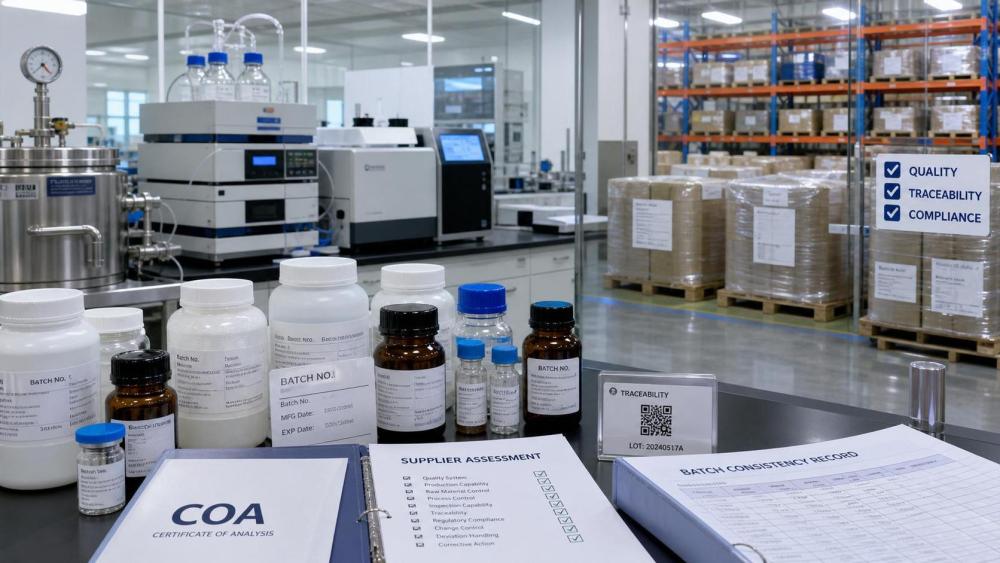
In ingredient sourcing, a low quote can hide expensive failures.
That is why supplier capability evaluation for ingredients has become a risk screen, not a procurement formality.
The pressure is sharper in food, fragrance, cosmetic actives, thickeners, preservatives, and surfactants.
A small deviation in purity, odor profile, microbial control, or viscosity can damage an entire product line.
FFAI tracks these ingredient categories closely because molecular performance and compliance are tied to commercial outcomes.
For that reason, evaluation should connect technical stability, regulatory fit, and delivery reliability in one view.
The practical question is not whether a supplier can ship once.
It is whether the supplier can keep shipping the same acceptable material under pressure, audit, and market volatility.
What does supplier capability evaluation for ingredients actually include?
A useful evaluation goes beyond certificates and sample approval.
It asks whether the supplier can repeatedly control risk across the whole supply cycle.
In practice, supplier capability evaluation for ingredients usually rests on five checks.
- Regulatory readiness: Can the material satisfy market-specific rules such as FDA, GRAS, IFRA, REACH, or CPNP requirements?
- Manufacturing control: Are batch records, change controls, sanitation, and critical process limits well managed?
- Traceability depth: Can the source, intermediate handling, and final release data be traced quickly?
- Consistency performance: Do COA values, sensory attributes, and stability data stay within tight commercial ranges?
- Supply resilience: Can the supplier handle raw material shocks, shipping disruption, or demand spikes without silent substitution?
This matters differently by category.
For antioxidants and preservatives, oxidation control and microbial defense are central.
For flavors and essential oils, profile drift and adulteration risk move to the front.
For peptides or anti-aging actives, efficacy claims, impurity control, and storage conditions become decisive.
Which early warning signs usually expose a weak supplier?
The fastest way to improve supplier capability evaluation for ingredients is to watch for signals that look minor at first.
A supplier rarely fails only on one obvious point.
More often, small inconsistencies appear across documents, samples, and communication.
These signals deserve context, not panic.
A smaller supplier may still perform well if controls are disciplined and transparent.
The problem starts when the supplier cannot explain deviation patterns with evidence.
How should ingredient categories change the evaluation method?
A common mistake is using one scorecard for every ingredient.
That approach looks efficient, but it misses category-specific failure modes.
Supplier capability evaluation for ingredients should be weighted by technical and commercial sensitivity.
For food preservatives and antioxidants
Focus on heat stability, oxidation resistance, microbial limits, and packaging protection.
If the ingredient is used in baking or long-haul distribution, process endurance matters more than a low unit price.
For thickeners and natural pigments
Check rheology repeatability, hydration behavior, color variation, and compatibility with clean-label positioning.
A thickener that behaves differently across lots can quietly disrupt texture and fill weight.
For flavors, fragrances, and essential oils
Sensory fingerprinting, adulteration screening, and origin integrity deserve extra weight.
Even slight profile drift can alter consumer perception and trigger reformulation reviews.
For cosmetic actives and specialty surfactants
Ask for impurity profiles, efficacy support, storage handling, and claim substantiation boundaries.
Higher-value molecules demand stronger evidence because replacement costs are rarely linear.
This is where intelligence platforms like FFAI are useful.
They help connect molecular behavior, compliance pathways, and commercial positioning instead of treating them separately.
Is the cheapest qualified supplier really the lowest-cost option?
Usually, no.
The lowest visible price often ignores testing repeat work, yield loss, complaint handling, and emergency freight.
In supplier capability evaluation for ingredients, total cost should include operational friction.
A slightly higher-priced supplier can be cheaper if batch acceptance is stable and lead times are predictable.
This is especially true for premium fragrance compounds and anti-aging actives.
Those categories carry a hidden multiplier effect.
A failed lot may delay launch timing, premium claims, or retailer commitments.
A more grounded comparison uses three cost layers.
- Direct cost: unit price, minimum order quantity, freight, duties, and payment terms.
- Control cost: incoming inspection intensity, audit frequency, qualification timeline, and document follow-up.
- Failure cost: rework, reformulation, stockout loss, claim exposure, and brand damage.
When these layers are visible, the evaluation becomes much more defensible internally.
What should be verified before approval, and what can wait?
Not every question needs a full audit on day one.
The better approach is to separate pre-approval essentials from post-approval monitoring.
Before approval, verify the points that could stop legal sale, safe use, or process continuity.
- Market compliance documents match the destination application.
- Specification limits are realistic for commercial production, not just pilot samples.
- Manufacturing site and subcontracting routes are disclosed.
- Traceability and recall response can be demonstrated quickly.
- Capacity and lead time claims are supported by planning evidence.
After approval, continue watching drift indicators.
That includes lot-to-lot sensory shifts, complaint frequency, delayed change notices, and sudden sourcing changes.
A supplier is not fully qualified forever.
Capability can improve, plateau, or weaken with scale, ownership change, or raw material stress.
How can the evaluation process stay practical and still reduce risk?
A workable model keeps the scorecard short, but the evidence deep.
Start with category-based risk weighting instead of using a generic approval pack.
Then map each supplier against technical fit, compliance fit, and continuity fit.
If one area is weak, the commercial value should be discounted accordingly.
In daily work, supplier capability evaluation for ingredients becomes stronger when external intelligence supports internal review.
That is relevant in global FMCG categories where formulation science, safety rules, and market claims move together.
FFAI follows that intersection closely, especially in preservatives, thickeners, flavors, fragrances, actives, and surfactants.
The immediate next step is simple.
Review the current supplier list, group materials by risk, and identify where price decisions were made without full capability evidence.
Then tighten the checks around traceability, batch consistency, and change control.
That is usually where avoidable cost and supply disruption first appear.
Related News
- How rheological thickeners for shampoo affect suspension stabilityOct 03, 2026Prof. Elian Thorne
- When does OEM ingredient sourcing support make custom formulations viable?Sep 29, 2026Prof. Elian Thorne
- What to check in a transdermal penetration supplier for skincareSep 26, 2026Prof. Elian Thorne
- How farnesene market pricing affects renewable ingredient sourcingSep 26, 2026Prof. Elian Thorne
Related News
- 00
0000-00
How to assess color stability from a natural food colors manufacturer - 00
0000-00
When does amino acid surfactant powder improve cleanser mildness? - 00
0000-00
How to verify a cosmetic nanotechnology supplier's safety documentation - 00
0000-00
How rheological thickeners for shampoo affect suspension stability - 00
0000-00
How to assess recombinant collagen ingredients for cream stability
Prof. Elian Thorne
Weekly Insights
Stay ahead with our curated technology reports delivered every Monday.