





Surfactant Technology in Southeast Asia: Cost, Performance, and Supply Trends
Surfactant technology in Southeast Asia is not just a chemistry topic. In commercial terms, it sits at the point where raw material volatility, formulation performance, regulatory pressure, and regional manufacturing strategy all collide. Many buyers still reduce surfactants to a simple question: anionic, nonionic, amphoteric, or cationic. That classification matters, but it does not explain why one detergent base survives a difficult water profile, why one shampoo system feels milder at similar active matter, or why a sourcing team suddenly rewrites its approved supplier list after feedstock disruption.
For companies operating across home care, personal care, food-contact cleaning, and industrial hygiene, the Southeast Asian market has become especially relevant because it combines three forces that do not always move together: price sensitivity, fast-moving consumer demand, and a manufacturing base closely tied to oleochemical feedstocks. That combination makes the region more than a consumption market. It is also a formulation laboratory and a supply node.
At the technical level, surfactants are amphiphilic molecules. One end interacts with water, the other with oil or soil. In practice, buyers are not purchasing amphiphilicity as an abstract property. They are buying cleaning power under dilution, foam behavior under different water conditions, emulsification stability, skin feel, rinsability, fragrance compatibility, and process consistency at factory scale. The reason this matters in Southeast Asia is that product success often depends on handling humid climates, variable water hardness, cost-conscious pack formats, and consumer expectations that differ sharply by category and country.
Why the region is different
A surfactant system that works well in a European premium body wash may not translate cleanly into a mass-market liquid detergent in Indonesia or Vietnam. The issue is not technical inferiority; it is context. Southeast Asian formulators often balance lower unit economics with demanding sensory targets. Laundry products need visible foam in some markets because foam is still read as a cleaning cue. Personal care products must feel mild and modern without drifting too far above the target cost per wash. Industrial and institutional cleaning products, meanwhile, are under pressure to deliver faster wetting, lower residue, and stable performance despite transportation heat and storage variability.
This is why the phrase surfactant technology Southeast Asia increasingly refers to an integrated capability rather than a single ingredient class. It includes feedstock access, sulfation and ethoxylation capacity, blending know-how, formulation support, quality control discipline, and the ability to adapt systems for local water conditions and consumer habits. A supplier with attractive pricing but weak batch consistency is not actually competitive. Neither is a technically advanced supplier that cannot give dependable lead times.
The region also benefits from its connection to palm-derived oleochemicals. That does not automatically make all local surfactants cheaper or greener, but it does influence cost structures for fatty alcohols and related intermediates used in many surfactant chains. Buyers who only compare the invoice price of finished surfactants often miss how strongly upstream feedstock economics shape downstream negotiation.
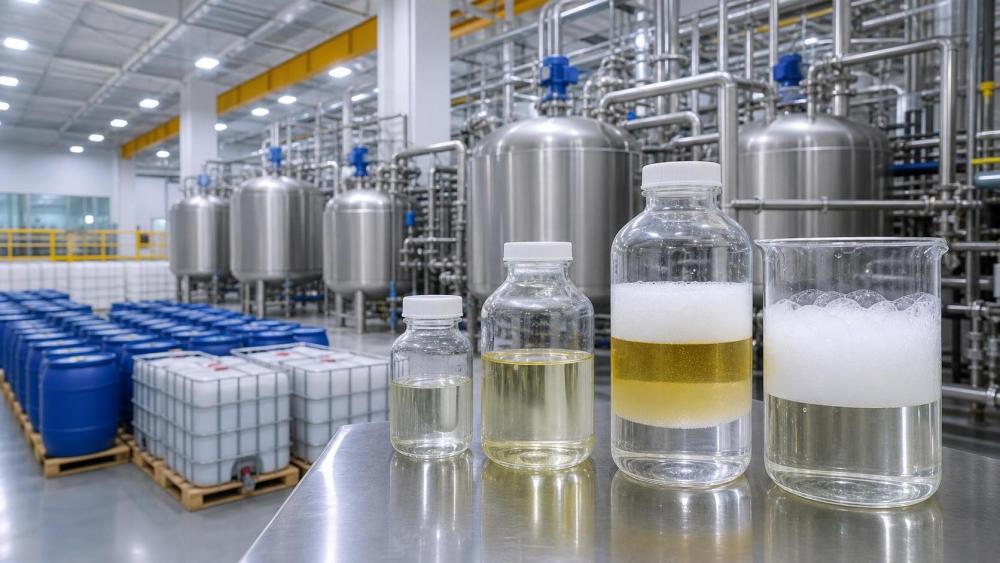
Cost is no longer a standalone metric
The old procurement reflex was straightforward: benchmark active matter, compare price per kilogram, and push volume toward the lowest acceptable source. That approach is now less reliable. In surfactants, the cheapest line item can produce a more expensive finished product if it forces higher dosage, destabilizes fragrance, increases preservative burden, or creates complaints around residue, scalp dryness, or phase separation.
A better cost discussion looks at cost-in-use. For example, two surfactant packages may appear close in lab detergency tests, yet diverge once builders, solvents, enzymes, polymers, and fragrance are added. One may need additional hydrotrope support. Another may be more tolerant of electrolytes. A shampoo base that seems expensive may reduce the need for separate foam boosters or reduce irritation concerns when combined with milder co-surfactants. In other words, purchase price matters, but formulation efficiency matters more.
This is particularly relevant in Southeast Asia, where pack affordability often compresses formulation budgets, but brand owners still expect products to feel upgraded. That tension is pushing teams to optimize surfactant architecture rather than simply downgrade raw materials. Amino acid surfactants, sulfosuccinates, alkyl polyglucosides, betaines, and tailored blends are being evaluated not only for marketing claims, but for their ability to support mildness, viscosity control, or rinse profile without excessive formula complexity.
Performance is becoming more nuanced
One common misunderstanding is that stronger cleaning automatically means better surfactant technology. In reality, performance is conditional. The best surfactant system is the one that solves the intended soil, substrate, and user experience problem with the least compromise. High foam is not always better foam. Fast wetting is not always compatible with long-lasting emulsion stability. Excellent degreasing can become a liability in skin or scalp applications if it strips too aggressively.
Decision-makers should usually test surfactants across five performance lenses:
- Detergency or soil removal under realistic dilution and contact time
- Foam volume and foam stability where consumer perception depends on them
- Mildness, residue, and sensory profile in personal care systems
- Compatibility with electrolytes, preservatives, fragrances, polymers, and actives
- Stability through transport heat, storage variation, and production scale-up
In Southeast Asia, water quality can complicate all five. Hard water tolerance, pH behavior, and solubility under warm storage conditions are not minor formulation details. They affect claim delivery, shelf appearance, and return rates. That is why regional application support often matters as much as the technical data sheet. A specification can tell you active content and pH range. It does not tell you how the material behaves in a concentrated refill system after six weeks in a warehouse.
Supply trends are shifting the buying model
The market is also changing in a structural way. Many procurement teams no longer treat surfactants as fully commoditized. They still run competitive tenders, but they are more careful about concentration risk, qualification speed, and regional redundancy. Recent years made one lesson obvious: a supplier base optimized only for nominal cost can break quickly under feedstock shocks, freight disruption, or regulatory pressure.
In Southeast Asia, this has encouraged a few clear shifts. More buyers are qualifying secondary regional sources instead of relying on a single multinational route. More suppliers are positioning themselves as solution partners, not just converters of standard chemistry. And more brand owners are asking difficult questions about traceability, sustainability narratives, and manufacturing resilience before approving new ingredients.
That does not mean global majors are losing relevance. In many categories, they still set the benchmark for process control, documentation, and broad portfolio integration. But regional players are gaining attention when they can combine acceptable regulatory documentation, solid technical service, and shorter response cycles. For a business trying to reformulate quickly around cost pressure, that responsiveness can outweigh a small difference in nominal price.
What buyers should actually compare
When evaluating surfactant suppliers in the region, the most useful comparison is rarely a one-column price sheet. A more realistic screen looks like this:
This framework is less dramatic than talk of supply chain transformation, but it reflects how experienced sourcing teams actually work. They know that a surfactant purchase is tied to launch timing, quality claims, and margin discipline all at once.
The sustainability layer is real, but still uneven
Another reason surfactant technology Southeast Asia is drawing attention is the rising demand for biodegradable, milder, and more naturally positioned systems. The commercial signal is clear, especially in personal care and premium home care. The technical reality is more complicated. Bio-based origin, biodegradability profile, sulfate-free positioning, and mildness are related ideas, but they are not interchangeable. A product can be marketed as plant-derived and still create formulation or sourcing trade-offs. A sulfate-free system can improve consumer perception while requiring more careful viscosity design and preservation strategy.
For decision-makers, the main discipline is not to collapse sustainability into a single claim. Ask what is being claimed, how it is being documented, and what performance cost comes with the change. In some applications, the trade-off is acceptable and commercially smart. In others, especially where heavy soil removal or strict cost targets dominate, the answer is less straightforward.
That is where an intelligence-led approach becomes useful. Markets such as food, fragrance, personal care, and household products increasingly intersect at the ingredient level. The same company may be balancing sensory expectations, label language, preservation strategy, and surfactant mildness inside one portfolio. Treating surfactant choice as a narrow procurement issue misses that broader formulation reality.
What this means for strategy
The practical takeaway is that surfactants in Southeast Asia should be read as a strategic category, not a routine commodity bucket. Cost pressure is still intense, but the most resilient companies are those that understand where cost, performance, and supply security can be traded and where they cannot. They qualify alternatives before a disruption. They compare cost-in-use rather than invoice price alone. They involve formulators early instead of asking R&D to validate a sourcing decision after the fact.
For executives making portfolio, sourcing, or manufacturing decisions, the key question is no longer whether the region matters. It is how deeply their teams understand the mechanics behind it. Southeast Asia is becoming more influential because it offers scale, feedstock relevance, and formulation agility at the same time. But those advantages only become real when buyers separate nominal cheapness from actual value, and when they judge surfactant systems by application outcomes rather than by category labels alone.
That is the more accurate way to read current market trends. The region is not simply producing more surfactants. It is shaping the commercial logic of how surfactants are selected, combined, and de-risked across the FMCG chain.
Related News
- How to interpret active matter on a surfactant specification sheetOct 14, 2026Prof. Elian Thorne
- What Quality Checks Should You Run on Fragrance Ingredient Suppliers?Oct 14, 2026Prof. Elian Thorne
- How to assess a flavor chemistry manufacturer's batch consistencyOct 13, 2026Prof. Elian Thorne
- What drives fragrance ingredients price changes in bulk orders?Oct 12, 2026Prof. Elian Thorne
Related News
- 00
0000-00
Can biomimetic peptides in cosmetics reduce the look of wrinkles? - 00
0000-00
How to assess a bio-based thickener manufacturer's batch consistency - 00
0000-00
Verifying halal status of hydrocolloid ingredients in the Middle East - 00
0000-00
How to interpret active matter on a surfactant specification sheet - 00
0000-00
How Do You Test Hydrocolloid Viscosity After Changing a Thickener?
Prof. Elian Thorne
Weekly Insights
Stay ahead with our curated technology reports delivered every Monday.