





Transdermal delivery Middle East is moving from niche interest to strategic watchlist
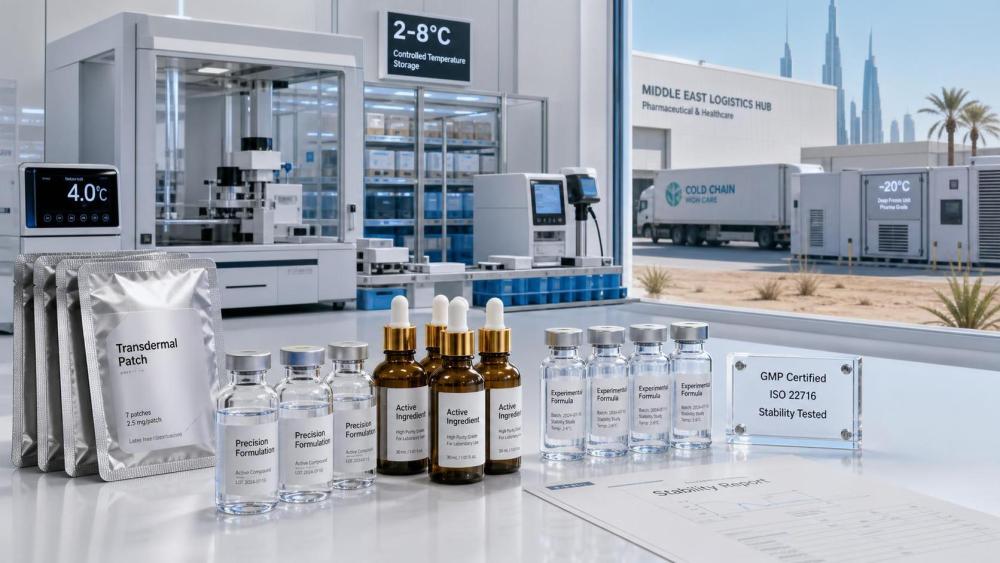
Transdermal delivery Middle East is no longer a narrow pharmaceutical topic.
It now sits at the intersection of healthcare access, premium beauty science, and ingredient-led product innovation.
That shift matters because the region is rewarding solutions that combine convenience, safety, and stronger adherence.
Patches, topical systems, and skin-penetrating actives fit that logic, but the market is not frictionless.
In the Middle East, demand is rising while execution remains uneven across regulation, climate resilience, and channel readiness.
This makes transdermal delivery Middle East a selective opportunity rather than a simple expansion story.
For intelligence-led platforms such as FFAI, the real value lies in reading molecules and markets together.
That means linking skin penetration science, active stability, sensory expectations, and compliance realities in one commercial view.
Recent movement shows that both therapeutic delivery and cosmeceutical positioning are shaping the regional conversation.
The same market that demands absolute safety also expects premium efficacy claims to feel credible and measurable.
Why the recent signals have become harder to ignore
Several changes are making transdermal delivery Middle East more visible than it was a few years ago.
Healthcare systems are under pressure to improve adherence without always increasing clinical complexity.
At the same time, consumers are becoming more comfortable with science-backed, non-invasive formats.
This is especially relevant in categories where oral dosing creates compliance issues or premium skincare needs deeper differentiation.
More noticeably, regional beauty and wellness brands are borrowing language from pharmaceutical delivery science.
Terms linked to peptide penetration, controlled release, and barrier support are entering commercial product narratives.
That overlap plays directly into FFAI’s territory.
Its coverage of high-end cosmetic actives, formulation behavior, and rigorous transdermal pharmacology matches how the market is evolving.
The opportunity is not just in finished patches.
It also appears in excipients, preservation systems, rheology modifiers, essential oils, and active compounds that support penetration or user acceptance.
The demand drivers are converging from different directions
The barriers are real, and most sit below the surface
The strongest constraint on transdermal delivery Middle East is not lack of curiosity.
It is the gap between concept viability and market-ready execution.
Regulation is the first layer.
Approval pathways, claim boundaries, and import requirements differ across the region, which complicates scale-up plans.
A product framed as therapeutic in one market may be treated closer to cosmeceutical in another.
That affects dossier design, labeling, testing scope, and launch timing.
The second layer is climate.
High temperatures challenge adhesives, volatile aroma components, preservative performance, and active integrity.
For transdermal systems, this is not a minor packaging issue.
It directly affects release consistency, shelf life, and user experience.
The third layer is behavioral.
Patient and consumer trust depends on feel, convenience, and clarity of use.
If a patch irritates, smells unstable, or peels under heat, repeat use weakens quickly.
The fourth layer is supply chain depth.
Some core materials still rely on imported specialty inputs, from advanced films to sensitive actives and high-purity excipients.
Where execution risk tends to appear first
- Adhesive systems lose performance under prolonged heat exposure.
- Peptides and delicate actives show instability during storage or transport.
- Sensory mismatch reduces acceptance in premium skincare applications.
- Cross-border registration slows launches more than demand forecasts anticipate.
- Local partners may handle distribution well but lack technical education capability.
This is affecting more than one business layer
The impact of transdermal delivery Middle East spreads across formulation, branding, pricing, and route-to-market decisions.
For formulation teams, the pressure is to prove more than penetration.
They must also demonstrate stability under regional conditions and maintain elegant sensory performance.
That is where FFAI’s broader ingredient perspective becomes useful.
Preservatives, thickeners, fragrance systems, and surfactants can shape whether transdermal or topical products feel trustworthy.
For brand positioning, the challenge is credibility.
Claims around anti-aging reversal, barrier repair, or controlled release now face more scrutiny from informed buyers and regulators alike.
For capital planning, margin logic is changing.
Higher-value systems can command pricing power, but only when efficacy, safety, and compliance are visibly linked.
That connection is particularly strong in premium skincare and therapeutic-adjacent wellness categories.
For commercial operations, channel education matters more than broad distribution alone.
Products using advanced skin delivery mechanisms often need better scientific storytelling than conventional topicals.
The better growth signals are appearing in selective use cases
Not every category will benefit equally from transdermal delivery Middle East.
The more promising signals are coming from applications where convenience and premium efficacy meet clear user value.
One area is therapeutic support for chronic or repeat-use regimens.
Another is advanced cosmeceuticals, where delivery depth and active protection strengthen product differentiation.
A third signal comes from hybrid wellness formats.
These combine consumer-friendly presentation with clinically inspired formulation logic.
More importantly, growth appears stronger where local adaptation is designed early.
Products that treat temperature tolerance, preservative strategy, and texture expectations as core design inputs move faster.
This explains why ingredient intelligence is becoming a competitive filter, not just a support function.
What deserves closer monitoring now
- Registration trends for skin-delivered therapeutic and cosmetic formats.
- Regional investment in localized fill-finish and packaging capability.
- Demand for peptides, penetration enhancers, and high-purity actives.
- Shifts toward clean-label, low-irritation, and low-residue supporting ingredients.
- The commercial spread between standard topicals and premium transdermal-positioned systems.
What a practical response looks like from here
A workable strategy for transdermal delivery Middle East starts with disciplined selection, not broad ambition.
The first task is to separate technically attractive concepts from region-ready formats.
That means stress-testing formulas for heat, packaging interaction, and sensory drift before scaling launch plans.
The next task is regulatory mapping by claim level.
A transdermal system positioned as premium skincare will require a different evidence package than a therapeutic patch.
The third task is ingredient architecture.
High-end actives alone do not create market success.
They need compatible preservation, rheology control, fragrance restraint, and surfactant discipline to hold performance together.
This is precisely where FFAI’s cross-category intelligence matters.
Understanding how antioxidants survive stress, how peptides penetrate, and how sensory systems affect trust can sharpen commercialization choices.
The market is opening, but it is rewarding those who integrate molecule-level rigor with local business realism.
The next step is straightforward: track claim-sensitive regulation, compare climate-ready formulations, and build phased validation around the most credible use cases.
In transdermal delivery Middle East, timing matters, but formulation discipline matters more.
Related News
- What drives fragrance ingredients price changes in bulk orders?Oct 12, 2026Prof. Elian Thorne
- How minimum order quantities shape private label ingredient sourcing costsOct 10, 2026Prof. Elian Thorne
- What drives personal care ingredient price volatility in sourcingOct 08, 2026Prof. Elian Thorne
- What drives micelles price differences in cosmetic formulations?Oct 07, 2026Prof. Elian Thorne
Related News
- 00
0000-00
What drives fragrance ingredients price changes in bulk orders? - 00
0000-00
How to assess a food antioxidants distributor’s traceability practices - 00
0000-00
How minimum order quantities shape private label ingredient sourcing costs - 00
0000-00
What drives personal care ingredient price volatility in sourcing - 00
0000-00
What drives micelles price differences in cosmetic formulations?
Prof. Elian Thorne
Weekly Insights
Stay ahead with our curated technology reports delivered every Monday.