





For technical evaluators, selecting natural food pigments for bakery applications requires more than matching a target shade before production begins.
Heat exposure, pH, water activity, ingredient interactions, and processing time can accelerate pigment degradation during baking and alter finished-product appearance.
The central assessment question is straightforward: can the selected pigment deliver the required color after the full thermal process, not only in a bench-top batter?
Reliable color retention depends on aligning pigment chemistry, delivery format, formula conditions, process settings, packaging expectations, and acceptable batch-to-batch variation.
This article explains how natural food pigments for bakery can maintain color stability while supporting clean-label positioning, scalable manufacturing, and commercial consistency.
The Short Answer: Stable Bakery Color Requires a System, Not a Single Ingredient
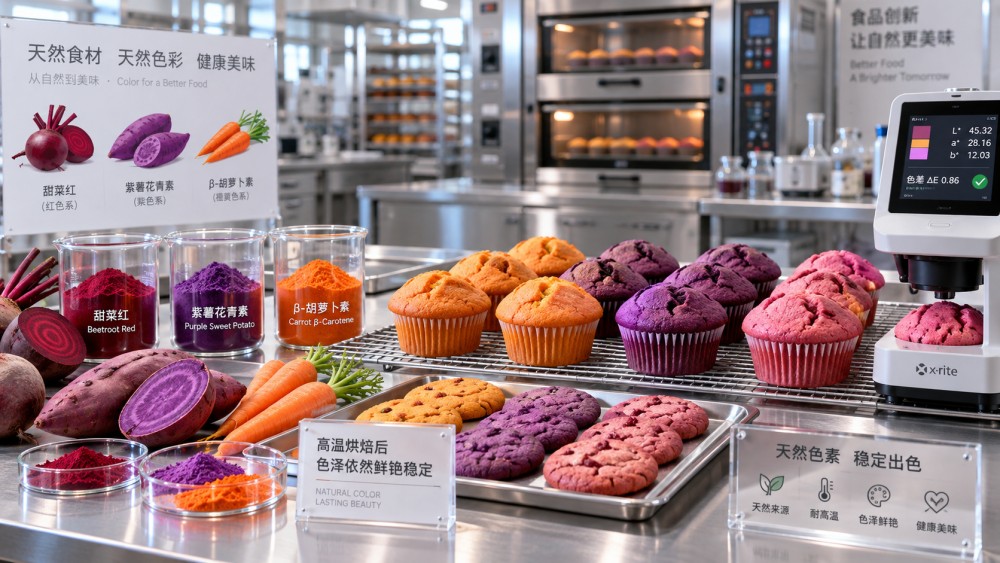
Natural pigments can perform well in baked goods, but they must be selected and protected according to the product's real thermal and chemical environment.
Many color failures occur because developers evaluate a pigment in water, frosting, or raw dough, then assume the same shade will survive baking.
In practice, oven temperature is only one stress factor. Moisture loss, oxygen, reducing sugars, proteins, fats, minerals, and pH shifts also matter.
A pigment that performs acceptably in a soft muffin may fail in a dry biscuit because the two systems create different thermal loads.
Technical teams should therefore assess color performance in the final formula, using the intended line conditions and realistic storage parameters.
The most dependable approach combines a heat-appropriate pigment source with encapsulation, suitable dispersion, controlled processing, and measurable acceptance criteria.
Clean-label claims do not eliminate technical choices. They increase the need for disciplined testing because fewer synthetic color options may be available.
For procurement and R&D teams, the objective is not maximum pigment dosage. It is repeatable visual impact at the lowest practical formulation risk.
Why Natural Pigments Lose Color in the Oven
Natural pigments are chemically diverse, so their failure mechanisms differ. Anthocyanins, carotenoids, chlorophylls, betalains, and curcumin respond differently to heat and formulation conditions.
Thermal degradation can break pigment structures, changing chromophores that absorb visible light. The result may be fading, browning, dullness, or an unintended shade shift.
Oxidation is another major pathway. Oxygen exposure during mixing, proofing, baking, cooling, and storage can gradually reduce color intensity.
High temperatures can accelerate oxidation, especially in systems containing unsaturated oils, metal ions, or residual oxygen in package headspace.
Water activity affects molecular mobility. In moist bakery products, pigments may remain reactive longer, while dry products can experience concentrated local heat exposure.
pH is particularly important for anthocyanin-based red, purple, and blue shades. A small pH movement can visibly change hue before significant degradation occurs.
Protein interactions may either help or harm color stability. Some proteins bind pigments and alter their appearance, while others provide a partial protective matrix.
Sugar systems also matter. Maillard browning can mask a natural pigment, especially when the target color is pale yellow, pink, lavender, or light green.
Match the Pigment Family to the Bakery Application
Selection should begin with the target shade, but it must quickly move to application conditions, including pH, moisture, fat level, bake profile, and shelf-life target.
Carotenoid-rich ingredients, including paprika, annatto, beta-carotene, and carrot-derived concentrates, often suit yellow, orange, and warm red bakery applications.
These pigments are generally more heat tolerant than many anthocyanins, but they can remain vulnerable to oxidation and light exposure.
Anthocyanin sources such as black carrot, elderberry, purple sweet potato, and red cabbage can provide attractive red-to-purple shades under favorable acidic conditions.
However, their stability usually declines in neutral or alkaline systems, making them less predictable for products containing sodium bicarbonate or ammonium bicarbonate.
Betalains from beetroot can produce vivid red and pink tones. They are useful in lower-temperature or shorter-bake applications, but severe baking conditions remain challenging.
Curcumin and turmeric-derived colors offer bright yellow tones, although formulators should consider light stability, flavor carryover, and permitted usage conditions in target markets.
Chlorophyll-derived green shades require especially careful evaluation. Heat, acid, and metal interactions can shift green toward olive or brown during processing.
Evaluate the Complete Formula Before Comparing Suppliers
A pigment supplier comparison is incomplete without a representative model formula. The same color ingredient can behave differently in separate flour, sugar, fat, and leavening systems.
Start by documenting the product's pH before baking, after baking, and after cooling. Final pH can differ materially from the initial batter reading.
Review leavening chemistry early. Sodium bicarbonate can raise pH, while acidic leavening components can support some red anthocyanin-based shades.
Assess fat type and antioxidant protection. Oxidized oils can contribute to pigment degradation and may create variability across production lots.
Trace metals such as iron and copper can catalyze oxidation. Water quality, mineral fortification, cocoa, fruit ingredients, and processing equipment may all contribute.
Consider the impact of dairy solids, egg proteins, plant proteins, and starches. Their interactions can modify pigment dispersion, opacity, and perceived saturation.
For products with cocoa, coffee, whole grains, or molasses, measure the pigment against the baked product's natural brown background rather than against a white control.
This formula-first process helps technical evaluators distinguish genuine pigment instability from color masking caused by the broader ingredient system.
Encapsulation Can Improve Survival, but It Is Not a Universal Fix
Encapsulation protects sensitive natural pigments by surrounding them with a carrier or matrix that reduces direct exposure to oxygen, heat, moisture, or reactive ingredients.
Common delivery systems may use maltodextrin, starches, gums, lipid matrices, proteins, or other food-grade protective materials, depending on the pigment and application.
In bakery systems, encapsulation can improve powder handling, reduce dusting, support dispersion, and delay pigment exposure during early processing stages.
Its value is highest when the protection mechanism matches the dominant degradation pathway. A barrier against oxygen will not automatically solve an unfavorable pH problem.
Evaluate encapsulated pigments in both dry-blend and liquid-addition processes. Mixing shear and hydration time can affect whether particles remain adequately protected.
Particle size also influences visible color development. Large particles may create speckling, while very fine particles can disperse more uniformly but hydrate faster.
Technical teams should request information on carrier composition, solids content, particle-size distribution, and processing recommendations instead of relying on generic stability claims.
When comparing costs, calculate effective delivered color after baking. A more expensive encapsulated pigment can be economical when it lowers dosage or reduces rejects.
Process Conditions Often Determine Whether Color Passes or Fails
Natural food pigments for bakery should be tested under the actual time-temperature profile, including makeup, proofing, oven zones, cooling, and any post-bake finishing steps.
A stated oven setpoint does not describe the complete thermal experience. Product size, moisture, pan material, airflow, and position in the oven influence core conditions.
Long bake times can be more damaging than short, high-temperature exposure because pigments remain under heat stress for extended periods.
Surface color and internal crumb color should be evaluated separately. Surface layers face more oxygen, dehydration, radiant heat, and browning reactions than the crumb.
Where possible, reduce unnecessary hold times between mixing and baking. Sensitive pigments may degrade during warm batter rests before entering the oven.
Addition sequence can also help. In some systems, adding pigment after certain reactive dry ingredients are dispersed can improve consistency and reduce local concentration effects.
Control mixing time carefully. Excessive shear can introduce air, increase oxidation risk, and alter the distribution of pigment particles or encapsulated material.
Cooling should not be ignored. Condensation, oxygen exposure, and warm product handling can change color before products enter their final packaging.
Use Instrumental Color Data Alongside Visual Evaluation
Visual review remains essential because consumers respond to appearance, but technical decisions should not rely only on subjective comparisons under uncontrolled lighting.
Colorimeters and spectrophotometers can track L*, a*, and b* values, allowing teams to quantify lightness, red-green movement, and yellow-blue movement.
Delta E values provide a practical way to compare a reference sample against baked trials, retained samples, supplier lots, and shelf-life checkpoints.
Set acceptance criteria before formal trials. For example, define the permitted color deviation, minimum saturation, and maximum allowable browning for the finished product.
Photograph samples under standardized lighting, but treat images as supporting evidence. Camera settings and display calibration can distort close color comparisons.
Include at least three production-relevant repeats where possible. Natural ingredients can vary, and a single promising batch may not represent commercial performance.
Record pigment dosage on an active-color basis when available. Comparing only kilograms added can be misleading when concentrates have different strength specifications.
Instrumental records also support supplier discussions, internal specifications, customer audits, and efficient root-cause analysis when color drift appears later.
Storage and Packaging Can Undo a Successful Bake Trial
A pigment that survives baking may still fade during distribution. Light, oxygen permeability, residual moisture, temperature cycling, and package headspace can alter the final appearance.
Products displayed in transparent packaging face greater light exposure. Carotenoids, curcumin, and several other natural color systems can be light sensitive.
Evaluate packaged samples at ambient conditions and accelerated conditions, but avoid treating aggressive accelerated tests as exact shelf-life predictions without correlation data.
Oxygen-barrier packaging can support color retention for susceptible pigments, particularly in products containing oils or high surface-area inclusions.
For frozen bakery items, assess freeze-thaw cycles and condensation. Moisture migration can affect surface appearance, especially in icings, fillings, and coated products.
Color specifications should define the sampling location. Crust, crumb, filling, topping, and cut surface can age differently and may require separate limits.
Include retained control samples from commercial runs. These provide a practical benchmark when teams investigate whether a future change is pigment-related or process-related.
Packaging evaluation should therefore be included in supplier qualification, not postponed until after pigment selection is already finalized.
Build a Practical Qualification Plan for Natural Bakery Colors
Begin with a screening stage using a small number of pigments whose chemistry aligns with the desired shade and the bakery product's pH range.
Run laboratory trials in the final formula, then compare the best candidates at pilot scale. Scale-up can expose mixing, heat-transfer, and deposition differences.
For each candidate, document dosage, color metrics, sensory effects, visual uniformity, ingredient declaration, regulatory status, availability, and total formulation cost.
Ask suppliers for lot-to-lot color specifications, contaminant controls, allergen information, country-of-origin data, and evidence relevant to target-market compliance.
Assess supply resilience as well as technical performance. Agricultural variation, extraction yield, seasonal availability, and regional sourcing can affect natural pigment consistency.
Define a fallback strategy before launch. A prequalified alternative pigment or shade-adjustment protocol can prevent extended disruption if supply or color performance changes.
Cross-functional approval should involve R&D, quality, regulatory, procurement, operations, and brand teams because color decisions influence each function differently.
This structured qualification approach turns natural color selection from a subjective design exercise into a controlled technical and commercial decision.
Conclusion: Choose for Finished-Product Performance
Natural food pigments for bakery hold color most effectively when pigment chemistry, formula pH, heat load, oxidation control, and packaging are evaluated together.
There is no universally heat-stable natural color. The correct option depends on the target shade, baked matrix, process severity, shelf-life conditions, and regulatory market.
Technical evaluators should prioritize finished-product data over supplier color charts, assessing actual baked samples with instrumental measurements and controlled visual review.
Encapsulation, antioxidants, optimized addition sequence, and packaging barriers can improve performance, but they work best after the underlying pigment-product match is sound.
A disciplined trial plan reduces late-stage reformulation, protects clean-label claims, and gives bakery manufacturers a more reliable path to consistent consumer-facing color.