





On July 10, 2026, Japan’s Ministry of Health, Labour and Welfare (MHLW) revised the JAS framework by adding annatto extract (E160b), purple sweet potato anthocyanin, and spirulina blue (phycocyanin) to the list of Designated Natural Additives. For imported clean-label food products, the immediate point of attention is not only the addition of three ingredients, but the resulting change in labeling flexibility: products using these colorants may now be positioned under natural color claims without synthetic pigment registration. This makes the update relevant to importers, ingredient sourcing teams, manufacturers, and downstream commercial partners that manage product compliance and market communication in Japan.
What the July 10 revision confirmed
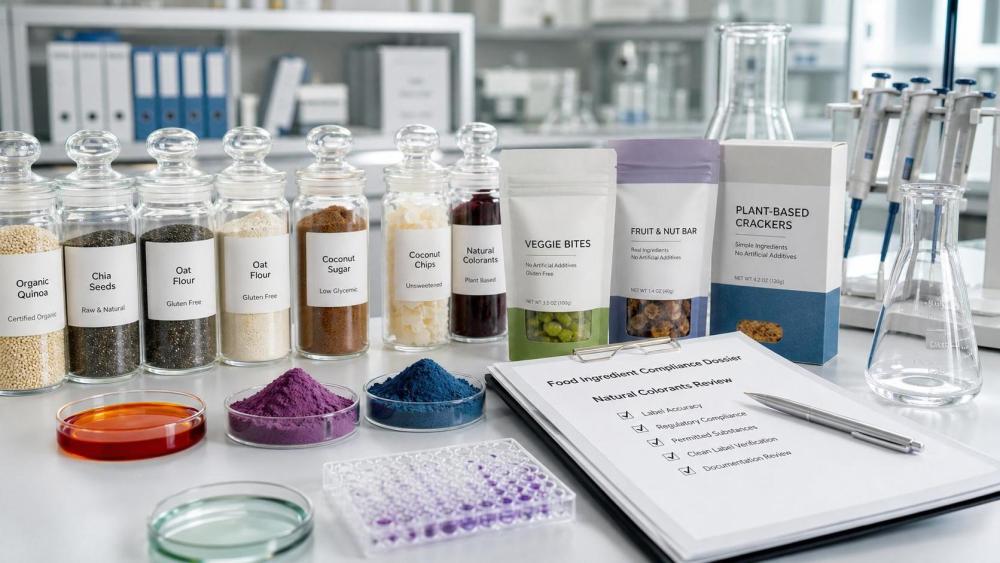
The confirmed change is that MHLW added three substances to the JAS Designated Natural Additives list with effect from July 10, 2026: annatto extract (E160b), purple sweet potato anthocyanin, and spirulina blue (phycocyanin). Based on the information provided, this revision expands labeling flexibility for imported clean-label food products. It specifically enables natural color claims without the need for synthetic pigment registration.
Where the impact is likely to be felt first
Imported product portfolios may become easier to position
From an industry perspective, direct trading companies and import-focused food businesses may feel the effect first because the revision concerns imported clean-label products and their labeling options in Japan. The main impact is likely to appear in product positioning, label review, and market-entry documentation. What deserves closer attention is whether existing imported SKUs using these three colorants can now be presented differently in commercial and compliance workflows.
Ingredient procurement and formulation teams have a narrower but practical issue to track
For raw material sourcing and formulation functions, the relevance lies in matching ingredient use with the updated designated list. The business impact is likely to center on specification review, supplier documentation, and internal confirmation of how these colorants are described across product files. Observably, this is less about creating a new ingredient trend and more about aligning procurement and technical records with a revised regulatory treatment.
Manufacturers and brand owners need to separate claim opportunity from execution detail
Processing manufacturers and terminal application companies may see this as a chance to revisit how products are labeled for the Japanese market. The likely effect falls on packaging review, regulatory checks, and customer-facing product communication. What deserves closer attention is that a broader labeling option does not remove the need for disciplined internal verification before any claim language is updated.
Supply chain and service providers may face documentation requests
For supply chain service providers, compliance consultants, and related service partners, the practical impact may appear in document handling and cross-border coordination. If customers seek to use the new labeling flexibility, service providers may be asked to support ingredient traceability, product file updates, or timing coordination around market submissions and shipments.
What companies should monitor now
Watch for official wording and practical interpretation
Analysis shows that the commercial significance of this revision depends not only on the listed substances, but also on how official language is applied in practice. Companies should pay close attention to any further wording, implementation notes, or clarifications connected to natural color claims and registration treatment.
Review affected products before changing labels
Businesses with imported clean-label products in Japan should identify whether any current or planned products use annatto extract, purple sweet potato anthocyanin, or spirulina blue. The practical issue is not simply ingredient presence, but whether the product documentation, formulation records, and market labels are ready to support any revised claim approach.
Check supplier files and supporting documents
What deserves closer attention is the quality and completeness of upstream documentation. Supplier specifications, additive descriptions, and supporting compliance materials may become more important if companies decide to rely on the new flexibility in customer communication or label updates.
Prepare for customer and channel questions
Importers, manufacturers, and sales teams may need a clear explanation of what has changed and what has not. Observably, this is where regulatory signal and business rollout can diverge: a policy revision may open a path, but actual use in commercial channels still depends on documentation, timing, and internal approval processes.
Why this looks like a regulatory signal worth tracking
Analysis shows that this development is best understood as a targeted regulatory change with immediate practical value, rather than as a complete shift in the food colorant market. The confirmed result is narrow but meaningful: three natural colorants now sit within the designated list, and that creates more room for natural color positioning in imported clean-label products. At the same time, it is more appropriate to understand this as an operational and compliance signal that still requires follow-through, not as a standalone indicator of broader market transformation.
How to read the significance at this stage
The industry value of this update lies in its direct effect on labeling flexibility in Japan for specific natural colorants used in imported clean-label foods. For businesses already active in this space, the change may support more straightforward claim strategies. For the wider market, the prudent reading is that this is a concrete but bounded development: it has confirmed relevance today, while its broader commercial effect will depend on how companies incorporate it into sourcing, compliance, packaging, and customer communication.
Basis of this article
This article is based on the user-provided news title, event date, and event summary concerning MHLW’s July 10, 2026 addition of annatto extract (E160b), purple sweet potato anthocyanin, and spirulina blue (phycocyanin) to the JAS Designated Natural Additives list. For this type of development, commonly relevant source categories may include official government notices, company disclosures, industry association updates, authoritative media coverage, and standard-related documents. A specific official source link was not provided in the input, so the exact original notice still requires ongoing verification. Follow-up attention should remain on any later official clarification, implementation language, and practical compliance interpretation tied to labeling use in Japan.
Related News
- How to assess color stability from a natural food colors manufacturerOct 06, 2026Food Rheology Expert
- How natural food pigments for bakery hold color during bakingSep 20, 2026Food Rheology Expert
- EFSA Tightens MRLs for Natural Food ColorsAug 10, 2026Food Rheology Expert
- EFSA Updates Residue Limits for Natural Colorants, Drawing Attention to China’s Export Compliance PathwaysAug 08, 2026Food Rheology Expert
Related News
- 00
0000-00
How to assess color stability from a natural food colors manufacturer - 00
0000-00
When does amino acid surfactant powder improve cleanser mildness? - 00
0000-00
How to verify a cosmetic nanotechnology supplier's safety documentation - 00
0000-00
How rheological thickeners for shampoo affect suspension stability - 00
0000-00
How to assess recombinant collagen ingredients for cream stability
Food Rheology Expert
Weekly Insights
Stay ahead with our curated technology reports delivered every Monday.