





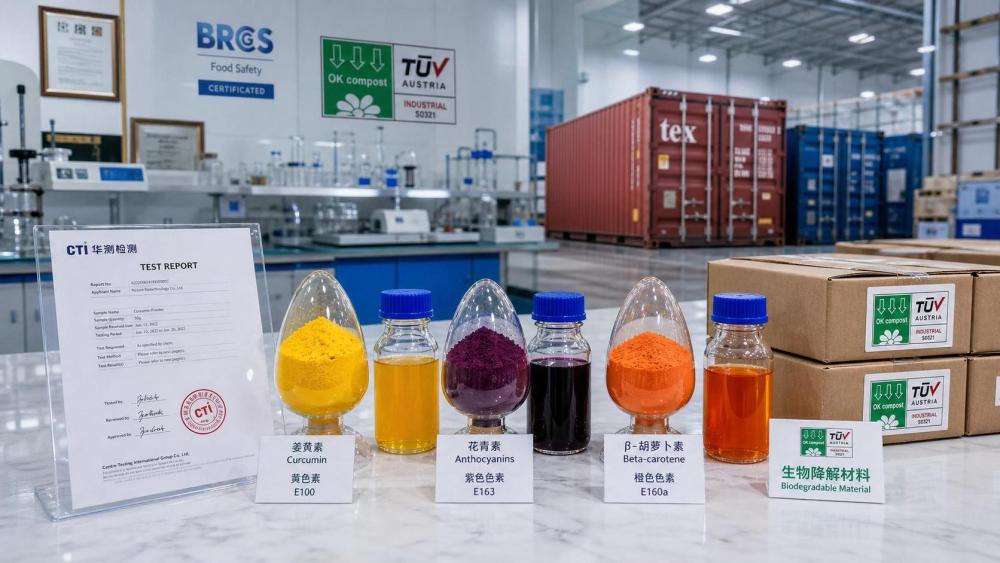
On June 19, 2026, Mercosur introduced a new compliance condition for imported natural food colorants, turning biodegradation verification into a customs-facing requirement rather than a purely technical reference. For exporters, importers, procurement teams, and compliance staff working with products such as curcumin, anthocyanins, and beta-carotene, the development is worth close attention because it links market access in Brazil, Argentina, Uruguay, and Paraguay to a report issued by a Mercosur-recognized laboratory before the rule becomes mandatory in December 2026.
A new entry condition for imported natural food colorants
According to the information provided, Mercosur issued Resolution GMC No. 38/2026 on June 19, 2026. The measure requires all imported Natural Food Colorants, including products such as curcumin, anthocyanins, and beta-carotene, to submit a biodegradation rate report under ISO 14852 from a Mercosur-recognized laboratory.
The report must show a biodegradation result of at least 60% in 28 days. If this documentation is not provided, customs clearance will not be granted. The rule applies across Brazil, Argentina, Uruguay, and Paraguay, and it will become mandatory from December 2026.
Where the pressure may emerge across the supply chain
Export transactions may face a new documentation gate
From an industry perspective, exporters shipping natural food colorants into Mercosur may be affected first because the rule directly ties import clearance to a specific test report. The practical impact may appear in pre-shipment document preparation, product release planning, and contract review, especially where a shipment previously moved on the basis of general product compliance files rather than a locally recognized biodegradation report.
Procurement teams may need to reassess supplier readiness
For buyers and sourcing teams, the rule may change how supplier qualification is reviewed. What deserves closer attention is whether current suppliers can provide an ISO 14852 biodegradation report issued by a Mercosur-recognized laboratory, because the issue is not only product specification but also the acceptance route of the supporting document.
Manufacturers and processors may see longer compliance coordination cycles
Manufacturers using natural colorants in downstream production may need to pay closer attention to inbound material approval, batch planning, and delivery coordination. Analysis shows that if compliance evidence is not aligned early, the risk may not stay at the testing stage alone but could extend into production scheduling and order fulfillment linked to imported inputs.
Testing and certification-related service providers may face higher demand for clarity
Testing and compliance service participants may also be drawn more directly into transaction planning. Observably, the key issue is not simply whether ISO 14852 is known in the market, but whether the laboratory issuing the report is recognized under the Mercosur requirement, which could become a decisive factor in document acceptance.
What companies should monitor before December 2026
Check whether existing files match the new acceptance threshold
Companies involved in imports or exports of natural food colorants should review whether their current technical files already contain ISO 14852 biodegradation data and, if so, whether the result and issuing laboratory align with the new requirement stated in the measure.
Review contracts, purchase terms, and shipping documents
It is more appropriate to understand this as a trade compliance issue as well as a technical one. Businesses may need to examine purchase specifications, supply agreements, and shipment documentation to determine where responsibility for obtaining the required report should sit before customs submission becomes a hard checkpoint.
Track how the rule is reflected in execution documents
Because the input information does not provide further implementation details, companies should continue to monitor how the requirement is described in operational documents such as import compliance files, customer technical requests, or tender-related specifications where applicable. The main point for now is to watch for consistent wording and acceptance criteria rather than assume a fully settled practice.
Allow time for compliance and delivery coordination
Procurement and supply chain teams may also want to reassess lead times for affected product categories. Analysis shows that when a market access condition depends on recognized laboratory documentation, coordination risk can shift into scheduling, shipment release, and delivery commitments even before the formal enforcement date arrives.
Why this looks like an execution signal, not just a policy headline
Analysis shows that this development is best read as a concrete market-access signal because the rule connects a specific standard, a minimum performance threshold, and a customs outcome. At the same time, it should not yet be overstated beyond the confirmed facts provided here. What deserves closer attention is how strictly recognition of laboratories is applied in practice, how consistently import documentation is reviewed across the four Mercosur markets, and whether downstream buyers begin to reflect the requirement in purchasing and technical documentation ahead of December 2026.
How the market may need to read this change
At this stage, the update is more appropriately understood as an approaching compliance requirement with direct trade implications for imported natural food colorants in Mercosur. The confirmed facts already point to a clear rule change, while the practical pace and interpretation of implementation still require continued observation. For industry participants, the most reasonable response is to treat the measure as an actionable compliance development and to watch closely for further execution detail.
Basis of this article and what still needs verification
This article is generated based on the user-provided news title, event date, and event summary. For events of this type, relevant source categories commonly include official regulatory notices, trade or customs authority releases, industry association communications, standard-related documents, and reporting by authoritative media. A specific official source link was not provided in the input, so the exact official publication path still needs to be verified on an ongoing basis. Continued attention should also be given to possible implementation details, document acceptance practice, certification or testing interpretation, procurement document changes, market feedback, and how companies execute the requirement in actual trade flows.
Related News
- How to assess color stability from a natural food colors manufacturerOct 06, 2026Food Rheology Expert
- How natural food pigments for bakery hold color during bakingSep 20, 2026Food Rheology Expert
- EFSA Tightens MRLs for Natural Food ColorsAug 10, 2026Food Rheology Expert
- EFSA Updates Residue Limits for Natural Colorants, Drawing Attention to China’s Export Compliance PathwaysAug 08, 2026Food Rheology Expert
Related News
- 00
0000-00
Can biomimetic peptides in cosmetics reduce the look of wrinkles? - 00
0000-00
How to assess a bio-based thickener manufacturer's batch consistency - 00
0000-00
Verifying halal status of hydrocolloid ingredients in the Middle East - 00
0000-00
How to interpret active matter on a surfactant specification sheet - 00
0000-00
How Do You Test Hydrocolloid Viscosity After Changing a Thickener?
Food Rheology Expert
Weekly Insights
Stay ahead with our curated technology reports delivered every Monday.