





Why are natural pigments getting so much attention in food?
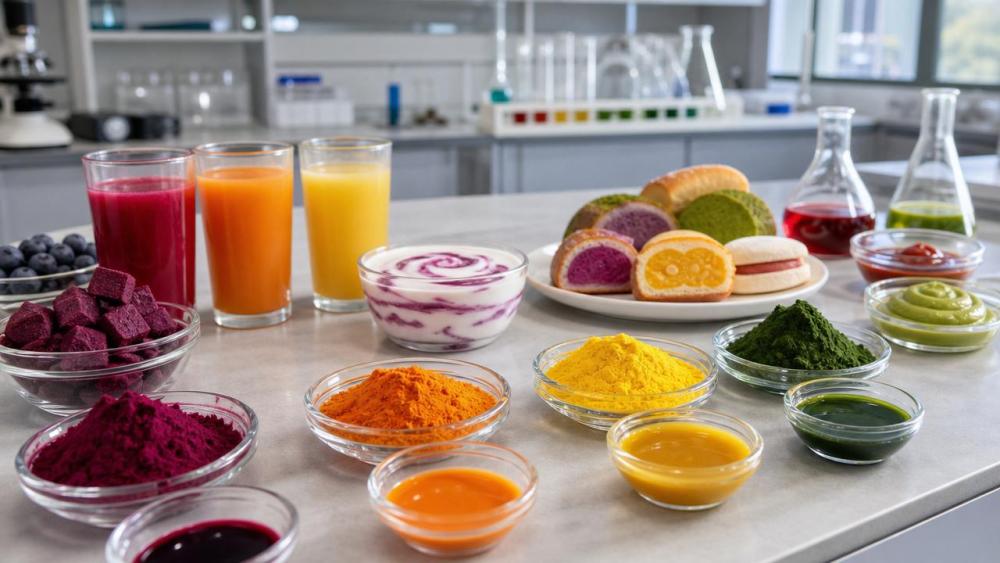
Natural pigments have moved from niche ingredients to mainstream formulation tools. Color still drives first impression, but now buyers also expect shorter labels and familiar sources.
That shift explains why natural pigments matter beyond appearance. They sit at the intersection of sensory appeal, preservation strategy, processing limits, and regulatory language.
In practical terms, a bright beverage, a stable yogurt swirl, or a bakery filling all ask different questions. The right answer depends on pH, heat, light, oxygen, and shelf-life targets.
This is also where FFAI’s broader lens becomes useful. Food color is rarely an isolated decision. It connects with antioxidants, thickeners, flavor systems, and compliance choices across global FMCG development.
So when people search for natural pigments, they are usually asking something deeper: will the color survive production, fit the label, and still look good at launch?
What exactly counts as natural pigments in food?
The short answer is color ingredients sourced from plants, algae, minerals, or certain biological processes, then prepared for food use under local rules.
Common examples include anthocyanins from fruits and vegetables, carotenoids such as beta-carotene and paprika extract, chlorophyll derivatives, turmeric-based curcumin, and beet-derived betalains.
Still, “natural” is not a universal technical definition. One region may focus on source, while another emphasizes permitted extraction methods or labeling language.
That is why natural pigments should be evaluated with two questions in mind. First, what is the pigment chemistry? Second, how will it be declared in the target market?
A red from beet and a red from anthocyanins may look similar on day one. Their behavior during heating, acid exposure, and storage can be very different.
A quick comparison helps
This table does not replace trials, but it gives a realistic starting map for natural pigments selection.
How stable are natural pigments during real processing?
Stability is where many projects succeed or fail. A pigment that looks perfect in a sample jar may fade, brown, or shift hue after pasteurization, baking, or transport.
Heat is the most obvious pressure, but it is not the only one. Oxygen pickup, metal ions, water activity, emulsification method, and package transparency can all change performance.
In acidic beverages, anthocyanins may perform well, especially in red and purple shades. In neutral dairy, that same choice can become less predictable.
For orange and yellow tones, carotenoid-based natural pigments often offer stronger process tolerance. Even then, oxidation control remains important through formulation and packaging.
A useful way to think about stability is not “Is this pigment stable?” but “Stable under which exact conditions?” That question leads to better trials and fewer late-stage surprises.
The most common stability checkpoints
- Process temperature and hold time, including short thermal spikes.
- Final product pH and possible pH drift during shelf life.
- Exposure to oxygen, headspace, and repeated opening.
- Light exposure during retail display and logistics.
- Interactions with ascorbic acid, minerals, proteins, or preservatives.
- Texture system effects, especially when thickeners change dispersion.
That last point is often underestimated. FFAI frequently frames color and rheology together because gums and stabilizers can improve suspension, opacity, and visual uniformity.
Can natural pigments deliver the full shade range brands want?
They can cover a wide shade range, but not every synthetic target has a perfect natural match. The gap is usually smaller in yellows, oranges, reds, and earthy tones.
Bright blues and stable greens remain more challenging. Blue options from spirulina can be effective, yet they often need careful control of heat and acidity.
Green shades may require blending blue and yellow systems. That creates another layer of risk because each component can age differently over time.
In actual development, the better question is often not “Can this match exactly?” but “What natural-looking target is acceptable for the category?”
Consumers usually tolerate some variation when the product signals authenticity. They are often less forgiving when a vivid expected shade fades before expiry.
When shade targets need adjustment
A realistic brief saves time. Instead of requesting a generic “bright red,” define the matrix, opacity, pack type, and end-of-shelf color expectation.
That approach usually leads to smarter use of natural pigments, especially in beverages, confectionery, dairy, bakery fillings, and savory sauces.
What labeling basics should be checked before launch?
Labeling is not just a legal footnote. It directly affects clean-label positioning, retailer acceptance, and cross-border scalability.
The same natural pigments may appear under different naming conventions depending on market rules. Some regions allow source-based descriptions. Others require functional or additive-style naming.
That means the commercial question is bigger than shade. A pigment may work technically but weaken the intended label story if the declaration looks unfamiliar or overly processed.
FFAI’s compliance perspective is useful here because ingredient approval, naming, and supporting documentation need to move in step with formulation work, not after it.
A practical labeling check table
Checking these points early reduces reformulation loops. It also helps natural pigments support a credible label claim instead of creating hidden complexity.
Where do teams misjudge natural pigments most often?
The first mistake is assuming source equals stability. A pigment from fruit or vegetables can still be highly sensitive in a demanding process.
The second is choosing by shade card alone. Bench-top color is only a snapshot. Shelf-life color is the real performance metric.
Another common issue is ignoring system interactions. Natural pigments may perform differently once flavors, acids, sweeteners, proteins, or antioxidants are added.
Cost is also misunderstood. The cheapest pigment per kilogram may not be the lowest-cost answer if it needs higher dosage, extra protection, or frequent reformulation.
More reliable decisions come from side-by-side trials using real process conditions, real packaging, and end-of-shelf evaluation rather than immediate visual approval.
A sensible next-step checklist
- Define the exact target shade at launch and at shelf-life end.
- Map pH, heat load, oxygen exposure, and package type.
- Review whether antioxidants or thickeners can support color retention.
- Confirm labeling language for every intended market.
- Compare total delivered cost, not ingredient price alone.
Natural pigments work best when color science, label strategy, and process reality are considered together. That is usually the difference between an attractive concept and a durable commercial result.
If the next step is evaluation, start with a narrow product brief, realistic storage testing, and a compliance review. That makes natural pigments easier to judge and much harder to regret.
Related News
- How to assess color stability from a natural food colors manufacturerOct 06, 2026Food Rheology Expert
- How natural food pigments for bakery hold color during bakingSep 20, 2026Food Rheology Expert
- EFSA Tightens MRLs for Natural Food ColorsAug 10, 2026Food Rheology Expert
- EFSA Updates Residue Limits for Natural Colorants, Drawing Attention to China’s Export Compliance PathwaysAug 08, 2026Food Rheology Expert
Related News
- 00
0000-00
Can biomimetic peptides in cosmetics reduce the look of wrinkles? - 00
0000-00
How to assess a bio-based thickener manufacturer's batch consistency - 00
0000-00
Verifying halal status of hydrocolloid ingredients in the Middle East - 00
0000-00
How to interpret active matter on a surfactant specification sheet - 00
0000-00
How Do You Test Hydrocolloid Viscosity After Changing a Thickener?
Food Rheology Expert
Weekly Insights
Stay ahead with our curated technology reports delivered every Monday.