





Color is often treated as a visual choice, yet the decision between natural pigments and synthetic colors now sits at the center of quality, compliance, and brand credibility. In food, personal care, and household products, shade performance still matters, but labeling risk has become just as important. When regulations tighten and clean-label expectations rise, a color system that looks acceptable in development can still create declaration problems, reformulation costs, or market access delays later.
Why this comparison matters now
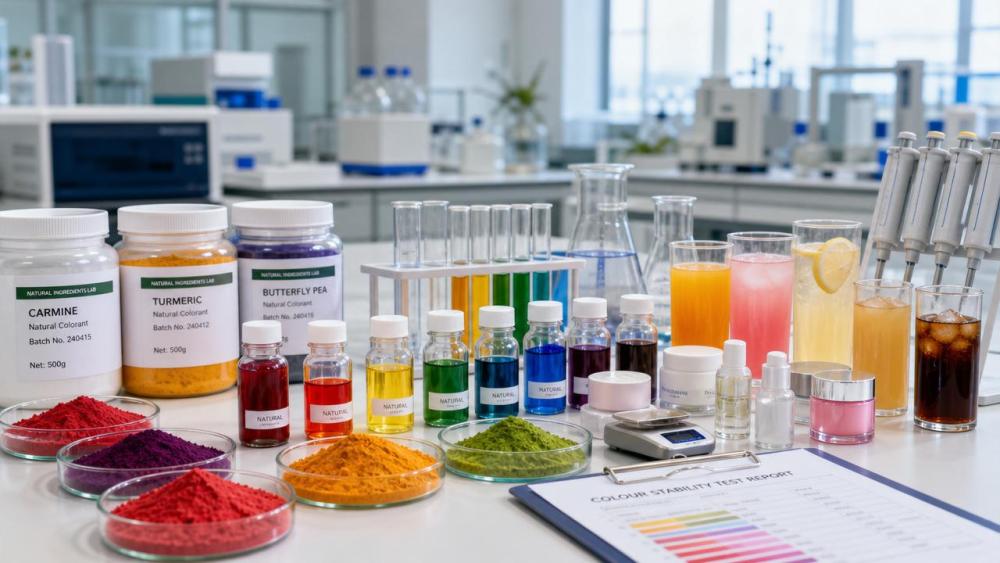
Across the global FMCG landscape, color no longer works in isolation. It interacts with preservatives, thickeners, flavors, surfactants, and active ingredients, shaping both sensory impact and regulatory exposure.
That broader view explains why FFAI tracks natural pigments alongside rheological thickeners, antioxidants, fragrance systems, and high-purity actives. A pigment decision can influence shelf life, formula stability, processing tolerance, and label positioning at once.
Natural pigments appeal to brands seeking shorter ingredient lists and a more transparent story. Synthetic colors remain attractive where consistency, intensity, and processing resilience are non-negotiable.
The real issue is not choosing one category as universally better. It is understanding which performance compromises are acceptable and which labeling risks are avoidable.
What separates natural pigments from synthetic colors
Natural pigments are colorants derived from botanical, microbial, mineral, or sometimes animal-associated sources. Common examples include anthocyanins, carotenoids, chlorophyll derivatives, paprika extract, spirulina, and beet-based colors.
Synthetic colors are manufactured through controlled chemical processes. They are often selected for precise shade matching, strong tinctorial power, and reproducible lot-to-lot behavior.
In practical terms, natural pigments usually carry more variability because source materials change with season, origin, extraction method, and purification level. Synthetic colors usually provide tighter control, but may trigger consumer hesitation or stricter label review.
This distinction becomes critical when a business sells across regions. A colorant accepted in one market may require different naming, classification, or supporting documentation elsewhere.
Performance is more than shade intensity
Color performance should be assessed under real process conditions, not just on a lab bench. Heat, light, oxygen, pH, water activity, emulsification, and packaging all influence how pigments behave over time.
For example, many natural pigments show vulnerability during high-temperature baking, retort treatment, or extended warehouse exposure. Others drift when pH moves from acidic to neutral.
Synthetic colors often outperform natural pigments in stability trials, especially in bright beverages, confectionery coatings, and products needing long visual consistency. Still, the stability advantage may not offset a weak fit with clean-label strategy.
Where natural pigments create value
Natural pigments support a broader market shift toward recognizable ingredients and low-friction label language. In many categories, that story contributes to premium positioning and lower consumer skepticism.
They can also align well with brand platforms built around plant-based claims, minimally processed positioning, and ingredient transparency. In some formulations, they create a more authentic visual tone than synthetic alternatives.
This is especially relevant in products where color should feel linked to the source. Fruit snacks, dairy alternatives, botanical beverages, topical gels, and natural-leaning personal care products often benefit from that coherence.
At the same time, natural pigments can affect system design. A weaker pigment may require support from thickeners, antioxidants, protective packaging, or gentler processing windows.
Typical pressure points in use
- Shade drift during storage or transport
- Batch variation tied to agricultural supply
- Sensitivity to metal ions, oxidation, or UV exposure
- Higher use levels that alter taste, odor, or texture
- Country-specific naming or source disclosure requirements
Labeling risk often appears after formulation success
A formulation can pass internal appearance testing and still fail later at the label stage. This is one of the biggest hidden risks in the natural pigments versus synthetic colors decision.
The challenge usually comes from three areas: legal naming, source interpretation, and claim compatibility. A pigment described as natural in commercial conversation may not fit the same description under local rules.
Some markets allow broader language for coloring foodstuffs or plant concentrates. Others require a more formal additive declaration. Cosmetic and household applications bring another layer, because ingredient lists, notifications, and traceability standards differ.
That is why FFAI’s compliance-oriented intelligence model matters. The issue is not only whether a pigment works, but whether the documentation, origin details, and label wording stay aligned from sourcing through export.
How the trade-off changes by application
In acidic beverages, natural pigments such as anthocyanins may perform well visually, but storage light exposure can still reduce appeal. In bakery systems, high heat may push teams toward encapsulation, process adjustment, or a synthetic fallback.
In dairy and frozen desserts, natural pigments often work better when paired with stabilizers that protect dispersion and visual uniformity. Here, hydrocolloids and pigment choice are closely connected.
In cosmetics, natural pigments may support a safer-looking and more premium narrative, yet oxidation, migration, and compatibility with active compounds still need close review. A colorant should not undermine efficacy claims or product appearance over shelf life.
In home care, the balance can shift again. Bold, highly stable shades may be more important than a natural origin story, especially when the product faces sunlight, humidity, and long distribution cycles.
Questions worth asking before approval
- Does the pigment remain stable through processing and full shelf life?
- Will the ingredient name support the intended market claim?
- Is the supplier package strong enough on origin, purity, and traceability?
- Could the required dose change taste, odor, viscosity, or skin feel?
- Will export markets classify the same material differently?
A practical review path for safer decisions
A workable evaluation framework starts with intended claims, not only color targets. If the commercial goal depends on natural positioning, the pigment should be screened early against label language, regional rules, and source documentation.
Next comes stress testing under realistic conditions. That includes thermal load, pH shift, light exposure, oxygen contact, and packaging interaction. Natural pigments that look promising in early trials may fail under distribution simulation.
Supplier review should then go beyond price and color card matching. Certificate quality, contaminant control, extraction method, residual solvent status, and batch reproducibility all matter.
Finally, align regulatory and formulation teams before commercialization. This prevents a common problem: technical approval of a pigment that later creates claim conflicts or relabeling work.
For many businesses, the most resilient solution is not a simple natural-versus-synthetic preference. It is a category-specific decision tree that links performance thresholds with declaration rules and brand intent.
What to monitor next
Natural pigments will remain under pressure to deliver stronger stability, cleaner extraction profiles, and clearer legal positioning. Synthetic colors will remain relevant where process severity and visual consistency dominate.
The best next step is to build a review matrix around three variables: performance under use conditions, labeling fit by market, and total reformulation risk. That approach makes color selection more defensible and less reactive.
Where uncertainty remains, compare a short list of natural pigments against synthetic benchmarks in the same formula, then assess not only appearance but also documentation strength and declaration impact. That is usually where the smarter choice becomes visible.
Related News
- How to assess color stability from a natural food colors manufacturerOct 06, 2026Food Rheology Expert
- How natural food pigments for bakery hold color during bakingSep 20, 2026Food Rheology Expert
- EFSA Tightens MRLs for Natural Food ColorsAug 10, 2026Food Rheology Expert
- EFSA Updates Residue Limits for Natural Colorants, Drawing Attention to China’s Export Compliance PathwaysAug 08, 2026Food Rheology Expert
Related News
- 00
0000-00
Can biomimetic peptides in cosmetics reduce the look of wrinkles? - 00
0000-00
How to assess a bio-based thickener manufacturer's batch consistency - 00
0000-00
Verifying halal status of hydrocolloid ingredients in the Middle East - 00
0000-00
How to interpret active matter on a surfactant specification sheet - 00
0000-00
How Do You Test Hydrocolloid Viscosity After Changing a Thickener?
Food Rheology Expert
Weekly Insights
Stay ahead with our curated technology reports delivered every Monday.