





Bio-based thickeners have moved beyond a simple clean-label story. In food formulation, they now sit at the intersection of texture design, supply risk, regulatory comfort, and margin control.
That shift matters because cost is rarely just the price per kilogram. For bio-based thickeners for food industry use, the better question is how a material performs across dose rate, process stability, shelf life, and sourcing resilience.
Within the broader FMCG value chain, this is exactly where rheology becomes commercial strategy. FFAI tracks these links closely, connecting ingredient behavior, compliance pressure, and formulation economics in a way that supports more grounded buying decisions.
Why bio-based thickeners are drawing more attention
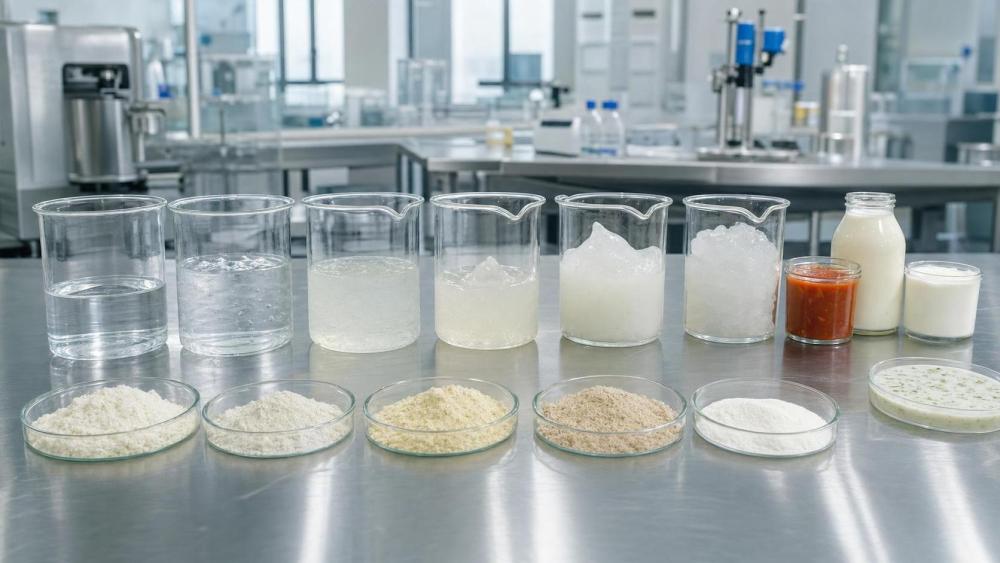
Demand is rising for ingredients that support texture while also fitting expectations around naturality, biodegradability, and label simplicity. That puts hydrocolloids and other plant, fermentation, or seaweed-derived systems under sharper review.
In practical terms, buyers are comparing xanthan gum, pectin, guar gum, carrageenan, starch derivatives, cellulose gums, konjac, and similar materials with much greater precision than before.
The attention is not only consumer-driven. It also comes from formulation teams trying to maintain mouthfeel under sugar reduction, protein enrichment, fat replacement, freeze-thaw stress, and more variable processing conditions.
As FFAI’s coverage often shows, thickeners are not isolated tools. They influence sensory perception, ingredient compatibility, and even how other functional compounds survive manufacturing and storage.
What “cost-performance” really means in food formulation
A low unit price can be misleading. Some bio-based thickeners for food industry applications look inexpensive at purchase, but require higher use levels, tighter hydration control, or more stabilizer support.
A more expensive option may still win when it reduces total solids, improves yield, lowers process loss, or creates a more stable texture over time.
The most useful evaluation usually includes four layers: ingredient cost, effective dosage, operational fit, and finished product performance. If one layer is ignored, comparisons become distorted.
This broader view is especially important when comparing clean-label systems with modified alternatives. The cheapest thickener on paper may create the highest hidden cost inside the plant.
Performance differences that change buying decisions
Not all bio-based thickeners deliver the same rheological profile. Some build short, spoonable body. Others create elastic flow, glossy suspension, or stable gel structures.
Xanthan remains valued for high efficiency and shear-thinning behavior. Pectin performs strongly in fruit systems and acidified products. Guar offers cost-effective viscosity, but can vary in hydration and sensory feel.
Carrageenan may still be relevant in dairy and protein systems where interaction with casein or other proteins matters. Starch-based options often bring familiarity and body, though thermal and freeze-thaw demands need closer review.
That means bio-based thickeners for food industry selection should start from the desired eating experience, not from a generic “natural thickener” category.
Key formulation variables
- pH can change hydration, gel strength, and long-term stability.
- Sugar, salt, and protein may strengthen or disrupt performance.
- Shear during mixing can help dispersion or reduce viscosity retention.
- Thermal load affects some systems more than others.
- Label targets may rule out otherwise practical options.
In many formulas, the winning solution is a blend rather than a single hydrocolloid. Synergy can improve stability and reduce total use rate, which directly improves cost-performance.
Where these materials create the most value
The commercial value of bio-based thickeners for food industry use changes by category. In beverages, they often protect suspension and mouthfeel under low solids conditions.
In dairy and dairy alternatives, they shape creaminess, reduce phase separation, and help maintain stability through cold-chain stress. In sauces and dressings, they influence cling, pourability, and visual body.
Bakery fillings, fruit preparations, frozen desserts, confectionery, and convenience meals each present different rheology problems. The best thickener is the one that matches the product’s process history and consumer expectation.
This is also why intelligence matters. FFAI’s perspective on thickeners sits alongside preservation, flavor, and active ingredient trends because texture decisions often affect the entire sensory and stability system.
Typical use-direction mapping
What to watch beyond the laboratory result
Bench performance is only one part of the decision. Supply-side reality can quickly erase a technical advantage if origin concentration, crop volatility, or fermentation bottlenecks create unstable pricing.
Specification discipline also deserves attention. Small changes in particle size, viscosity grade, microbial limits, or hydration behavior can disrupt line performance and finished product consistency.
Regulatory and labeling expectations vary by market. FFAI’s compliance-oriented lens is useful here, especially when export routes involve different clean-label preferences or ingredient naming sensitivities.
Sustainability claims should be checked with the same rigor as technical claims. “Bio-based” does not automatically mean low-risk, low-footprint, or supply-secure.
Practical checkpoints before switching suppliers or grades
- Confirm viscosity performance at actual plant conditions, not ideal lab conditions.
- Compare landed cost against effective use rate and expected waste.
- Review crop or fermentation exposure behind the supply chain.
- Check compatibility with preservatives, flavors, acids, and proteins.
- Ask for consistency data across recent production lots.
A more useful way to move forward
The strongest decisions around bio-based thickeners for food industry programs usually come from a structured shortlist, not from broad ingredient enthusiasm.
Start with the target texture, process window, and label requirement. Then compare two or three candidate systems against dose efficiency, shelf-life behavior, and supply resilience.
It also helps to evaluate thickener choice as part of a wider formulation map. Texture, flavor release, preservation strategy, and premium positioning often move together rather than separately.
For teams using FFAI as a reference point, the next step is less about chasing a universal “best” hydrocolloid and more about building a repeatable decision framework. In a tighter FMCG market, that framework is where lower-risk sourcing and stronger product performance begin.
Related News
- Functional Food Additives for Bakery: Performance and Labeling BasicsJul 09, 2026Food Rheology Expert
- Bio-Based Thickeners: Cost and Performance in Food FormulationJun 25, 2026Food Rheology Expert
- Indonesia Duties Chinese PP, Affecting Starch and Flavor CarriersJun 21, 2026Food Rheology Expert
- Argentina Tightens Inorganic Arsenic LimitsJun 18, 2026Food Rheology Expert
Related News
- 00
0000-00
Can biomimetic peptides in cosmetics reduce the look of wrinkles? - 00
0000-00
How to assess a bio-based thickener manufacturer's batch consistency - 00
0000-00
Verifying halal status of hydrocolloid ingredients in the Middle East - 00
0000-00
How to interpret active matter on a surfactant specification sheet - 00
0000-00
How Do You Test Hydrocolloid Viscosity After Changing a Thickener?
Food Rheology Expert
Weekly Insights
Stay ahead with our curated technology reports delivered every Monday.