





Why Bakery Formulation Now Demands Closer Ingredient Intelligence
Functional food additives for bakery sit at the intersection of texture, nutrition, shelf life, and labeling pressure.
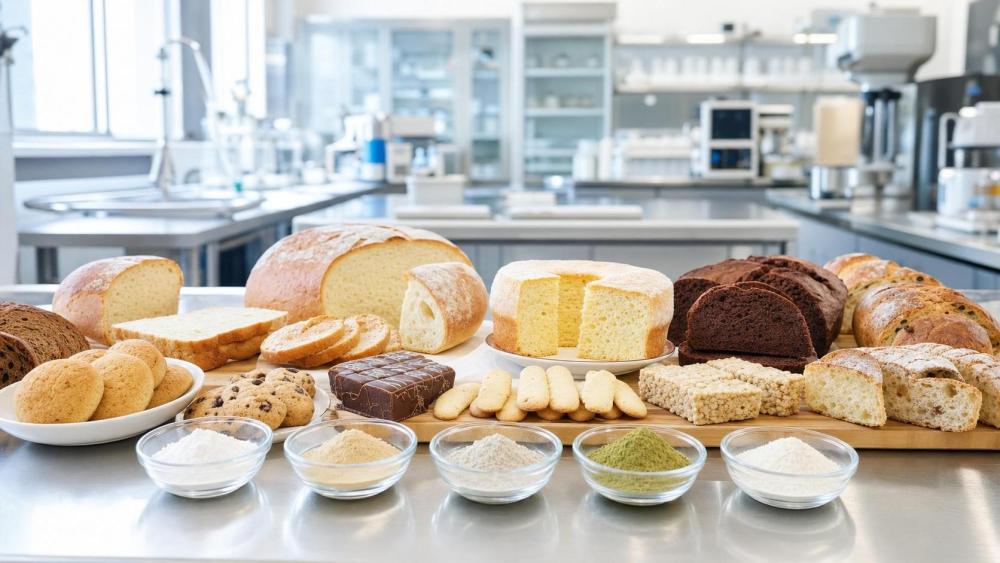
That makes them more than processing aids or minor recipe extras.
They influence dough tolerance, crumb softness, moisture migration, oxidation control, and how a finished product is perceived on pack.
In bakery, small dosage changes can shift machinability, baking stability, and shelf appeal in ways that are commercially significant.
The current market adds another layer.
Buyers increasingly expect fortified products, shorter ingredient lists, and claims that still survive technical scrutiny.
As a result, functional food additives for bakery are being evaluated not only for performance, but also for regulatory fit and label clarity.
This is where FFAI’s intelligence focus becomes relevant.
Its research lens on preservatives, thickeners, flavors, and compliance helps connect ingredient chemistry with real FMCG decision-making.
What Counts as Functional Food Additives for Bakery
The term covers ingredients added to deliver a targeted technical or nutritional outcome in baked systems.
Some improve dough handling.
Others extend freshness, stabilize fat, support structure, enrich nutrient content, or maintain sensory quality during storage.
They can include emulsifiers, hydrocolloids, enzymes, fibers, antioxidants, preservatives, mineral salts, plant extracts, and flavor modulators.
The same additive may play multiple roles.
For example, a hydrocolloid may improve batter viscosity, slow staling, and reduce breakage in transport.
A fiber ingredient may support a nutrition claim while also changing water absorption and crumb firmness.
That dual function is why performance data alone rarely tells the full story.
Performance depends on the bakery matrix
Bread, cakes, biscuits, laminated doughs, tortillas, and gluten-free products behave very differently.
Water activity, fat phase, sugar level, mixing energy, and thermal exposure change additive behavior.
An antioxidant that works well in one fat-rich cookie may add little value in a lean bread formula.
A thickener that helps gluten-free muffins can easily damage eating quality in crackers.
The Functions That Matter Most in Commercial Bakery
When reviewing functional food additives for bakery, a few performance areas consistently shape formulation decisions.
The strongest formulations usually come from balancing these functions rather than maximizing one metric.
A cleaner label that causes severe staling in three days is not a real upgrade.
Likewise, a highly stable formula may lose market value if the label appears overly complex.
Why Labeling Basics Are No Longer Basic
Labeling has become a formulation constraint, not a final packaging step.
Ingredient names, functional classes, regional standards, and claim language must align with product reality.
This is especially true for functional food additives for bakery intended for export or multi-market distribution.
Simple questions often become complicated in practice.
Is the material declared by chemical name, common name, or functional category?
Does a natural source support a cleaner consumer-facing description?
Can an enzyme or cultured ingredient reduce the need for a more sensitive additive declaration?
FFAI’s compliance perspective is useful here.
Its attention to GRAS status, export rules, and ingredient notification logic reflects how labeling strategy must start during R&D.
Three labeling checks worth making early
- Confirm the legal identity of each additive in the target market, not only in the source market.
- Review whether processing conditions change the status of the ingredient or its declaration.
- Test consumer-facing simplicity against technical necessity before locking claims or artwork.
Clean Label Pressure and the Reformulation Trade-Off
Clean label is one of the main reasons interest in functional food additives for bakery keeps growing.
But the term is market-driven, not uniformly defined across regulations.
That creates a practical challenge.
Replacing a conventional emulsifier with enzyme systems or fiber blends may improve perception, yet it can narrow process tolerance.
Switching to natural antioxidants may fit brand direction, but heat stability and cost-in-use need close review.
In bakery, especially shelf-stable products, clean label decisions should be tested against four realities:
- Does the alternative hold performance after baking and during storage?
- Does it preserve flavor, softness, and visual consistency?
- Does the new declaration clearly improve consumer interpretation?
- Does the total formulation economics still work at scale?
The most durable clean label strategy is usually evidence-based, not slogan-based.
Where Functional Additives Create the Most Value
Not every bakery product needs the same technical toolkit.
Value emerges when additive selection matches a defined product risk or market goal.
Bread and rolls
Softness retention, dough strength, and mold control are common priorities.
Emulsifiers, enzymes, cultured preservation systems, and fibers are often reviewed together.
Cakes and sweet baked goods
Batter aeration, moisture management, fat oxidation, and flavor stability matter more.
Hydrocolloids and antioxidants can be especially relevant in extended shelf-life formats.
Biscuits and crackers
Oxidative rancidity, snap, spread, and flavor consistency tend to drive additive selection.
A low-moisture system still needs protection if fats or inclusions are sensitive.
Gluten-free and fortified products
These formulas show why functional food additives for bakery matter so much.
Without gluten structure, texture support becomes more dependent on hydrocolloids, proteins, starch systems, and emulsification balance.
Added vitamins, minerals, or fibers can further complicate taste and process behavior.
A Practical Review Framework for Ingredient Decisions
A useful way to assess functional food additives for bakery is to review them across five linked questions.
- What exact defect, claim, or shelf-life issue is the additive solving?
- How does it behave under mixing, proofing, baking, cooling, and storage?
- What interactions appear with flour quality, fat type, sugar level, or inclusions?
- How will it be declared, and does that support the intended market position?
- What is the cost of performance failure compared with the cost of the ingredient?
That last question is often underestimated.
A lower-cost additive can become expensive if it shortens shelf life, increases returns, or forces a weaker label position.
FFAI’s cross-disciplinary view is helpful because bakery choices rarely stay inside one technical silo.
Preservation, rheology, sensory perception, and compliance usually move together.
What to Watch Next
The next phase of bakery formulation will likely focus on multifunctional ingredients with clearer labeling narratives.
Heat-stable natural antioxidants, enzyme-led freshness systems, and fibers with improved sensory profiles are already drawing attention.
At the same time, regional compliance differences will keep shaping how functional food additives for bakery are chosen and described.
A sensible next step is to build an internal comparison sheet for each candidate additive.
Track technical purpose, thermal stability, dosage range, shelf-life impact, declaration name, and claim fit in one place.
That approach turns ingredient screening into a repeatable decision process rather than a series of isolated trials.
In bakery, that discipline is often what separates a promising concept from a reliable commercial formula.
Related News
- Functional Food Additives for Bakery: Performance and Labeling BasicsJul 09, 2026Food Rheology Expert
- Bio-Based Thickeners: Cost and Performance in Food FormulationJun 25, 2026Food Rheology Expert
- Indonesia Duties Chinese PP, Affecting Starch and Flavor CarriersJun 21, 2026Food Rheology Expert
- Argentina Tightens Inorganic Arsenic LimitsJun 18, 2026Food Rheology Expert
Related News
- 00
0000-00
Verifying halal status of hydrocolloid ingredients in the Middle East - 00
0000-00
How to interpret active matter on a surfactant specification sheet - 00
0000-00
What Quality Checks Should You Run on Fragrance Ingredient Suppliers? - 00
0000-00
How to assess a flavor chemistry manufacturer's batch consistency - 00
0000-00
What drives fragrance ingredients price changes in bulk orders?
Food Rheology Expert
Weekly Insights
Stay ahead with our curated technology reports delivered every Monday.