





In daily FMCG formulas, bio-based thickeners do more than raise viscosity. They define texture, support stability, improve spreadability, and shape how products feel in real use.
Across food, personal care, and home care, these renewable rheology modifiers now sit at the center of clean-label and sensory strategy. Their effect is practical, measurable, and increasingly commercial.
As formulation expectations rise, understanding how bio-based thickeners affect texture helps connect ingredient choice with processing behavior, user perception, and long-term product positioning.
Texture Is Becoming a Competitive Signal in Daily FMCG Formulas
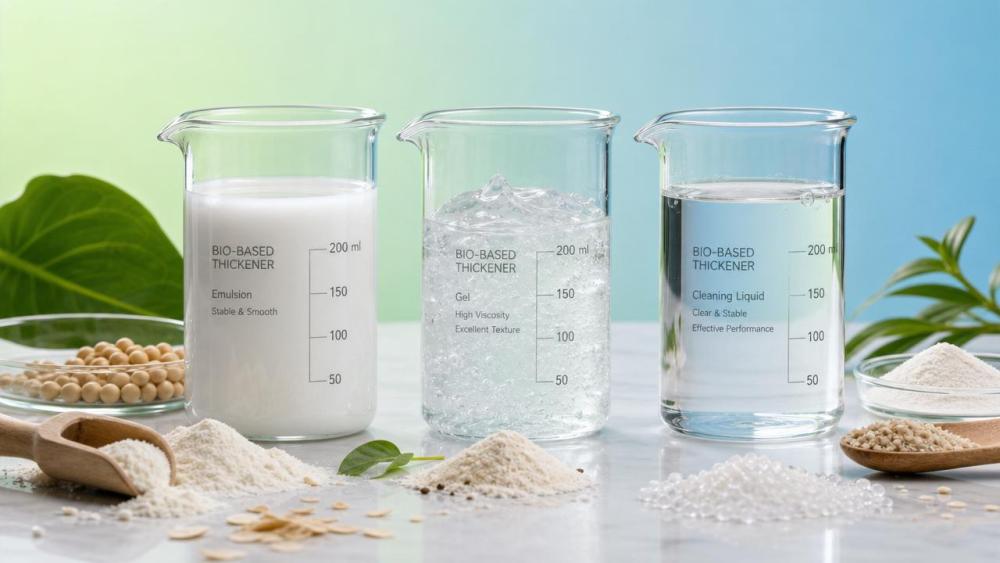
Texture once played a supporting role. Today, it is a visible market signal. Consumers often judge quality through spoon feel, pour profile, foam body, glide, and afterfeel.
This shift has increased interest in bio-based thickeners. Brands want natural-sounding ingredients that still deliver premium sensory performance under real manufacturing constraints.
The change is especially clear in yogurt, sauces, shampoos, body washes, creams, and liquid cleaners. In each category, texture now influences trust, perceived concentration, and repeat purchase.
For intelligence platforms such as FFAI, this trend matters because rheology has become a bridge between molecular design and market success. Small dosage changes can reshape the entire experience.
Why Bio-based Thickeners Are Gaining Momentum Now
Several forces are pushing bio-based thickeners into wider use. These drivers are technical, regulatory, and emotional at the same time.
This is why xanthan gum, guar gum, pectin, carrageenan, cellulose derivatives, starches, and other natural hydrocolloids remain so relevant. They deliver form and feel with low use levels.
How Bio-based Thickeners Actually Change Texture
Bio-based thickeners influence more than thickness. They interact with water, oils, proteins, surfactants, salts, and actives to create a specific sensory structure.
1. They control flow behavior
Some systems pour easily under force but stay stable at rest. This shear-thinning profile is valuable in sauces, lotions, and detergents that must dispense smoothly but resist phase separation.
2. They build body and mouthfeel
A yogurt may feel creamy, a shampoo may feel dense, and a body lotion may feel cushiony because the thickener creates a structured liquid network.
3. They affect lubrication and glide
In skin and hair care, the right bio-based thickeners can reduce drag, improve spread, and create a smoother payoff. The wrong choice may feel tacky or leave residue.
4. They stabilize suspended materials
Pigments, fragrance capsules, exfoliating particles, spices, or active droplets stay more evenly distributed when the continuous phase has the right rheological support.
5. They shape the finish
Texture is judged at the end, not only during application. Afterfeel can be clean, coated, moist, rich, light, or film-forming depending on thickener architecture and dose.
Texture Effects Differ Strongly by FMCG Application
The same ingredient does not create the same result everywhere. Bio-based thickeners behave differently depending on the surrounding formula matrix.
- Food systems: They influence spoonability, gel strength, melt resistance, and flavor release.
- Personal care: They adjust slip, richness, suspension, and pumpability in creams, gels, and washes.
- Home care: They control cling, pour shape, foam support, and the perceived strength of liquid cleaners.
For example, xanthan may improve suspension and low-shear stability, while starch can add bulkier body. Pectin may create a softer gel, and cellulose can improve clarity in selected systems.
This means texture design cannot rely on label appeal alone. It must match pH, ionic load, heating profile, packaging format, and expected user behavior.
The Main Drivers Behind Performance Differences
When bio-based thickeners perform well in one formula but fail in another, the reason usually sits in a few critical variables.
- Hydration method: Poor dispersion can cause fisheyes, lumps, or delayed viscosity build.
- pH range: Some hydrocolloids lose efficiency or change structure outside their preferred window.
- Salt and surfactant load: Electrolytes can strengthen or weaken the network depending on the polymer type.
- Temperature history: Heating and cooling cycles alter swelling, gelation, and final texture expression.
- Formula interactions: Proteins, oils, solvents, and actives can compete for water or disrupt the texture network.
These details explain why formulation teams increasingly use rheology as a strategic tool, not just a viscosity checkpoint.
What the Shift Means Across Business and Development Chains
The rise of bio-based thickeners affects multiple links in the FMCG value chain. The change is broader than ingredient substitution.
In R&D, texture targets are becoming more precise. Teams must define not only viscosity, but also yield value, recovery, spread, and sensory finish.
In quality control, repeatable hydration and batch consistency matter more. Natural-origin materials can vary by source, process, and seasonal conditions.
In regulatory and brand communication, renewable thickening systems support claims around biodegradability, naturality, and cleaner ingredient language, when properly substantiated.
In pricing strategy, better texture can justify premium positioning. Richer sensory delivery often lifts perceived efficacy in both food enjoyment and personal care performance.
What Deserves Closer Attention Right Now
Current market conditions suggest several priority areas for anyone evaluating bio-based thickeners in daily FMCG formulas.
- Check texture under real storage stress, not only fresh lab samples.
- Measure sensory attributes separately from viscosity numbers.
- Compare single-polymer systems with synergistic blends.
- Review compatibility with preservatives, fragrances, surfactants, and actives.
- Evaluate processing energy, hydration speed, and cleaning practicality.
- Confirm claim alignment with regional compliance expectations.
These checkpoints help prevent a common mistake: choosing a natural thickener for image value while overlooking sensory trade-offs or line-level inefficiency.
A Practical Way to Judge Future-Ready Thickener Choices
This framework turns texture from a subjective discussion into a structured development decision.
The Next Move Is Smarter Texture Mapping
Bio-based thickeners are no longer optional add-ons in modern FMCG formulation. They are central to how products look, move, feel, and earn trust.
The best results come from mapping texture goals early, then matching ingredient behavior to process reality, regulatory direction, and final sensory expectations.
FFAI’s cross-category intelligence approach shows why this matters. In food, fragrance-linked perception, cosmetic actives, and surfactant systems, texture is often where chemistry becomes value.
The practical next step is simple: review current formulas, identify where texture limits performance, and benchmark alternative bio-based thickeners under actual use conditions.
That is where cleaner labels, stronger sensory identity, and more resilient product development start to align.
Related News
- Functional Food Additives for Bakery: Performance and Labeling BasicsJul 09, 2026Food Rheology Expert
- Bio-Based Thickeners: Cost and Performance in Food FormulationJun 25, 2026Food Rheology Expert
- Indonesia Duties Chinese PP, Affecting Starch and Flavor CarriersJun 21, 2026Food Rheology Expert
- Argentina Tightens Inorganic Arsenic LimitsJun 18, 2026Food Rheology Expert
Related News
- 00
0000-00
Can biomimetic peptides in cosmetics reduce the look of wrinkles? - 00
0000-00
How to assess a bio-based thickener manufacturer's batch consistency - 00
0000-00
Verifying halal status of hydrocolloid ingredients in the Middle East - 00
0000-00
How to interpret active matter on a surfactant specification sheet - 00
0000-00
How Do You Test Hydrocolloid Viscosity After Changing a Thickener?
Food Rheology Expert
Weekly Insights
Stay ahead with our curated technology reports delivered every Monday.