





As of 2026-06-01, Pakistan’s new import compliance rule deserves close attention from food traders, ingredient suppliers, buyers, and supply-chain service providers. Under a decree issued on 2026-04-28, imported food products must be accompanied by a forced-labor-free due diligence certificate issued by an institution recognized by the ILO. Because the requirement applies not only to finished food but also to ingredients such as natural food colorants, modified starches, and alginates, the change reaches into procurement, documentation, customs clearance, and delivery planning rather than remaining a narrow border formality.
What the new import requirement confirms
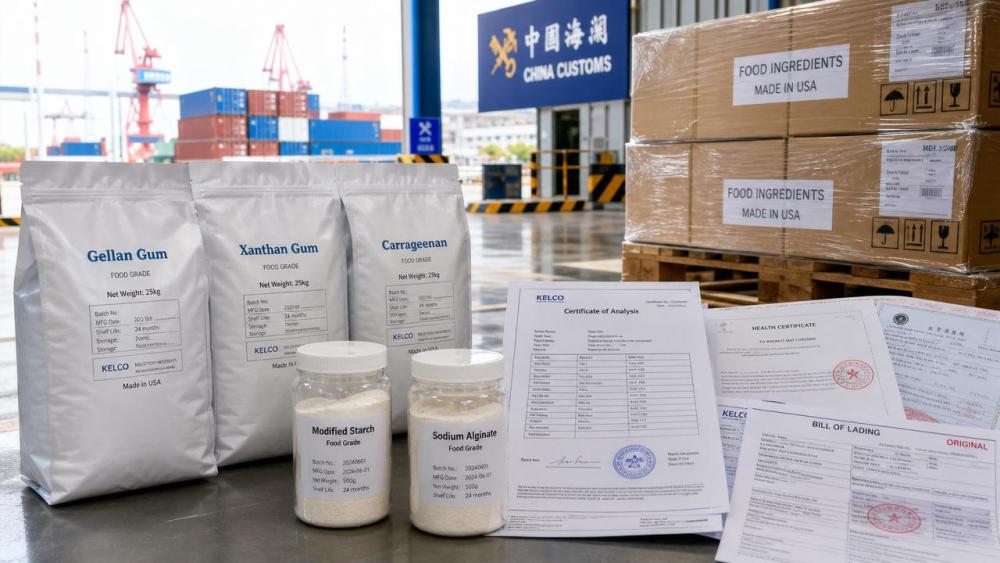
The confirmed facts are limited but clear. Pakistan issued Decree No. 704(I)/2026 on 2026-04-28. The decree requires all imported food products to be submitted with a due diligence certificate stating the goods are free from forced labor, and the certificate must be issued by an institution recognized by the ILO.
The requirement covers imported food broadly and specifically includes ingredients such as natural edible colorants, modified starches, and alginates. The rule is to be enforced from June 2026, and goods without the required certificate will not be allowed to clear customs.
Where the pressure is likely to appear first
Ingredient exporters face a documentation threshold before shipment
From an industry perspective, exporters of natural colorants, hydroxypropyl starch and other modified starch products, as well as alginate-related ingredients, may feel the effect early because these goods are explicitly within the scope described in the event summary. The practical issue is not only product eligibility, but whether shipment files can be completed with the required certificate before cargo reaches customs.
What deserves closer attention is the handoff between compliance preparation and trade execution. If the certificate becomes a mandatory precondition for clearance, exporters may need to treat it as part of the shipment document set rather than as a supplementary statement prepared later.
Importers and buyers may need to shift supplier screening forward
Analysis shows the rule may alter purchasing workflows for importers and downstream buyers in Pakistan. If customs release depends on a certificate from an ILO-recognized institution, procurement teams may need to verify supplier readiness earlier in the ordering process, especially for food ingredients that move on short replenishment cycles.
The likely impact is less about product reformulation and more about procurement control: whether suppliers can present compliant due diligence evidence, whether document timing matches delivery schedules, and whether purchase orders and contract terms need to reflect this requirement more clearly.
Logistics and customs-facing services may see higher document sensitivity
Supply-chain service providers, including customs-facing logistics participants, may also be affected because the rule ties customs clearance directly to the presence of a specific compliance document. Observably, this raises the operational importance of document review before arrival, since a missing certificate is described as a direct barrier to clearance.
For these service roles, the main concern is process coordination: aligning shippers, importers, and document handlers so that compliance paperwork is not treated as a post-arrival issue.
What companies should watch now
Check whether current document sets are still sufficient
Companies involved in food exports to Pakistan should review whether their existing shipment documentation already includes a pathway to provide the required forced-labor-free due diligence certificate. The confirmed information does not describe detailed submission formats or supporting annexes, so at this stage the key point is to identify whether current export files are structurally capable of accommodating the new requirement.
Pay attention to certificate recognition and execution wording
Analysis shows that one of the most important open points is execution wording around institutions recognized by the ILO. The event summary confirms the recognition condition, but it does not provide the operative list, process detail, or verification method. That means companies should pay close attention to how the recognition standard is referenced in trade documents, customs practice, and any follow-up compliance communication.
Review lead times for ingredients with continuous delivery schedules
For ingredients that are purchased repeatedly or delivered on tight schedules, businesses should examine whether the new certificate requirement could extend pre-shipment preparation time. This is not yet a confirmed delay, but it is a reasonable compliance concern because documentation now appears linked directly to clearance eligibility.
Watch for downstream changes in purchase and tender documents
It is more appropriate to understand this rule not only as a customs issue, but also as a possible trigger for updates in purchase specifications, supplier qualification files, and bid or tender documents. Even without confirmed secondary changes, companies should watch whether customers begin to request proof of certificate readiness before placing orders or confirming supply.
Why this looks like an execution signal, not just a policy headline
Observation suggests this development is best read as an already actionable trade-compliance signal because the summary includes a decree number, an issuance date, a stated start of enforcement from June 2026, and a clear customs consequence for non-compliance. That gives the rule more practical weight than a general policy discussion.
At the same time, it remains necessary to separate confirmed facts from pending operational detail. The available information does not yet clarify how review will be conducted in practice, how institutions recognized by the ILO will be verified in each transaction, or whether product-by-product documentation interpretations will vary at execution level. For that reason, the market still needs to monitor how the rule is applied in actual import procedures.
How the market may need to interpret this stage
The industry significance of this event lies in the fact that a labor-related due diligence requirement is being tied directly to food import clearance, including ingredient categories that sit upstream in manufacturing and formulation. That makes the issue relevant not only to compliance teams, but also to sourcing, trade operations, and delivery coordination.
For now, the most balanced reading is that this is a landed rule with immediate compliance relevance, while its detailed operating standard still requires continued observation. Companies do not need to assume outcomes beyond the confirmed facts, but they do need to treat document readiness and supplier qualification as live operational questions.
Basis of this article and what still needs verification
This article is based on the user-provided news title, event date, and event summary. In reporting on this type of development, relevant source categories would usually include official decrees, notices from regulators, customs or trade authorities, industry association communications, standard-setting documents, and reporting by authoritative media.
No specific official source link was provided in the input, so the exact official publication path still needs to be verified on an ongoing basis. Observably, the next points worth tracking are detailed implementation language, certificate acceptance practice, any changes in trade or tender documentation, market feedback from affected businesses, and how companies operationalize the requirement in real shipments.
Related News
- Functional Food Additives for Bakery: Performance and Labeling BasicsJul 09, 2026Food Rheology Expert
- Bio-Based Thickeners: Cost and Performance in Food FormulationJun 25, 2026Food Rheology Expert
- Indonesia Duties Chinese PP, Affecting Starch and Flavor CarriersJun 21, 2026Food Rheology Expert
- Argentina Tightens Inorganic Arsenic LimitsJun 18, 2026Food Rheology Expert
Related News
- 00
0000-00
What drives fragrance ingredients price changes in bulk orders? - 00
0000-00
How to assess a food antioxidants distributor’s traceability practices - 00
0000-00
How minimum order quantities shape private label ingredient sourcing costs - 00
0000-00
What drives personal care ingredient price volatility in sourcing - 00
0000-00
What drives micelles price differences in cosmetic formulations?
Food Rheology Expert
Weekly Insights
Stay ahead with our curated technology reports delivered every Monday.