





Bio-Based Thickeners for Food Industry: Performance Tests That Matter
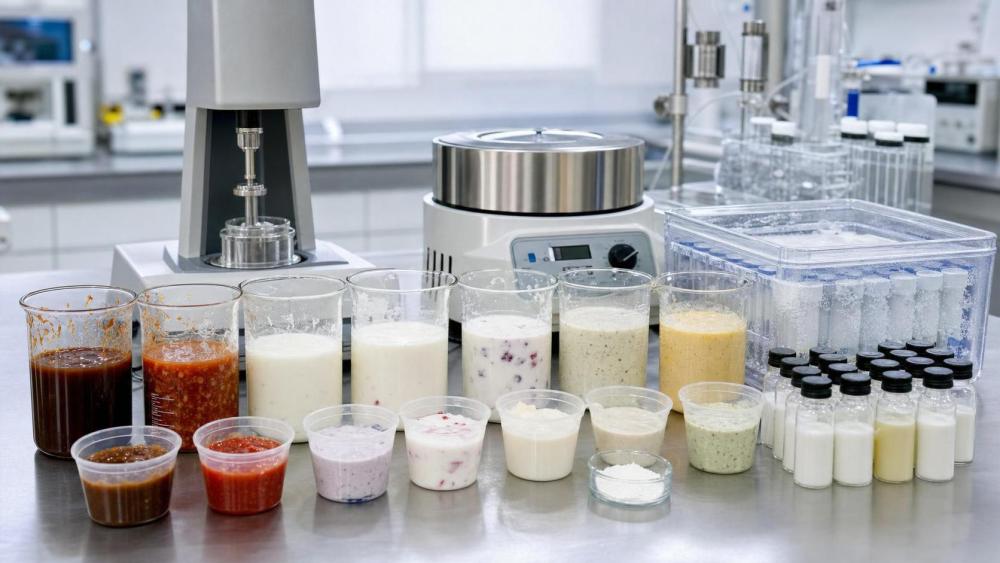
For technical evaluation, label-friendly claims are only the starting point. The harder question is whether bio-based thickeners for food industry use can hold structure, process cleanly, and stay stable in real products.
That question matters more now. Clean label pressure is rising, but process windows are getting tighter. Reformulation teams need data that reflects factory stress, not only ideal lab conditions.
In practice, good screening starts with function. A thickener must control viscosity, suspend particles, protect texture, and survive packaging, storage, and transport without creating new quality risks.
This is why performance testing should mirror the intended application. A sauce, drinking yogurt, plant dessert, and frozen filling may all use similar hydrocolloids, yet their failure points differ sharply.
When comparing bio-based thickeners for food industry projects, the most useful tests are the ones that reveal behavior under shear, heat, pH shift, ionic load, and long storage.
Start With the Right Functional Baseline
Before running advanced methods, define what success looks like. “High viscosity” is too vague. The better target is a performance profile linked to product use and process sequence.
For example, spoonable dairy alternatives need body plus clean melt in the mouth. Beverage systems often need low apparent viscosity during drinking, but enough structure to prevent sedimentation.
That baseline usually covers five areas:
- Target viscosity at specific shear rates
- Yield stress or suspension power
- Thermal and pH stability
- Sensory texture and flavor release
- Compatibility with processing equipment
This framing prevents common mistakes. One of the most frequent is selecting bio-based thickeners for food industry use based on brochure viscosity instead of finished product behavior.
Rheology Tests That Reveal Real Performance
Rheology is still the core filter. Not because every product needs the same number, but because flow behavior predicts filling, pumping, coating, swallowing, and visual texture.
A single Brookfield value rarely tells the whole story. Most bio-based thickeners for food industry formulations are non-Newtonian, so their response changes across the shear range.
1. Flow Curve Measurement
Run viscosity across low, medium, and high shear. This shows whether a system is strongly shear-thinning, nearly Newtonian, or structurally unstable after processing.
Low shear data matters for suspension and shelf appearance. High shear data matters for pumping, mixing, dosing, and oral perception during eating or drinking.
2. Yield Stress and Suspension Testing
If the system contains cocoa, spices, fruit solids, or proteins, yield stress becomes critical. Without it, phase separation appears even when headline viscosity looks acceptable.
This is especially relevant when evaluating bio-based thickeners for food industry beverage bases, reduced-sugar sauces, and plant-protein emulsions.
3. Thixotropy and Recovery
Many products are sheared hard during homogenization and filling. Test how fast the structure rebuilds after stress. Slow recovery may cause weak body, uneven topping distribution, or settling.
Fast recovery helps products look stable on shelf. It also improves cling in dressings and sauces after shaking or squeezing.
Heat, pH, Salt, and Process Tolerance
A thickener can perform well in water and still fail in production. That is why stress testing needs to reflect thermal load, acidity, minerals, and ingredient interactions.
For bio-based thickeners for food industry applications, these variables often determine whether a promising lab sample becomes a workable commercial ingredient.
Heat Stability
Test under the true thermal path. Pasteurization, UHT, hot fill, retort, and baking all create different damage patterns. Some systems lose viscosity. Others gel unpredictably.
Measure before heating, after heating, and after cooling. The cooling stage is often where hidden instability becomes visible.
pH Stability
Acid beverages, fruit preps, and cultured products can shift texture fast. Run a pH ladder rather than testing only one endpoint. The steepest performance loss may happen in a narrow range.
This becomes more important when proteins are present. Thickener performance and protein stability often move together, especially in plant-based systems.
Salt and Ionic Strength
Sodium, calcium, and potassium can strengthen, weaken, or distort hydrocolloid networks. Test with the full mineral system, not with deionized water only.
From a selection standpoint, this is where many bio-based thickeners for food industry recipes separate into practical and impractical options.
Freeze-Thaw and Storage Stability
Storage testing is where commercial risk becomes visible. A sample that looks good on day one may show syneresis, graininess, or phase split after temperature abuse.
Frozen and chilled products need at least several freeze-thaw cycles. Measure water separation, texture drift, and visual breakdown after each cycle.
For ambient goods, combine accelerated aging with real-time storage. Accelerated results are useful, but they can miss slow structural changes in bio-based thickeners for food industry formulas.
It also helps to track package orientation. Upright, inverted, and side storage can reveal movement patterns that standard shelf trials miss.
Sensory and Flavor Release Cannot Be an Afterthought
Instrumental data matters, but mouthfeel decides acceptance. The best bio-based thickeners for food industry use should create the intended body without dulling flavor or leaving residue.
Key sensory checks include:
- Initial thickness versus perceived heaviness
- Shortness, slipperiness, or gumminess
- Flavor bloom and finish
- Coating, residue, and clean swallow
- Texture consistency across shelf life
This is where formula teams often refine blends. One material may deliver body, while another improves recovery or reduces slimy perception.
Natural positioning only helps if the product still tastes right. In actual buying decisions, sensory failure outweighs a cleaner ingredient story.
A Practical Test Matrix for Comparison
To compare candidates fairly, keep the test matrix simple and repeatable. Use one base formula, fixed solids, controlled hydration, and matched process conditions.
This approach makes comparison cleaner. It also helps procurement, R&D, and quality teams discuss bio-based thickeners for food industry use with the same decision framework.
What Often Gets Missed During Evaluation
A few gaps appear again and again.
- Testing in water instead of the full formulation matrix.
- Ignoring hydration order and dispersion method.
- Using one viscosity point as the main decision tool.
- Skipping sensory review until late-stage development.
- Overlooking batch-to-batch consistency and raw material variability.
These issues slow down selection and create false positives. A candidate may look strong in screening, then collapse when sugar level, protein type, or heating sequence changes.
The more disciplined route is to screen broadly, then stress the short list under realistic manufacturing conditions.
Final Decision: Match the Thickener to the Failure Mode
The best bio-based thickeners for food industry projects are not the ones with the strongest headline claims. They are the ones that solve the actual failure mode in the intended product.
If the issue is settling, focus on yield stress and recovery. If the issue is acid drift, map pH tolerance. If the issue is texture fatigue after retort, prioritize thermal retention.
That is the practical value of structured testing. It turns thickener selection from a marketing discussion into an evidence-based decision.
For teams tracking clean label direction, cost control, and processing fit at the same time, that discipline is what keeps reformulation programs moving.
Build the shortlist around realistic stress tests, verify with sensory data, and select the option that stays stable where the product is most likely to fail. That is usually the choice that lasts.
Related News
- How to assess a bio-based thickener manufacturer's batch consistencyOct 16, 2026Food Rheology Expert
- Verifying halal status of hydrocolloid ingredients in the Middle EastOct 15, 2026Food Rheology Expert
- How Do You Test Hydrocolloid Viscosity After Changing a Thickener?Oct 17, 2026Food Rheology Expert
- Which Natural Hydrocolloid Works Best in Acidic Cosmetic Formulas?Oct 16, 2026Food Rheology Expert
Related News
- 00
0000-00
Can biomimetic peptides in cosmetics reduce the look of wrinkles? - 00
0000-00
How to assess a bio-based thickener manufacturer's batch consistency - 00
0000-00
Verifying halal status of hydrocolloid ingredients in the Middle East - 00
0000-00
How to interpret active matter on a surfactant specification sheet - 00
0000-00
How Do You Test Hydrocolloid Viscosity After Changing a Thickener?
Food Rheology Expert
Weekly Insights
Stay ahead with our curated technology reports delivered every Monday.