





Choosing Rheology Modifiers for Stable Texture and Easier Processing
For technical evaluators balancing texture stability, pumpability, and production efficiency, choosing the right rheology modifiers is a critical formulation decision.
From food and personal care to fragrance systems, the best modifier must control viscosity, support suspension, and fit the process window.
It also needs to protect sensory quality, compliance status, and total formulation cost.
That sounds simple on paper. In practice, it is rarely a one-variable choice.
Different rheology modifiers respond differently to salt, pH, heat, shear, alcohol, oils, and active ingredient load.
This is why a strong screening method matters more than a quick viscosity match.
Why Rheology Modifiers Matter Beyond Simple Thickening
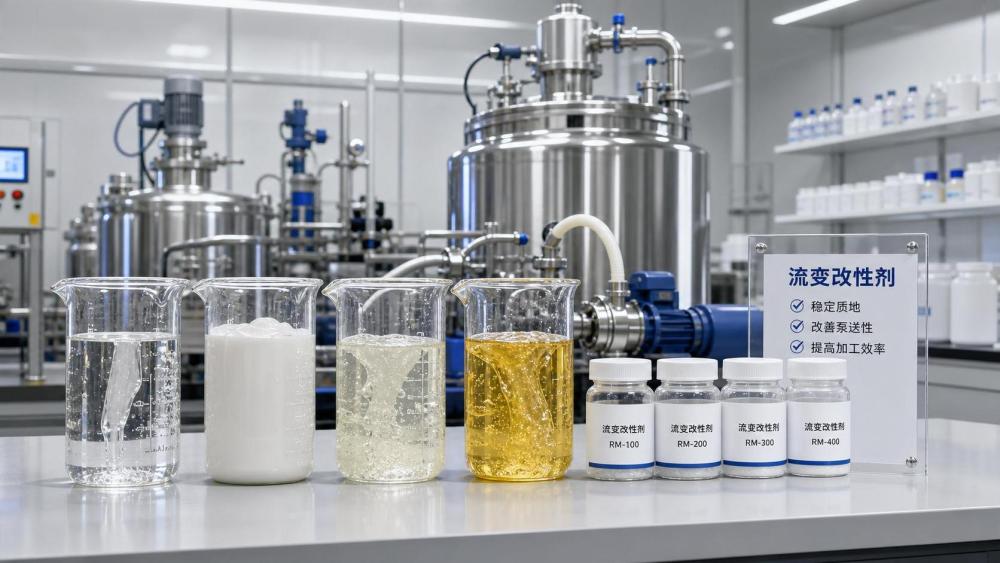
Many teams still start with a basic question: which material gives the target viscosity fastest?
That approach can miss the bigger job of rheology modifiers in real products.
A good rheology profile shapes filling speed, mixing efficiency, dosage accuracy, and shelf stability at the same time.
It also controls how a product pours, spreads, pumps, or sprays.
In sauces, dairy systems, and beverages, rheology modifiers define mouthfeel and particle suspension.
In creams, serums, and cleansers, they shape glide, richness, and package compatibility.
In fragrance and active systems, they often help stabilize difficult dispersed phases.
More importantly, the wrong choice can create hidden process losses.
These include fisheyes during hydration, tank wall buildup, poor deaeration, nozzle clogging, and inconsistent batch transfer.
So when reviewing rheology modifiers, stable texture is only half the story.
The other half is how that texture behaves under real manufacturing stress.
Core Selection Criteria for Rheology Modifiers
A practical review should focus on measurable factors, not just supplier claims.
The first checkpoint is target flow behavior.
Ask whether the product needs shear thinning, yield value, suspension strength, or fast recovery after stress.
For example, a pumped gel may need low resistance under shear but strong rebuild afterward.
A beverage suspension may need gentle viscosity with good particle holding, not heavy body.
Key Questions During Technical Screening
- Does the modifier hydrate easily under current mixing energy?
- Does it remain stable across the product pH range?
- How does it respond to salt, ethanol, surfactants, or sugars?
- Can it tolerate heat treatment, homogenization, or freeze-thaw cycles?
- Does it affect flavor release, fragrance bloom, or skin feel?
- What is the use level required to reach the final profile?
The second checkpoint is formulation compatibility.
Some rheology modifiers perform beautifully in water, then collapse once electrolytes or solvents enter the system.
Others work well with surfactants but mute fragrance diffusion or create draggy afterfeel.
That is why bench results should reflect the full formula, not a simplified base.
The third checkpoint is process fit.
A material that looks efficient in the lab can become expensive on plant scale.
Long hydration times, dust control issues, or narrow addition windows often erase raw material savings.
How Different Rheology Modifiers Behave in Real Applications
Not all rheology modifiers build structure in the same way.
Hydrocolloids, associative thickeners, clays, cellulose derivatives, and acrylic systems each bring different tradeoffs.
From a technical standpoint, selection should match the dominant stress in the product lifecycle.
Typical Performance Patterns
In food systems, xanthan gum remains a classic among rheology modifiers because it offers strong shear thinning and suspension.
Yet even strong performers can become limiting if they create excessive stringiness or blunt flavor release.
In personal care, associative rheology modifiers often improve elegance and pumpability.
Still, surfactant-rich systems may shift their viscosity unexpectedly during reformulation.
That also means substitute decisions should never rely on one-point viscosity data alone.
Building a Better Evaluation Protocol
A strong protocol reduces trial noise and speeds final approval.
Start by defining the product’s non-negotiables.
These usually include target texture, processing temperature, filling method, packaging format, and shelf-life expectation.
Then rank what matters most, because not every parameter can be optimized equally.
Recommended Evaluation Steps
- Screen candidate rheology modifiers at realistic use levels.
- Measure viscosity across multiple shear rates, not one spindle point.
- Check recovery after shear, especially for filling and pumping conditions.
- Test pH, salt, heat, and storage stability in the full formula.
- Review sensory output with trained internal evaluators.
- Compare total processing cost, not just price per kilogram.
This last point is where many decisions shift.
A slightly higher-cost rheology modifier may lower batch time, reduce rejects, and improve line consistency.
Over time, that often produces the better commercial result.
Risk Signals That Should Not Be Ignored
Some warning signs appear early and deserve attention.
One common signal is a large viscosity drop after adding fragrance, preservative, electrolyte, or active compounds.
Another is slow texture recovery after shear.
That can lead to phase separation, particle settling, or weak in-pack appearance.
Stringiness, excessive aeration, and poor discharge from tanks also point to suboptimal rheology modifiers.
From a compliance angle, supply documentation matters just as much.
Material consistency, regulatory status, allergen position, and regional acceptability all affect the true fit.
This is especially relevant for global FMCG portfolios crossing food, beauty, and household channels.
A Smarter Way to Choose Rheology Modifiers
The best rheology modifiers are not simply the thickest, cheapest, or most familiar options.
They are the ones that keep texture stable while making production easier and more predictable.
That balance requires looking at flow behavior, formulation compatibility, sensory output, process efficiency, and compliance together.
In real development work, this integrated view usually prevents costly late-stage reformulation.
For teams evaluating rheology modifiers across food, fragrance, and active systems, a disciplined screening framework gives the clearest advantage.
It helps connect molecular behavior with line performance, sensory quality, and business practicality.
That is where better texture decisions become better product decisions.
If the goal is stable texture and easier processing, choose rheology modifiers with data, context, and end-use reality in mind.
Related News
- Verifying halal status of hydrocolloid ingredients in the Middle EastOct 15, 2026Food Rheology Expert
- How cassava costs shape Thailand xanthan gum market pricesSep 29, 2026Food Rheology Expert
- Can Thailand's xanthan gum market support stable export supply?Sep 28, 2026Food Rheology Expert
- How food hydrocolloids prevent ice crystals in frozen dessertsSep 14, 2026Food Rheology Expert
Related News
- 00
0000-00
Verifying halal status of hydrocolloid ingredients in the Middle East - 00
0000-00
How to interpret active matter on a surfactant specification sheet - 00
0000-00
What Quality Checks Should You Run on Fragrance Ingredient Suppliers? - 00
0000-00
How to assess a flavor chemistry manufacturer's batch consistency - 00
0000-00
What drives fragrance ingredients price changes in bulk orders?
Food Rheology Expert
Weekly Insights
Stay ahead with our curated technology reports delivered every Monday.