





On May 11, 2026, the Egyptian Organization for Standardization (EOS) released a draft standard for ice cream containing plant fats, drawing attention from exporters of xanthan, alginate hydrocolloids, and natural food colorants, especially those serving the emerging plant-based frozen dessert market in the Middle East. The draft is notable because it does not only address product use in general terms; it also raises the documentation and purity expectations that could affect type testing and customs clearance preparation if adopted.
What the draft standard specifically requires
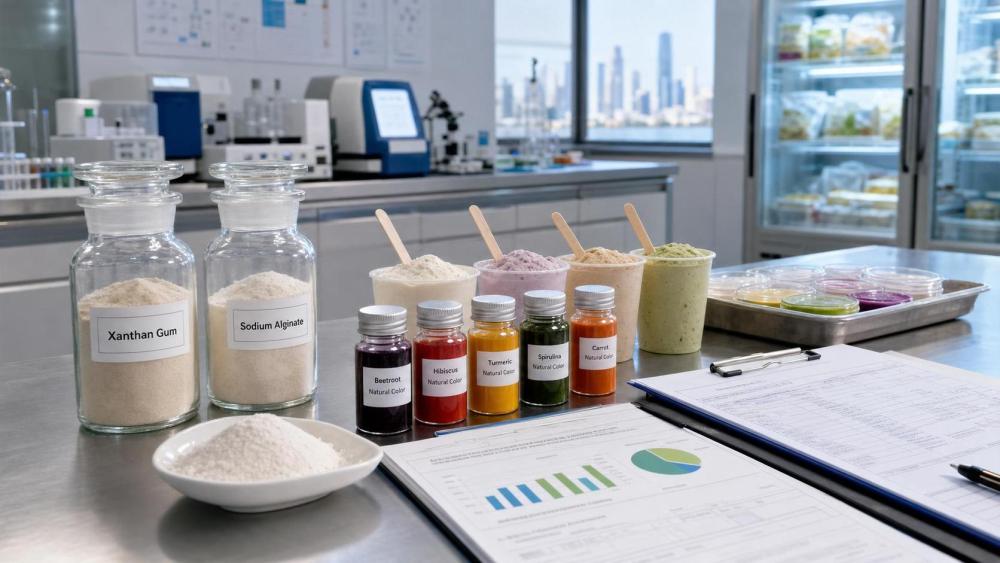
According to the information provided, the EOS draft standard sets out two clear compliance points for plant-fat ice cream ingredients. First, natural edible colorants would need proof of source and stability data. Second, water-soluble hydrocolloids such as alginates and xanthan gum would need to meet the purity grade defined in ISO 11128:2023.
The draft was released on May 11, 2026. The provided information also indicates that, if passed, it would directly affect type inspection and customs clearance document preparation for Chinese exporters of xanthan, alginate hydrocolloids, and natural food colorants.
Where the pressure may appear across the supply chain
Documentation risk for ingredient exporters
From an industry perspective, exporters of natural food colorants may be affected first because the draft explicitly points to source proof and stability data. The practical impact is likely to appear in product dossiers, pre-shipment document readiness, and customer-facing compliance files rather than in sales language alone.
Purity verification for hydrocolloid suppliers
Suppliers of alginates and xanthan gum may face closer scrutiny around whether their materials align with the purity grade referenced in ISO 11128:2023. Analysis shows that this could shift attention toward specification matching, test records, and the consistency of supporting paperwork used in type inspection and border clearance processes.
Higher review demands for importers and buyers
Importers, formulators, and procurement teams involved in plant-based frozen desserts may also need to pay closer attention to supplier submissions. If the draft moves forward, the impact may be felt in supplier screening, product approval timing, and the completeness of compliance documentation requested before shipment or customs filing.
What companies should watch now
Follow whether the draft becomes an adopted rule
What deserves closer attention is the distinction between a draft requirement and an enforceable one. Companies should track subsequent official wording and adoption status, because the commercial consequences depend on whether the current draft is finalized without material change.
Check files for source and stability support
For natural colorant suppliers, the immediate practical issue is whether current files can demonstrate ingredient origin and provide stability-related support in a form customers and authorities can use. This is less about broad marketing claims and more about whether the paperwork is ready for inspection and clearance scenarios.
Review hydrocolloid specifications against the cited standard
For xanthan and alginate suppliers, the key task is to compare existing product specifications and test documents with the purity grade cited in ISO 11128:2023. Observably, any mismatch between commercial specifications and compliance documentation could become a friction point during qualification or shipment preparation.
Prepare customer communication and lead-time buffers
Exporters and supply chain teams may also need to prepare for longer back-and-forth with buyers over technical documents if the draft advances. In practice, this means checking document completeness early and clarifying with customers what evidence may be expected for type testing and customs paperwork.
Why this looks more like a compliance signal than a final outcome
Analysis shows that this development is better read as an active regulatory signal rather than a completed market change, because the text described is still a draft. Even so, the signal is specific enough to matter: it points to tighter expectations around traceability for natural colorants and recognized purity standards for water-soluble hydrocolloids.
It is more appropriate to understand this as a development that deserves continued monitoring, particularly for businesses already shipping into Middle Eastern plant-based frozen dessert applications. The draft does not yet confirm a final regulatory end state, but it does indicate where future compliance pressure may concentrate.
How the market should read this stage
At this stage, the industry significance lies less in immediate disruption and more in the direction of compliance review. The draft suggests that supporting evidence for ingredient identity, source, stability, and purity may become more central in market access preparation for relevant exports to Egypt.
A neutral reading is that the development is neither a completed rule change nor a routine notice with no operational consequence. For affected suppliers and traders, it is currently best understood as a draft-stage requirement with practical implications worth preparing for, while final implementation still needs to be confirmed.
Basis of this article and what still needs verification
This article is generated from the user-provided news title, event date, and event summary. For this type of industry update, commonly relevant source categories may include official notices, standard-setting organization documents, company disclosures, industry association updates, and reporting from authoritative trade media.
A specific official source link was not provided in the input, so the exact original publication path still requires ongoing verification. The main follow-up point to watch is whether the EOS draft standard is formally adopted, and whether its wording on source proof, stability data, and ISO 11128:2023 purity alignment changes during that process.
Related News
- How to assess a bio-based thickener manufacturer's batch consistencyOct 16, 2026Food Rheology Expert
- Verifying halal status of hydrocolloid ingredients in the Middle EastOct 15, 2026Food Rheology Expert
- How Do You Test Hydrocolloid Viscosity After Changing a Thickener?Oct 17, 2026Food Rheology Expert
- Which Natural Hydrocolloid Works Best in Acidic Cosmetic Formulas?Oct 16, 2026Food Rheology Expert
Related News
- 00
0000-00
Can biomimetic peptides in cosmetics reduce the look of wrinkles? - 00
0000-00
How to assess a bio-based thickener manufacturer's batch consistency - 00
0000-00
Verifying halal status of hydrocolloid ingredients in the Middle East - 00
0000-00
How to interpret active matter on a surfactant specification sheet - 00
0000-00
How Do You Test Hydrocolloid Viscosity After Changing a Thickener?
Food Rheology Expert
Weekly Insights
Stay ahead with our curated technology reports delivered every Monday.