





Hydrocolloid technology for food shapes far more than mouthfeel. It affects process control, phase stability, shelf life, and batch consistency across modern FMCG systems.
That matters because texture failure rarely appears as a single defect. It often shows up as syneresis, sedimentation, poor pumpability, icy structure, or uneven flavor release.
In practical formulation work, the right hydrocolloid system connects sensory design with operational reality. It helps products survive mixing, heating, filling, transport, storage, and final consumption.
Within the broader FFAI perspective, hydrocolloids sit beside preservatives, pigments, flavors, and active compounds as core ingredients that define performance. They are not secondary aids. They are structural decision points.
Why texture stability has become a strategic issue
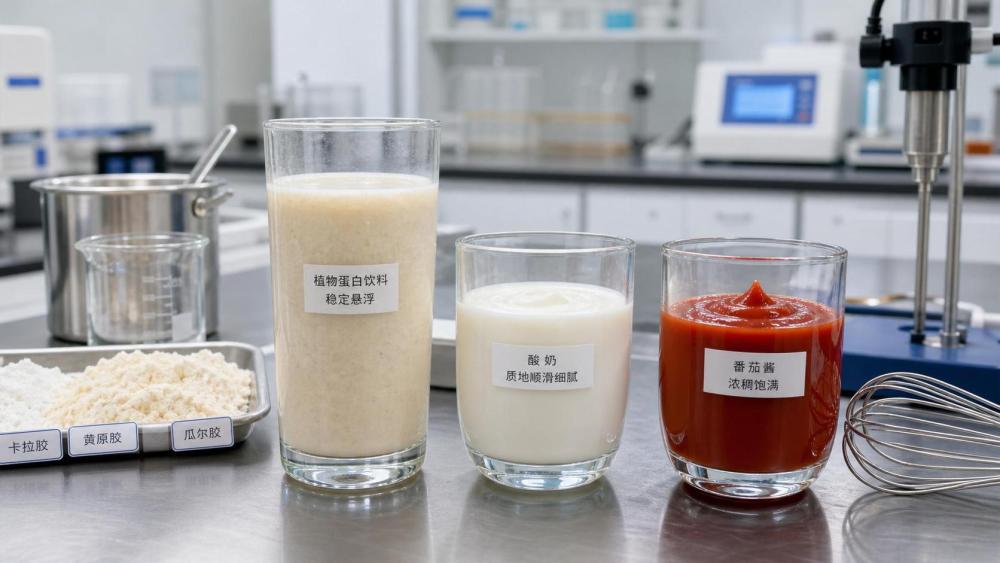
Texture stability is now under pressure from several directions. Cleaner labels reduce the room for correction. Global supply chains extend product stress. Consumers also notice small defects faster than before.
A beverage that separates after temperature cycling loses credibility. A yogurt that weeps in storage looks old before its expiry date. A sauce that thins on heating may fail in foodservice use.
Hydrocolloid technology for food responds to these issues by managing water, particles, air, and fat within one formulation framework. That is why it remains central in both legacy products and new development.
It also supports the FFAI view that ingredient intelligence must link sensory performance with compliance, economics, and scalability. Stable texture is never just a sensory target. It is a commercial safeguard.
What hydrocolloids actually do inside a food system
Hydrocolloids are water-binding polymers that alter rheology at low use levels. Depending on type and process, they thicken, gel, suspend, stabilize emulsions, or reduce crystal and phase mobility.
Simple viscosity increase is only part of the story. Many systems depend on yield stress, pseudoplastic flow, elastic recovery, or controlled gel strength rather than absolute thickness.
That distinction matters during scale-up. A fluid can look acceptable in a beaker yet fail during pumping, deaeration, or hot filling. Hydrocolloid technology for food must be evaluated under process-relevant shear and temperature conditions.
Common mechanisms include water immobilization, particle network formation, serum phase control, and interfacial support. In many formulas, stability comes from synergy between two or more gums.
Typical functional roles
- Control pourability in beverages, sauces, and dressings
- Reduce whey-off or syneresis in dairy and plant-based systems
- Hold cocoa, pulp, spices, or protein particles in suspension
- Improve freeze-thaw resistance in frozen desserts and fillings
- Support shape retention in bakery, confectionery, and processed foods
Where hydrocolloid technology for food delivers the most value
The strongest value appears when texture stability and processing stability must coexist. Products today need to look right on day one and remain functional after distribution stress.
In dairy and dairy alternatives, hydrocolloids help manage serum separation, protein interactions, and creaminess perception. Small changes can shift spoonability, drinking viscosity, and flavor carrying behavior.
In sauces and condiments, they help maintain cling, shine, and suspended particulates. They also reduce the gap between cold viscosity and hot-service performance.
In frozen systems, hydrocolloid technology for food limits ice crystal growth and slows structural collapse after partial thaw. This improves body, smoothness, and tolerance to storage fluctuation.
In bakery fillings and fruit preparations, they support moisture control and cuttable texture. That can reduce leakage, water migration, and post-bake instability.
Current evaluation priorities in formulation and sourcing
Selection today is less about choosing a single gum by habit. It is about matching a hydrocolloid system to the full product environment.
Label direction is one pressure point. Some brands want familiar ingredients such as pectin, guar, or locust bean gum. Others accept modified systems if they improve robustness.
Regulatory fit also matters across export markets. FFAI’s intelligence model is relevant here because ingredient acceptance, naming, and application limits can shape technical choices early.
Cost is another filter, but it should be read correctly. A cheaper gum that creates rework, inconsistent fill weight, or poor shelf-life outcomes is not a lower-cost solution.
More valuable than headline price is total formulation efficiency. That includes dosage, compatibility, hydration behavior, process tolerance, and failure rate during commercial production.
Questions that improve early screening
- Does the system need suspension, gel structure, or only viscosity?
- What happens after heat treatment, homogenization, or pH adjustment?
- Is the target texture stable after freeze-thaw or temperature abuse?
- How does the hydrocolloid interact with proteins, salts, sugars, and acids?
- Can the ingredient support clean label goals without sacrificing process reliability?
Why single-ingredient thinking often fails
Texture instability usually comes from system interactions, not from one missing ingredient. A hydrocolloid can perform well in water and still underperform in a complex food matrix.
Protein-rich beverages are a common example. pH, ionic strength, thermal history, and homogenization pressure all influence whether the final structure remains stable.
The same applies to fruit systems. Pectin performance depends on soluble solids, calcium balance, acid profile, and process sequence. The hydrocolloid choice cannot be separated from the whole formula.
This is where hydrocolloid technology for food becomes a decision discipline rather than a purchase line item. Better outcomes come from matrix-level evaluation, not ingredient substitution alone.
A practical way to assess fit before scale-up
A useful review starts with failure mode, not ingredient catalog. Define whether the core issue is separation, brittleness, weak body, poor recovery, or instability after thermal and mechanical stress.
Then test under realistic conditions. Bench viscosity data alone is too limited. Process simulation should include shear exposure, hold times, filling temperature, storage cycling, and target shelf life.
Sensory checks should run beside rheology. A technically stable product can still feel gummy, slimy, or muted in flavor release. Texture stability only matters when it supports the intended eating experience.
It also helps to compare hydrocolloid technology for food against adjacent tools. In some products, antioxidants, emulsifiers, or solids management may be part of the same stability solution.
Useful decision criteria
- Performance across the intended shelf-life window
- Robustness during production variability
- Compatibility with clean label positioning
- Regulatory and export suitability
- True cost per stable commercial batch
What to watch next
The next phase of hydrocolloid technology for food will be shaped by cleaner labels, plant-based reformulation, and tighter process economics. Those trends increase the value of precise ingredient intelligence.
For that reason, texture work should stay connected to the broader ingredient picture. FFAI’s cross-category lens is useful because thickener performance often intersects with preservation, flavor delivery, and formulation risk.
A sensible next step is to map the product’s failure modes, process stresses, and label constraints before comparing gum systems. That creates a clearer basis for trials, supplier dialogue, and scale-up decisions.
When hydrocolloid technology for food is evaluated this way, texture stability becomes measurable, repeatable, and commercially meaningful rather than subjective or reactive.
Related News
- How to assess a bio-based thickener manufacturer's batch consistencyOct 16, 2026Food Rheology Expert
- Verifying halal status of hydrocolloid ingredients in the Middle EastOct 15, 2026Food Rheology Expert
- How Do You Test Hydrocolloid Viscosity After Changing a Thickener?Oct 17, 2026Food Rheology Expert
- Which Natural Hydrocolloid Works Best in Acidic Cosmetic Formulas?Oct 16, 2026Food Rheology Expert
Related News
- 00
0000-00
Can biomimetic peptides in cosmetics reduce the look of wrinkles? - 00
0000-00
How to assess a bio-based thickener manufacturer's batch consistency - 00
0000-00
Verifying halal status of hydrocolloid ingredients in the Middle East - 00
0000-00
How to interpret active matter on a surfactant specification sheet - 00
0000-00
How Do You Test Hydrocolloid Viscosity After Changing a Thickener?
Food Rheology Expert
Weekly Insights
Stay ahead with our curated technology reports delivered every Monday.