





Choosing the right rheology modifiers for functional foods is a technical decision with direct effects on texture, stability, processing, nutrient delivery, and label acceptance. In protein drinks, fortified dairy, gummies, sauces, and plant-based systems, a modifier does far more than thicken. It shapes suspension behavior, controls shear response, protects sensory quality, and supports shelf-life targets. This guide explains how to evaluate options systematically, so formulation work moves faster with fewer performance surprises.
Why a checklist matters when choosing rheology modifiers for functional foods
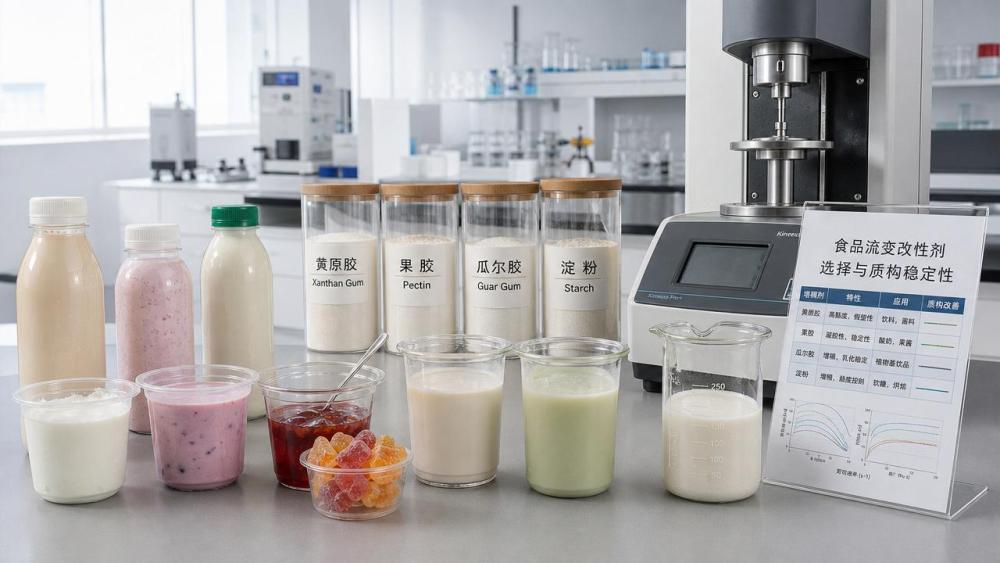
Functional foods combine structure-sensitive ingredients with demanding consumer expectations. Added proteins, fibers, minerals, probiotics, sweeteners, and plant extracts can destabilize a system quickly. A checklist reduces trial-and-error and highlights fit across formulation, processing, compliance, and cost.
It also helps compare hydrocolloids and texturizers beyond simple viscosity. Xanthan gum, pectin, carrageenan, guar, starches, cellulose derivatives, and mixed systems behave differently under heat, acid, salt, and shear. A disciplined selection path improves consistency from lab bench to commercial scale.
Core checklist for selecting rheology modifiers for functional foods
- Define the target texture first. Specify spoonability, drinkability, gel strength, cling, creaminess, and recovery after shear before screening any rheology modifier or hydrocolloid blend.
- Match the modifier to the product matrix. Protein-rich, acidic, high-sugar, low-fat, or plant-based systems each change hydration rate, compatibility, and final mouthfeel.
- Check the full pH tolerance window. Many rheology modifiers for functional foods lose stability or change texture sharply in low-pH beverages and fortified fruit systems.
- Evaluate heat and process resistance. Review behavior during pasteurization, UHT, retort, baking, or hot-fill because thermal history strongly affects viscosity development and phase stability.
- Measure shear profile, not only final viscosity. Determine whether the formula needs pseudoplastic flow, suspension at rest, pumpability, or fast rebuild after mixing and filling.
- Assess interactions with actives and fortification salts. Calcium, magnesium, fibers, botanicals, and proteins may trigger precipitation, over-gelation, or inconsistent hydration.
- Review label strategy early. Clean label goals may favor pectin, starch, citrus fiber, or xanthan, while some modified systems offer stronger process tolerance.
- Test sensory impact under real serving conditions. A technically stable system may still fail if it feels slimy, gummy, chalky, or leaves unwanted coating.
- Compare dosage efficiency and cost-in-use. The lowest unit price is rarely the best choice if higher inclusion, slower processing, or larger batch variation follows.
- Confirm regulatory fit by market. Ingredient naming, use levels, and category acceptance differ across regions, making early compliance review essential.
How common modifier families behave in functional food systems
Xanthan gum and guar gum
Xanthan gum is widely used among rheology modifiers for functional foods because it builds viscosity at low dosage and performs well across broad pH and temperature ranges. It supports suspension and strong shear thinning in beverages, sauces, and nutrition formats.
Guar gum can provide body and smoothness economically, but hydration control matters. In some systems, guar may create excessive thickness or unstable texture under heat. Blending xanthan and guar can improve mouthfeel, but bench validation is necessary.
Pectin and carrageenan
Pectin is often selected for acidified dairy drinks, fruit preparations, and reduced-sugar applications where a cleaner consumer image is desired. Its function depends on pH, soluble solids, and calcium balance, so formula context is critical.
Carrageenan is useful in dairy and protein systems where suspension and phase management are important. It can interact strongly with proteins, helping maintain body and particle distribution, yet overuse may produce brittle or overly set textures.
Starches and cellulose-based systems
Native and modified starches support viscosity, opacity, freeze-thaw behavior, and indulgent texture in spoonable and cooked products. They fit many fortified foods, but process and shelf-life demands determine whether native or specialty starches are appropriate.
Cellulose gums and microcrystalline cellulose can stabilize beverages, improve suspension, and reduce syneresis. These rheology modifiers for functional foods are especially valuable where particle control and pourable body must coexist.
Application notes by product scenario
Protein beverages and meal replacements
High protein increases the risk of sedimentation, chalkiness, and age thickening. Prioritize modifiers that hold suspended solids while keeping low-to-medium drinking viscosity. Heat stability and compatibility with calcium and sweetener systems should be screened together.
Shear thinning is usually desirable. It allows a fuller in-mouth feel while preserving filling efficiency. Small changes in dosage can alter perception quickly, so sensory evaluation at refrigerated and ambient conditions is important.
Fortified dairy and cultured systems
In yogurt drinks and fortified dairy, rheology modifiers for functional foods must support protein networks without causing graininess or serum separation. Fermentation endpoint, mineral fortification, and post-acidification all influence final texture.
Use a modifier that tolerates cold-chain variation. Some systems look stable after production but lose structure during transport or repeated temperature abuse. Short accelerated storage studies reveal these risks early.
Plant-based beverages and desserts
Plant proteins, fibers, and oils introduce complex instability mechanisms. Suspended particles, weak emulsions, and beany flavor masking often require multi-component texturizing systems rather than one single gum.
Focus on balancing creaminess with clean finish. Some hydrocolloids can overcorrect thinness and create a coating sensation. Pilot trials should check foaming, homogenization response, and viscosity drift over shelf life.
Common oversights and formulation risks
Ignoring hydration sequence
Even strong rheology modifiers for functional foods can fail if dispersion is poor. Fish eyes, incomplete hydration, and local overconcentration create false negatives during lab evaluation.
Testing only day-one viscosity
A formula may pass initial viscosity targets yet separate, gel, or thin over time. Stability data should include storage temperature, transport simulation, and final package effects.
Underestimating ingredient interactions
Botanical extracts, electrolytes, and protein isolates can alter rheology in unexpected ways. Always test modifiers in the complete formula, not in a simplified water model.
Choosing by cost per kilogram
A cheaper gum may demand higher use level, longer hydration, or added stabilizers. Total economics should include process time, scrap risk, batch reproducibility, and sensory acceptance.
Practical execution steps
- Build a screening matrix with pH, protein, sugar, mineral load, heat treatment, and target viscosity ranges.
- Run side-by-side trials at low, mid, and high dosage rather than testing only one recommended level.
- Record Brookfield or rheometer data with sensory notes, suspension results, and visual stability observations.
- Validate dispersion order, mixing speed, and hold time because process settings often determine whether a modifier succeeds.
- Review ingredient declaration and regional compliance before scale-up to avoid late reformulation.
Conclusion and next action
Selecting rheology modifiers for functional foods requires more than picking a thickener from a datasheet. The best choice aligns texture targets, matrix compatibility, process tolerance, label goals, sensory quality, and regulatory fit in one workable system.
Start with a structured checklist, shortlist two to four candidate systems, and test them in the full formula under real process conditions. That approach cuts development risk, improves batch consistency, and leads to functional foods that perform as well as they promise.
Related News
- How cassava costs shape Thailand xanthan gum market pricesSep 29, 2026Food Rheology Expert
- Can Thailand's xanthan gum market support stable export supply?Sep 28, 2026Food Rheology Expert
- How food hydrocolloids prevent ice crystals in frozen dessertsSep 14, 2026Food Rheology Expert
- Which food texture modifiers for sauces prevent thinning after reheating?Sep 13, 2026Food Rheology Expert
Related News
- 00
0000-00
What drives fragrance ingredients price changes in bulk orders? - 00
0000-00
How to assess a food antioxidants distributor’s traceability practices - 00
0000-00
How minimum order quantities shape private label ingredient sourcing costs - 00
0000-00
What drives personal care ingredient price volatility in sourcing - 00
0000-00
What drives micelles price differences in cosmetic formulations?
Food Rheology Expert
Weekly Insights
Stay ahead with our curated technology reports delivered every Monday.